
Livraison le jour même ou le lendemain

Qualité garantie

Débloquez vos offres de bienvenue: Livraison GRATUITE | Jusqu'à -80 % | 30 jours d'essai gratuits à JoyPlus
Téléchargez l'application
Whether for a long holiday road trip, a camping getaway, or simply keeping drinks chilled during a picnic, an electric cooler is the ideal solution. However, the market is flooded with marketing promises that can quickly lead to disappointment. To prevent a promising purchase from turning into a costly mistake, it's crucial to know the common pitfalls that lie ahead.
At the top of the list of disappointments: misunderstood cooling performance and a greatly underestimated impact on your vehicle's battery.
To avoid these issues, let's focus on the technical specifications that truly matter. Together, let's analyse the three fundamental points to check before you pull out your credit card.
This is the number one criterion, the one that determines the device's entire performance.
A portable cooler must be as practical as it is safe.
The capacity in litres doesn't tell the whole story. Think about real-world use! One 20-litre model might hold 1.5L bottles upright, while another of the same capacity might not due to its shape. Check the internal dimensions, the quality of the lid seals, and the overall durability. Good insulation is key to making the device run less often and consume less energy.
To help you see things more clearly, here are a few models we recommend, each suited for a specific use case.
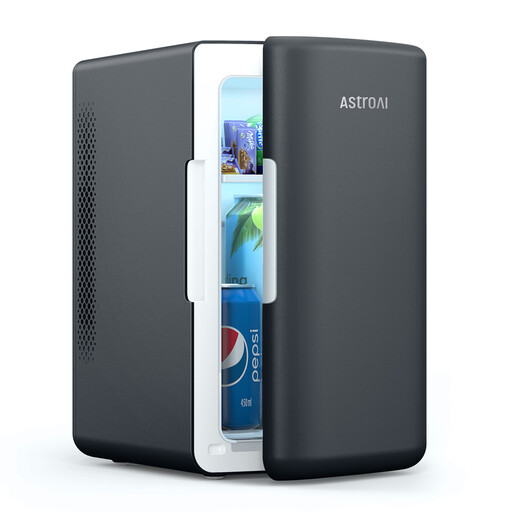
Why this model? This mini car fridge is perfect for keeping a few drinks and a sandwich cool during a drive or a picnic. With a very small footprint, it even has a warming function, a nice little bonus in winter.
It's upfront about what it is: a thermoelectric cooler/warmer for occasional use, not a travel fridge. No false promises about its performance.
It runs on both mains (AC) and cigarette lighter (DC) power, making it just as useful in the car as it is in the office or a bedroom. Very quiet.
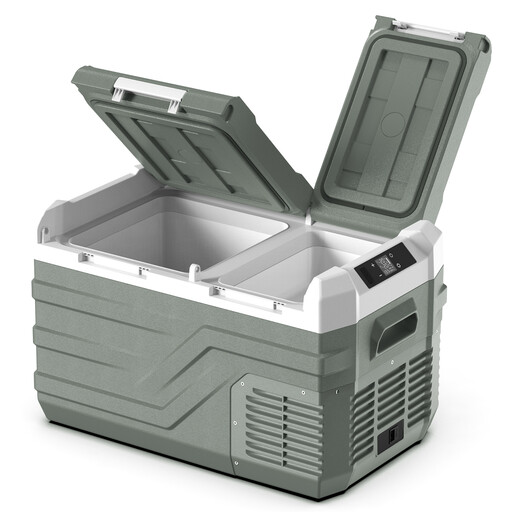
Why this model? For those heading out for several days of camping, van life, or boating, reliability is king. This compressor model offers true refrigeration and freezing performance, ensuring perfect food preservation over the long haul.
Its compressor technology guarantees a stable temperature down to -20°C, sidestepping the relative performance trap. It includes three-level battery protection to prevent a dead battery.
Innovative dual-zone design with independent temperature control to refrigerate and freeze simultaneously. MAX (fast) and ECO (energy-saving) operating modes.
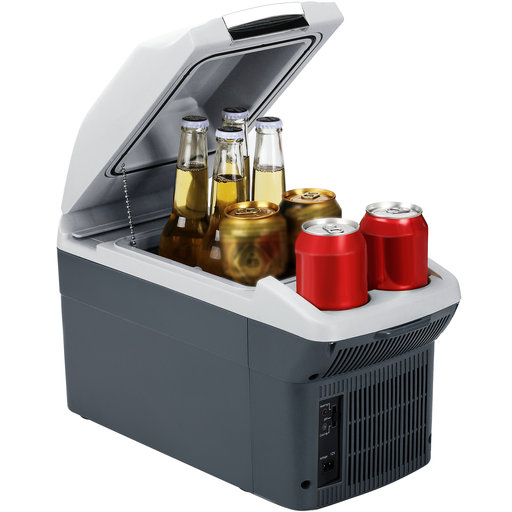
Why this model? This is an excellent compromise for those who want more capacity than a mini-cooler without investing in a compressor model. Its 9-litre capacity is perfect for a family on a day trip.
It offers a practical volume and a design made for the car (cup holders, strap), making it a smarter choice than a basic entry-level model. The optional AC adapter increases its versatility.
A good balance between capacity (9L), portability, and features (hot/cold). Its design is truly optimised for in-car use.
We have curated a full range of products that meet our criteria for performance and safety.
No. A thermoelectric cooler can only cool its contents by a fixed temperature difference (usually 18-22°C) from the outside air. Therefore, it cannot reliably reach sub-zero temperatures, especially in hot weather. To freeze, it's essential to opt for a compressor cooler.
The safest solution is to choose a model equipped with a battery protection system. This feature, often adjustable to several levels, monitors the voltage and cuts power to the cooler before the battery gets too low to start the engine. If your model doesn't have this, the golden rule is simple: unplug the cooler as soon as you turn off the ignition for an extended period.
Maintenance is simple but essential. Ensure the motor or compressor ventilation grilles are never obstructed to prevent overheating. After each use, clean the interior with a damp cloth and a mild detergent, then let it dry completely with the lid open to prevent bad odours. Finally, store it in a dry place and out of direct sunlight.