
Livraison le jour même ou le lendemain

Qualité garantie

Débloquez vos offres de bienvenue: Livraison GRATUITE | Jusqu'à -80 % | 30 jours d'essai gratuits à JoyPlus
Téléchargez l'application
A weekend van trip, a long day on the road, or a simple picnic with friends: a portable cooler is the essential accessory for keeping drinks and food chilled. The problem? The market is a jungle of often confusing marketing promises. One wrong choice guarantees disappointment: spoiled food, lukewarm drinks, and wasted money.
As the Head of Product Curation at Joybuy, my mission is to help you see clearly. Let's break down the pitfalls to avoid and the criteria that truly matter to find the perfect model for your needs, cutting through the marketing noise.
Ending up with a disappointing appliance is a classic scenario. To avoid falling into the trap, here are the three most common mistakes people make when buying.
To make the right choice, you first need to understand the technologies and features that truly set products apart.
This is THE number one criterion. Each technology has its purpose.
A cooler's versatility is also measured by its power options.
Rather than searching for a one-size-fits-all model that doesn't exist, it's better to choose one that matches your specific use case.
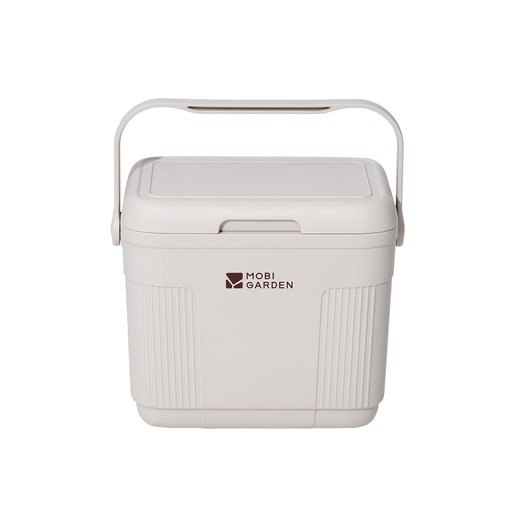
Why it's a match: Perfect for picnics, beach days, or fishing trips. Zero electronics means zero risk of malfunction or a dead battery. Its 22L capacity is well-sized for a family of 4 to 6 people.
As a passive insulated cooler, there are no false promises. Its performance is predictable and relies on good preparation: pre-chill the cooler and its contents, and don't skimp on the ice packs.
High-density PU foam insulation for long-lasting cold retention (up to 36-48h depending on conditions and ice packs). Food-grade materials (PP) and a silicone seal for a perfect airtight closure.
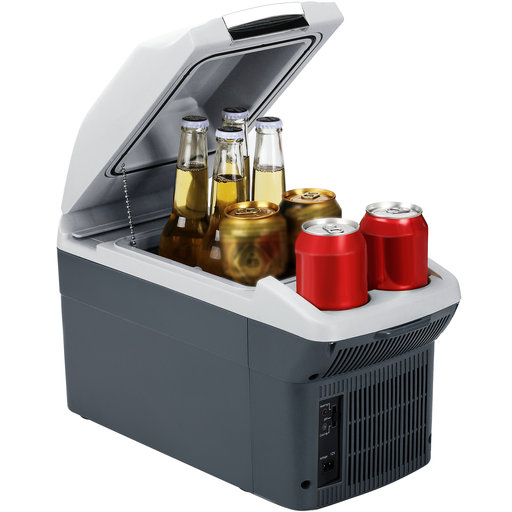
Why it's a match: Designed for road professionals, sales reps, or families on a road trip. Its compact size fits neatly on a passenger seat, and its integrated cup holders are a real plus for keeping drinks within easy, spill-free reach.
This thermoelectric car mini-fridge is honest about what it does: it's a solution for *maintaining* cold temperatures. Its quiet operation and cabin-focused design prevent the annoyances of larger or noisier models.
Operates on 12V DC, features a car-optimized design (cup holders, carrying strap), and has a dual hot/cold function for year-round versatility.

Why it's a match: For van life enthusiasts, long-term campers, or fishing aficionados who demand reliable refrigeration, or even true freezing. Its large capacity and energy efficiency make it the perfect ally for extended trips, even when off-grid.
As a compressor cooler, it obliterates performance issues by reaching -20°C, even in direct sunlight. It sidesteps the power consumption trap with its ECO mode and multi-source compatibility (12V/24V/220V, and even solar panels).
True refrigeration/freezing, remote control via Bluetooth app, ultra-efficient ECO mode, and a robust design with wheels for easy transport.
We have compiled a complete and up-to-date collection of products that meet our demanding selection criteria and current safety standards.
The difference is significant. A thermoelectric cooler chills relative to the ambient temperature (for example, 20°C lower); its effectiveness therefore drops in high heat. A compressor cooler works like a real fridge: it reaches a set temperature (e.g., 4°C or -18°C) regardless of the outside heat, all while being much more energy-efficient.
Yes, the risk is very real, especially with thermoelectric models that run continuously. To mitigate this risk, opt for models, particularly compressor types, equipped with a multi-level battery protection system. This feature cuts power to the cooler before the battery gets too low to start the engine. It's still wise not to leave it plugged in for hours with the engine off, unless you have an auxiliary battery.
For a passive cooler, it's all in the preparation.