
Livraison le jour même ou le lendemain

Qualité garantie

Débloquez vos offres de bienvenue: Livraison GRATUITE | Jusqu'à -80 % | 30 jours d'essai gratuits à JoyPlus
Téléchargez l'application
Whether for a long road trip, a van getaway, or simply keeping drinks cool at the office, the electric cooler has become an essential accessory. However, navigating a saturated market filled with misleading claims can be tough. Between overstated cooling performance and well-hidden design flaws, it's easy to make the wrong choice. As a product expert for Joybuy, my mission is to cut through the noise for you and highlight the criteria that truly make a difference.
Before you commit, watch out for these three common pitfalls that could turn your purchase into a real disappointment?:
This is the number one criterion, the one that will dictate the real-world performance and how you can use your cooler.
The Thermoelectric Cooler (Peltier effect)?: This is the most common technology in entry-level models, like a mini car fridge or a hot/cold cooler. Its principle?? An electronic module transfers heat from one side to the other.
The Compressor Cooler?: This uses the same technology as your kitchen refrigerator or a true RV fridge. A compressor circulates a refrigerant gas to absorb heat from the interior.
A good portable refrigerator must be versatile. Double-check the power options available?:
The absolute non-negotiable feature for mobile use is the battery protection system. This function, often adjustable to three levels (High, Medium, Low), automatically cuts power to the cooler when the vehicle's battery voltage drops. It's your safeguard against a dead battery, ensuring you can start your engine without a hitch.
Instead of just a list of spec sheets, we've selected models tailored to specific use cases. The goal is to help you find the cooler that will truly meet your needs.
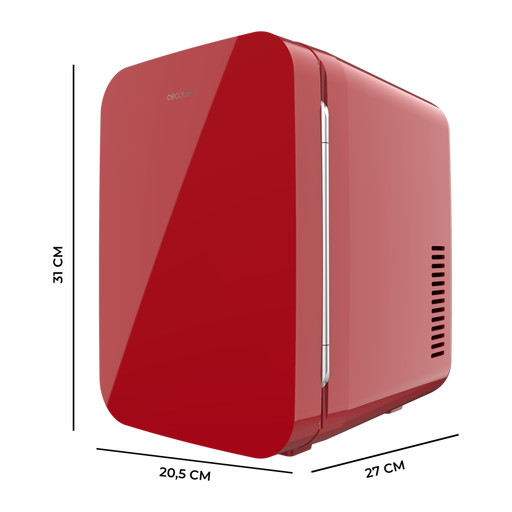
Why it's a great fit : Compact and lightweight, it's perfect for keeping a lunch, drinks, or medication cool during a car ride or at the office. Its dual power supply makes it highly versatile for secondary use.
This thermoelectric model is refreshingly honest : it keeps things cool without promising unrealistic freezing capabilities. This avoids the disappointment associated with limited performance.
Hot/cold versatility and an included dual 12V/220V power supply for both mobile and stationary use.
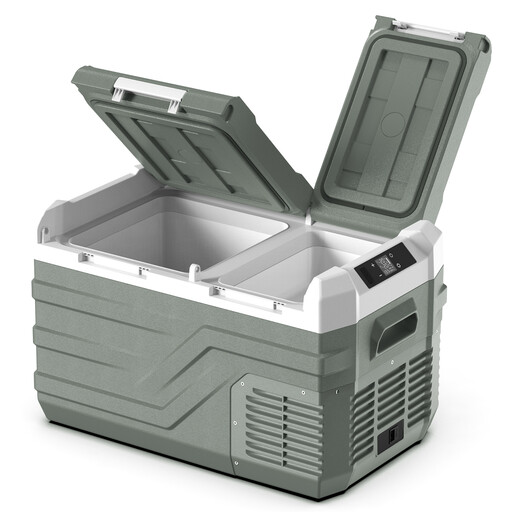
Why it's a great fit : For long trips, van life, or camping, reliable refrigeration is non-negotiable. This compressor model offers true performance and smart power management.
It includes a three-stage battery protection system, which eliminates the risk of a dead battery. Its compressor technology ensures a stable temperature, even in high heat.
A true portable freezer (down to -20°C) with an innovative dual-zone, dual-door design for easy access and organization.

Why it's a great fit : Truck drivers or tradespeople on the move need reliable and robust equipment. This compressor model is built for heavy-duty use, with 12V and 24V compatibility to suit both cars and heavy-duty trucks.
Its rugged design and proven compressor technology avoid the trap of flimsy, entry-level models. The dual AC/DC power and battery protection are a guarantee of reliability for daily use.
Fast and efficient cooling (down to -18°C), 12V/24V DC and 100-240V AC compatibility, and a 22L capacity suitable for several days' worth of provisions.
Our full selection features products that meet our performance criteria and current safety standards.
Absolutely. This is a very real risk with models that lack a battery protection system. This crucial feature monitors the voltage and cuts power to the cooler before the level becomes critical for starting the engine. It's a must-have feature when buying, especially if you choose a compressor cooler intended to run for long periods with the engine off.
The difference is night and day. A thermoelectric cooler cools relative to the ambient temperature. It's perfect for keeping drinks cool for the duration of a trip. A compressor cooler, on the other hand, works like a real fridge. It reaches and maintains a precise temperature (even sub-zero) regardless of the outside heat. It's the only technology that guarantees safe food storage over several days.
A passive (non-electric) cooler, like the models from Mobi Garden, is an excellent option for short-term needs (24 to 48 hours). Its effectiveness depends solely on the quality of its insulation and the number of ice packs you use. It's lighter, completely silent, and consumes no energy, making it a great companion for a picnic or a day at the beach. However, it can't compete with the consistency of an electric model for a multi-day trip.