
Livraison le jour même ou le lendemain

Qualité garantie

Débloquez vos offres de bienvenue: Livraison GRATUITE | Jusqu'à -80 % | 30 jours d'essai gratuits à JoyPlus
Téléchargez l'application
Switching from pre-ground to whole bean coffee is the first, and most important, step to revolutionising the quality of your brew. However, choosing an electric coffee grinder can quickly become a daunting task. Between marketing promises and opaque spec sheets, it's easy to make a purchase you'll regret. As a product expert for Joybuy, my mission is to help you see things more clearly. This guide breaks down the essential criteria to steer you towards a smart choice that fits your habits and your budget.
Before we dive into the technical specs, it's crucial to know the most common mistakes that lead to buyer's remorse.
The blade grinder trap. Often sold as low-cost "coffee grinders," these devices are actually just choppers. They pulverise the beans with no uniformity using a blade spinning at very high speed. The result: a mix of overly fine powder (which leads to bitterness) and overly coarse chunks (a source of sour under-extraction). For a consistent extraction and an aromatic coffee, a burr coffee grinder is non-negotiable.
The illusion of more settings. A grinder that boasts "50 settings" isn't necessarily more precise than one offering "30." True quality lies in the consistency of the grind and the actual incremental steps between each setting. For an espresso coffee grinder, micro-adjustments are essential to dial in the extraction time to the second—a detail most consumer-grade models overlook.
Ignoring retention and static electricity. Retention is the amount of ground coffee that remains trapped in the grinder after each use. High retention means stale coffee from the day before will contaminate your fresh morning grind. Likewise, static electricity can turn your countertop into a coffee-covered battlefield, a source of daily frustration.
To avoid making the wrong choice, focus on these three crucial technical points.
The heart of any good grinder is its burrs. Their work is what will define the quality of your grind.
The choice between flat burrs and conical burrs is therefore primarily a matter of taste and the type of coffee you prefer.
The ability to adjust the grind fineness is vital for switching between different brewing methods.
A smart design should save you from the worst chores. Look for low-retention models, meaning those with a short and direct chute that prevents ground coffee from accumulating. Some more sophisticated models integrate anti-static systems (like plasma generators) to ensure a clean, mess-free grind output.
Rather than an endless list, here are some options we recommend for different profiles, based on the criteria we've just covered.
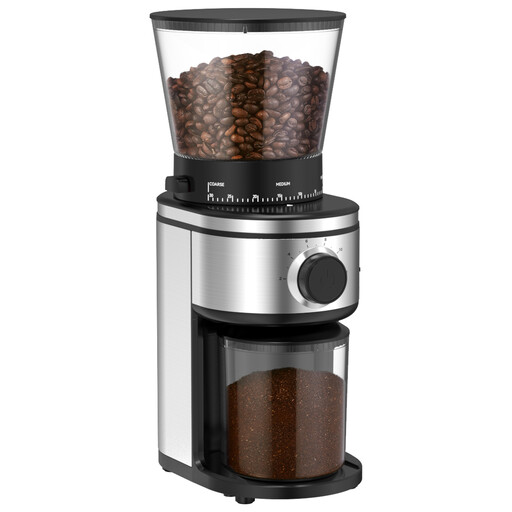
Why it's a good fit: Ideal for those saying goodbye to pre-ground coffee. It offers a true burr grind without breaking the bank and covers a wide range of methods, from French press to filter coffee.
It's equipped with conical burrs, ensuring a much more uniform grind than any blade grinder, thus avoiding pitfall #1.
Its 30 stepped settings offer great versatility and an intuitive experience for exploring different grinds without getting lost in complex adjustments.
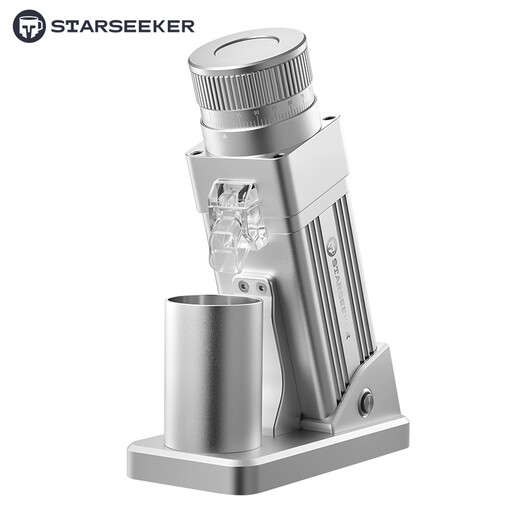
Why it's a good fit: Built for the home barista who demands total control over their espresso. Its robust construction and advanced features allow for professional-level precision.
Its stepless (micrometric) grind adjustment offers absolute precision, avoiding pitfall #2 of numerous but imprecise settings. The integrated plasma system actively combats static electricity (pitfall #3).
The 55mm titanium-coated conical burrs and all-metal body ensure a consistent grind and excellent durability, even with heavy use.
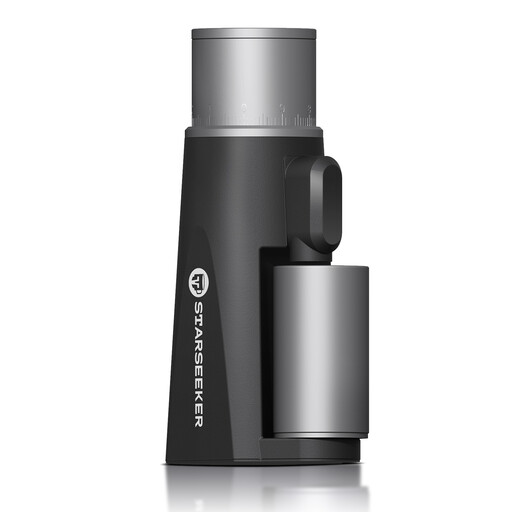
Why it's a good fit: For those who want excellent coffee absolutely anywhere: while travelling, at the office, or camping. It combines the quality of a burr grinder with the freedom of a wireless design, without the chore of a manual grinder.
Despite its compact size, it features real 38mm conical burrs and precise adjustment, delivering a grind quality that's light-years ahead of low-end portable gadgets.
Its wireless design, long-lasting battery, and compact form factor let you set up a quality coffee corner anywhere, without compromising on the grind.
We've compiled a complete, up-to-date list of products that meet our strict selection criteria.
The lifespan mainly depends on the burr material (steel or ceramic) and your frequency of use. For typical home use, steel burrs can grind between 250 and 500?kg of coffee before showing signs of wear, which translates to many years of use. On high-end models, the burrs are often replaceable, which further extends the life of the device.
Regular cleaning is crucial to preserve the flavours of your coffee. For weekly maintenance, unplug the device, then use a brush and an air blower to remove coffee residue from the hopper and the output chute. For a deep clean once a month, use grinder-specific cleaning tablets. Most importantly, never use water to clean the burrs: it's guaranteed to cause rust!
Yes, grinding coffee beans is inherently noisy. However, the noise level varies greatly from one model to another. Grinders equipped with DC (brushless) motors and good sound insulation are generally much quieter than entry-level models with high-speed universal motors. This is a factor not to be overlooked if you make your coffee at the crack of dawn.