
Livraison le jour même ou le lendemain

Qualité garantie

Débloquez vos offres de bienvenue: Livraison GRATUITE | Jusqu'à -80 % | 30 jours d'essai gratuits à JoyPlus
Téléchargez l'application
An electric coffee grinder can transform your daily coffee routine, but not every model is designed for the same uses. Espresso, filter coffee, cafetière, moka pot or coffee on the go: each method requires a different grind size and sufficiently precise adjustment.
Before you reach the checkout, three pitfalls come up time and again. The first is treating the number of settings as a reliable indicator of precision. The second is looking at the burrs without considering the motor that drives them. The third is static electricity: when ground coffee sticks to the walls or spreads around the container and portafilter, cleaning becomes a chore and some of the coffee ends up being wasted.
Here are the criteria to consider when choosing an electric coffee grinder suited to your habits in France, along with a selection of models for different types of user.
A burr coffee grinder crushes and cuts beans between two surfaces, unlike a blade model, which chops them. This design is generally preferred for achieving a more even grind.
Titanium, stainless steel or a metal alloy alone are not enough to guarantee better results. Instead, look at the stated dimensions, the type of adjustment and the available safety information.
A precision coffee grinder lets you adapt the grind size to the coffee you are using, your machine and your brewing method.
A stepped model, such as the Ollygrin BG705 with 14 settings, is easy to use. It is suitable for anyone who wants to switch from a fine grind to a coarser one without having to make endless blind adjustments.
Stepless adjustment offers more intermediate positions. The Starseeker E55 Pro states a graduation of 0.01 mm, while the EDGEmini model claims 100 adjustment levels. These figures reflect the specifications provided in the product listings, but they do not guarantee identical results with every type of bean.
For an espresso coffee grinder, prioritise a fine range with sufficiently gradual adjustments. For a filter coffee grinder, it is especially useful to be able to return quickly to a medium or coarse grind.
Ground coffee can stick to the walls because of static electricity, particularly in dry weather or with certain beans. An anti-static coffee grinder with a dedicated system can reduce the spread of ground coffee, but you will still need to empty the chute and container regularly.
Other points to check:
A machine designed for grinding roasted coffee should not be used to grind spices, cereals or green beans unless the manufacturer explicitly authorises it.
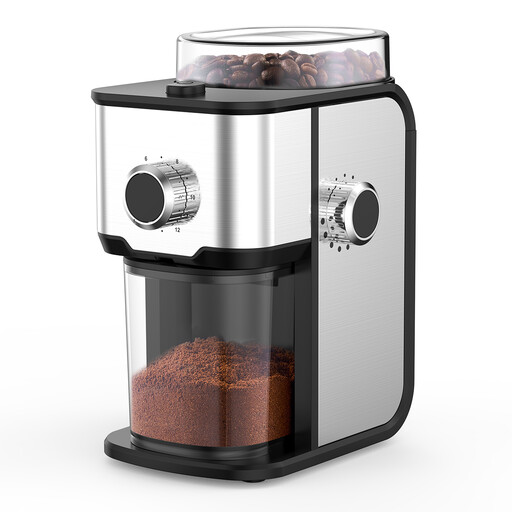
Why this model suits this profile: Its compact design, one-touch control and 14 settings make it particularly easy to use, whether at home or in the office.
The listing specifies the number of positions and the capacity for 2 to 12 cups, rather than making a vague promise of versatility.
Flat burrs, 14 stated settings and a capacity of 2 to 12 cups.

Why this model suits this profile: It is aimed at users who want to fine-tune their settings gradually, for both espresso and filter coffee.
The stepless adjustment and plasma anti-static system are presented as two separate features, making comparison easier.
55 mm conical burrs, stepless adjustment stated at 0.01 mm and a removable magnetic ground-coffee outlet.

Why this model suits this profile: Its touchscreen, programmable doses and compatibility with three portafilter sizes can fit seamlessly into an intensive espresso routine.
The 48 settings, stated 150 W power and supported portafilter sizes are clearly detailed in the listing.
48 positions, stated anti-static technology and support for 51, 54 and 58 mm portafilters.
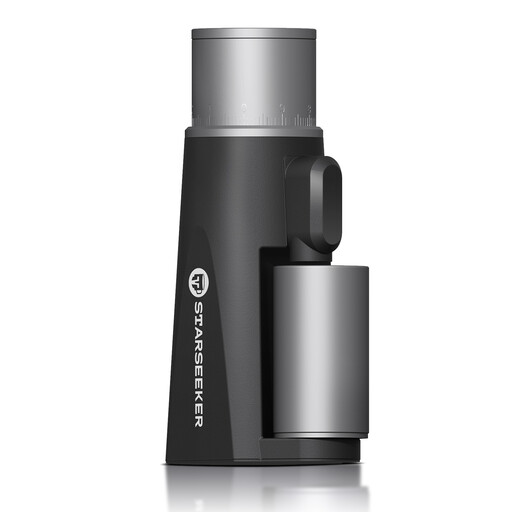
Why this model suits this profile: This cordless grinder runs on battery power and slips easily into a bag for travelling, working from home or enjoying the outdoors.
The listing mentions a 2,600 mAh battery and specifies that there is no anti-static system, so expectations are clear.
38 mm conical burrs, USB-C charging and adjustment across 100 stated levels.
We have put together a complete, real-time updated selection of products that meet these demanding criteria and European safety rules.
Start with a medium grind, then adjust it according to the brewing time and the taste of the coffee. A grind that is too fine can slow the flow of water, while one that is too coarse often produces a lighter, less aromatic cup. The best reference points vary depending on the beans and equipment you use.
Its lifespan depends on the motor, burrs, grinding frequency and maintenance. Remove residue with a suitable brush, never get the motor unit wet and unplug the appliance before cleaning it. Also follow the operating cycle specified in the manual.
It all depends on the motor’s power and how long the grinder is used. As grinding generally takes only a few seconds per dose, consumption mainly depends on how frequently you use it. With a cordless model, check the battery capacity, charging type and time required to reach a full charge.