
Livraison le jour même ou le lendemain

Qualité garantie

Débloquez vos offres de bienvenue: Livraison GRATUITE | Jusqu'à -80 % | 30 jours d'essai gratuits à JoyPlus
Téléchargez l'application
An electric cleaning brush can save you a fair amount of elbow grease on grout, tiles, the bathtub or floors. But not all models are created equal when it comes to your specific needs. A generous battery life on paper, an avalanche of accessories or a high waterproof rating aren't enough to guarantee the right choice for your home.
Here are the criteria to consider before buying an electric rotary brush, a cordless cleaning brush or a replacement brush for a household appliance.
A kit may include a multitude of heads without necessarily being suitable for every surface. A stiff brush designed for grout could mark a delicate material. Conversely, a head that is too soft will lack the bite needed for stubborn, set-in deposits.
Before ordering, check the nature of the accessories supplied and what each one is intended for:
Battery life varies depending on the speed selected, the pressure applied and the condition of the battery. The maximum duration measured under optimal conditions won't necessarily match an intensive cleaning session.
For regular use, opt for a rechargeable scrubbing brush fitted with a clear battery indicator. An LCD screen or a light lets you plan recharging and avoid running out of power mid-session.
IPX ratings are not interchangeable. An IPX6 device can withstand powerful water jets and splashes, but its main unit must not be immersed in water. An IPX8 device is designed to handle prolonged immersion under the conditions specified by the manufacturer – that doesn't mean you can skip reading the manual.
In all cases, remove the battery or follow the charging instructions to the letter, dry the connectors and never plug in a damp appliance.
A single speed may be enough for occasional cleaning, but it limits how well you can adapt to different materials. An electric bathroom brush offering two or three levels lets you start gently on a fragile surface, then increase the speed for grout or soap scum.
The values expressed in revolutions per minute, or RPM, indicate the head's rotation speed. On their own, they don't let you judge cleaning effectiveness. The pressure applied, the shape of the bristles and the cleaning product used also play a role.
For cleaning a shower, the bottom of a wall or a floor, an extendable handle saves you from having to bend down repeatedly. Check in particular:
A handle that is too long can quickly become cumbersome in a small bathroom. For worktops and sinks, a compact format is generally more manoeuvrable.
Ease of replacement is a factor not to be overlooked. Heads should fit without excessive play and be removable without complicated tools. For a floor washing appliance, only use a part designed for the specific model.
The BISSELL CrossWave HF3 replacement brush, for example, should not be chosen based solely on its shape. Check its compatibility with the CrossWave HF2 and HF3 references indicated by the manufacturer, as well as the dimensions of the part.
The models below cater to different needs. Their features are presented based on the information provided for each product.
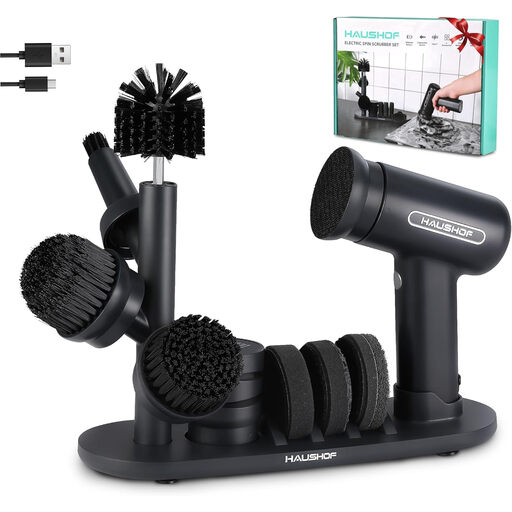
Why this choice suits this profile: Its LCD screen, three speeds and seven heads make it easy to get to grips with everyday tasks in the kitchen and bathroom.
The charge indicator limits unpleasant surprises, while the replaceable accessories mean you're not reliant on a single head.
Three rotation settings, an advertised battery life of up to 320 minutes, a storage base and IPX6 protection. The appliance must not be immersed.
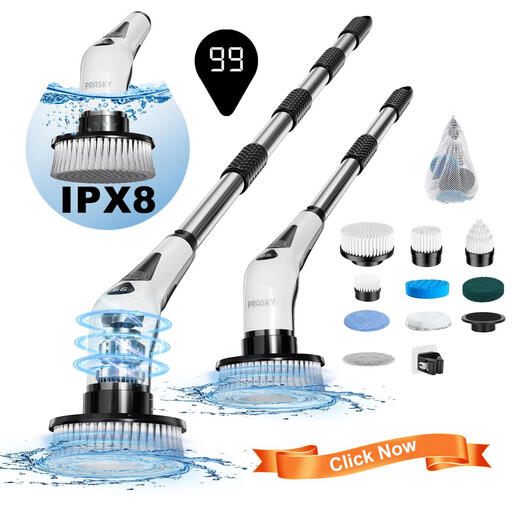
Why this choice suits this profile: Its four adjustable sections, LED screen and nine interchangeable heads are ideal for those seeking a complete setup for different spaces.
The adjustable length means you don't have to choose between a tool that's too short for floors or too bulky for vertical surfaces.
Advertised IPX8 protection, two speeds of 300 and 400 RPM, a 2,600 mAh battery and auto-stop in case of obstruction according to the product sheet.
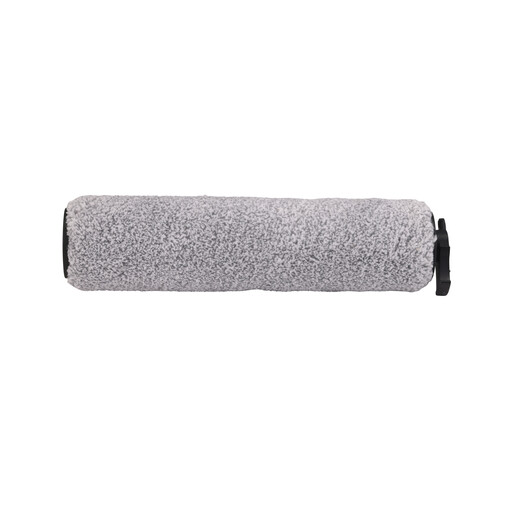
Why this choice suits this profile: This part is aimed at owners of a CrossWave HF2 or HF3 who want to replace the roller intended for cleaning hard floors.
Checking the reference before buying reduces the risk of ordering a part that looks similar but is incompatible.
Microfibre roller, stated dimensions of 24.6 × 6 × 6 cm and an advertised weight of 900 g. Compatible with several listed HF2 and HF3 references.
A motorised brush isn't always essential for car maintenance. A chenille wheel brush can be more suitable for reaching the inside of wheels, spokes and hard-to-access areas.
The 33 cm MF Wheel Brush Chenille has an advertised length of 35 cm in its description, soft microfibre fibres and a handle with a non-slip coating. Use it with a product suitable for your wheels, after checking its compatibility with their finish. Rinse the brush regularly so that a grain of dust doesn't scratch the surface on the next pass.
We've put together a comprehensive, real-time updated list of products that fully meet these strict selection criteria and European safety regulations.
For a standard bathroom, a battery life of 60 to 90 minutes can be enough for several short sessions. Larger homes or intensive cleaning jobs require a more enduring battery. However, check whether the advertised battery life corresponds to the minimum speed or standard use.
Yes, provided you choose a suitable head and start with moderate pressure. Old or crumbly grout may not cope well with overly abrasive action. Test on a small area before treating the whole surface.
Replace the accessory when its fibres are flattened, deformed, smelly or less effective despite cleaning. For an appliance part, follow the frequency recommended by the manufacturer and check the exact reference before ordering.