
Livraison le jour même ou le lendemain

Qualité garantie

Débloquez vos offres de bienvenue: Livraison GRATUITE | Jusqu'à -80 % | 30 jours d'essai gratuits à JoyPlus
Téléchargez l'application
Scrubbing tile grout, shower stalls, or cooktops by hand is a real chore. An electric cleaning brush promises to turn this tedious task into a breeze. But be warned: the market is flooded with models that make tempting promises but often deliver disappointing performance. To help you see clearly, we've broken down the common pitfalls to avoid and the criteria that truly matter before you buy.
Too many devices promise the world, only to let you down after just a few uses. Here are the most common flaws that turn a bargain into a buyer's remorse.
To ensure you make a solid choice and buy a device that will go the distance, focus on these three key parameters.
The performance of a rotary cleaning brush isn't just measured by its speed, but more importantly, by its torque. A good device should maintain its rotation speed even when you apply pressure to scrub away dirt. Opt for a model that offers multiple speeds:
For a cordless scrub brush, battery life is a non-negotiable feature. Prioritise models equipped with Lithium-ion batteries, which ensure a longer lifespan and faster charging. A runtime of at least 90 minutes of continuous use is an excellent indicator of quality. The inclusion of a USB-C charging port is also a real plus for its convenience and universal compatibility.
A good multi-surface cleaning brush should be a true Swiss Army knife. The quality and variety of the included heads determine its everyday usefulness. Ensure the base kit includes at least:
Instead of an endless catalogue, here are our targeted recommendations, designed for different user profiles and based on strict performance and durability criteria.
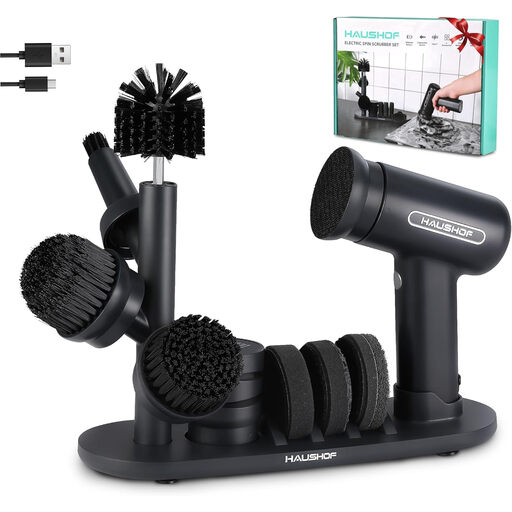
Why we chose it: For those who want a powerhouse against dirt, capable of cleaning everything from floor to ceiling without faltering on power or battery life.
This model checks all the right boxes: record-breaking battery life (up to 320 min advertised), 3 speeds to adjust power, and an IPX6 waterproof rating that can handle powerful water jets.
Its LCD screen, which displays the speed and remaining battery life, is a real everyday convenience. The ultra-complete kit with its 7 heads and storage base makes it a versatile and well-thought-out ally.
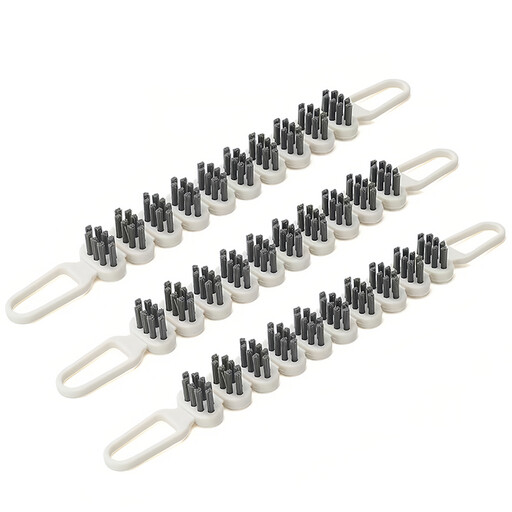
Why we chose it: To hunt down dirt in inaccessible nooks and crannies (around taps, window tracks, air vents...) where a standard electric brush gives up.
Rather than doing several things poorly, this kit excels at one thing: detail work. It's the ideal complement to an electric brush for a spotless clean, down to the smallest detail.
Their secret? Flexibility that allows them to get into every nook and cranny. The bristles are robust enough to clean effectively but gentle enough not to scratch chrome or delicate plastics.
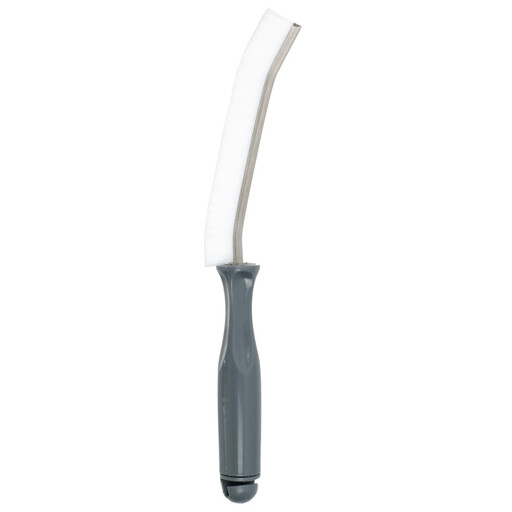
Why we chose it: Perfect if your only nightmare is tile grout. A remarkably effective and economical solution to solve the problem without investing in an electric device.
Why spend more? This manual brush saves you from the disappointment of a low-quality electric gadget. Reliable, sturdy, and specialised, it gets the job done with no frills and no battery to recharge.
Its nylon bristles are designed to last and attack grout lines without flattening. Its ergonomic handle ensures an excellent grip for effective scrubbing without fatigue.
Our selection doesn't stop here. Discover other models that have successfully passed our tests and meet all safety standards.
It all depends on the model! Entry-level versions often struggle to exceed 30 to 60 minutes. To avoid running out of power mid-task, aim for a minimum of 90 minutes of real-world runtime. That's the comfort threshold for cleaning an entire bathroom without stress.
Yes, but be sure to check its IP (Ingress Protection) rating. For worry-free use in the shower, demand a minimum rating of IPX6 (resistance to powerful water jets) or IPX7 (temporary immersion). A simple IPX4 rating, which only protects against splashes, is insufficient and unsafe. And unless the manufacturer states otherwise, never play submarine with your brush!
Proper maintenance is key. After each cleaning session, rinse the heads thoroughly with clean water to remove product and dirt. Shake them to remove excess water and let them air dry (on their stand is ideal). Most importantly, don't store them while still damp, as this can lead to mould growth. When the bristles look worn and deformed, it's time to replace them to maintain maximum effectiveness.