
Livraison le jour même ou le lendemain

Qualité garantie

Débloquez vos offres de bienvenue: Livraison GRATUITE | Jusqu'à -80 % | 30 jours d'essai gratuits à JoyPlus
Téléchargez l'application
Getting around the city can often feel like an obstacle course: traffic jams, crowded public transport, rising fuel prices… In the face of these challenges, the electric city bike is emerging as a mobility solution that is as sustainable as it is efficient. It allows you to cover longer distances effortlessly, arrive at your destination feeling refreshed, and, most importantly, rediscover the joy of riding in an urban environment.
But with an overwhelming number of options available, it's hard to know where to start. This guide is here to provide clear benchmarks and help you find the perfect urban e-bike for your daily life, whether for commuting, running errands, or weekend rides.
Before you dive in, let's review the features that will make all the difference on your city journeys.
This is what sets it apart from a conventional bike. Its location directly affects the bike's handling and your riding experience.
For daily commutes, comfort is non-negotiable. The frame's geometry plays a crucial role here.
A low-step electric bike (or "step-through" frame) is the king of the city. It allows you to get on and off with ease, even when wearing a skirt, a suit, or with a child seat attached. This is a significant advantage during frequent stops at red lights. A comfortable electric bike also means a well-padded saddle, an adjustable handlebar to maintain an upright posture, and ideally, a suspension fork to smooth out cobblestones and other road imperfections.
A fully equipped electric bike will make your life easier. For a hassle-free bike commute, check for these essentials:
To help you choose, our editorial team has scoured the market. Here are three models that stand out for urban use.
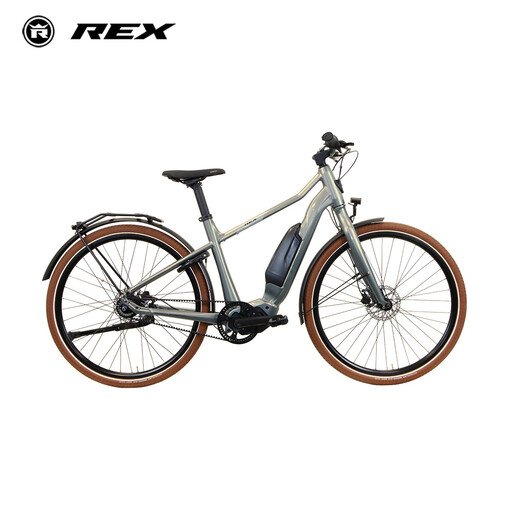
Why it stands out: Its secret weapon is the Gates Carbon Drive CDX belt instead of a traditional chain. This system is not only silent but also requires no lubrication and doesn't rust. It's the epitome of peace of mind, offering a virtually maintenance-free experience.
Advantages:
Who is it for? The pragmatic commuter who wants a reliable, clean, and low-maintenance city e-bike for their daily journeys.

Why it stands out: It features an Enviolo HD-148 continuously variable transmission, which is a game-changer. Forget the classic derailleur; this system allows you to change gears completely smoothly and without any jerking, even when stationary. It's absolute comfort in the city.
Advantages:
Who is it for? The urban cyclist seeking the ultimate in comfort and simplicity, with powerful assistance to venture beyond flat city streets.
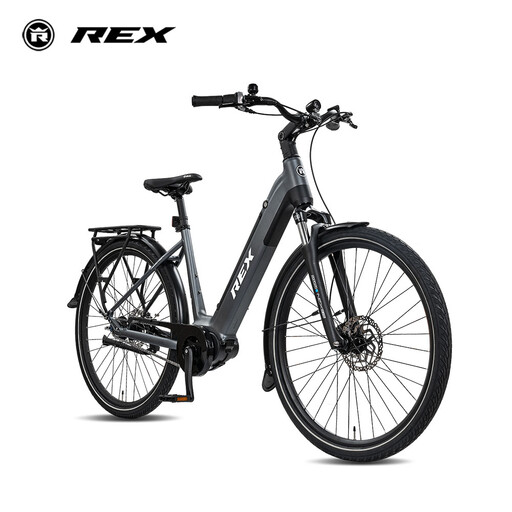
Why it stands out: This is the Swiss Army knife of our selection, offering an excellent balance of power, features, and versatility. Its Ananda M60 mid-drive motor with 70 Nm of torque provides robust assistance, and its MIK-compatible luggage rack makes it incredibly modular.
Advantages:
Who is it for? The all-rounder city dweller looking for a high-performance, modular e-bike to effortlessly juggle commuting, shopping, and weekend getaways.
Is your ideal bike not in this selection? Every cyclist is unique. To discover other models, whether they are urban e-bikes, electric trekking bikes, or accessories to customise your ride, explore our full range.
Discover our selection of electric bikes and accessories
An e-bike's range depends on many factors: battery capacity (in watt-hours, or Wh), assistance level, rider's weight, terrain, weather… For the models presented, which have batteries around 500 Wh, you can expect a real-world range of 50 to over 100 km. For urban use, this often means several days of commuting before needing to recharge.
While the nominal power of all e-bikes is limited to 250W in Europe, what really matters is the torque, expressed in newton-metres (Nm). For a mostly flat city, a torque of 40-50 Nm is more than enough. A torque above 60 Nm, like on the Rabeneick or the Rex Commuter+, will offer more punch when starting off and will be more capable on steep hills or when carrying heavy loads.
Maintaining an e-bike is very similar to maintaining a conventional bike, with a few key differences.