
Livraison le jour même ou le lendemain

Qualité garantie

Débloquez vos offres de bienvenue: Livraison GRATUITE | Jusqu'à -80 % | 30 jours d'essai gratuits à JoyPlus
Téléchargez l'application
Preparing fresh citrus juice at breakfast can quickly become part of your routine, provided you choose an appliance suited to your habits. A compact electric orange juicer may not be enough for a family, while a versatile juicer will take up more space and require a little more preparation.
Before placing your order, three pitfalls come up time and again: power figures highlighted without explaining their real-world value, a stated capacity that does not always match the usable volume, and cleaning described as quick even though pulp can collect in several hard-to-reach areas. Here are the criteria to consider when choosing an electric citrus juicer suited to a French kitchen and regular use.
A 150- or 600 W motor is not necessarily more effective at juicing oranges than a 30- to 60 W model. A dedicated citrus juicer generally uses a rotating cone and direct pressure. A slow juicer, on the other hand, is designed to process a range of fruits and vegetables.
Power should therefore be assessed alongside the mechanism used, the maximum continuous operating time and the reservoir capacity. To prepare a few glasses of orange or lemon juice, a 30- to 60 W citrus juicer may be perfectly adequate. If you want to expand your repertoire to include fruits and vegetables, a slow juicer or centrifugal juicer will meet a different need.
A large bowl does not necessarily mean you can serve a large quantity of juice without stopping. Check each of the following separately:
A high-capacity citrus juicer makes sense for several people, but an oversized reservoir can also make the appliance heavier, increase its footprint and extend the time required for washing up.
Pulp dries quickly around the filter, cone and pouring spout. An easy-to-clean citrus juicer should have removable components and come with clear instructions. The motorised base must never be immersed in water.
Also check for a drip-stop system, a non-slip base and pressure-activated operation. In France, confirm the specified voltage—typically 220–240 V for domestic appliances—as well as the manufacturer’s contact details and those of the responsible party established within the European Union.
An electric lemon juicer and an electric orange juicer often use a rotating cone. Simply cut the citrus fruit in half, then press it onto the cone. This system is suitable for oranges, lemons, limes and grapefruits, with minimal preparation.
A model supplied with two interchangeable cones will adapt more easily to different fruit sizes. A slow auger juicer is better suited to those who also want to prepare apple, carrot, cucumber or vegetable juices. However, it will not always offer the same convenience as an appliance designed specifically for citrus fruit.
For one person, a 400 to 700 ml reservoir may be sufficient for daily preparation. For a household, a 1 to 1.4 l bowl reduces the need for repeated refills. Remember to measure your worktop, particularly the available height beneath wall cabinets.
Weight also affects stability. A lightweight base should have non-slip feet to prevent it from moving while you apply pressure.
A stainless-steel citrus juicer may feature a stainless-steel base or filter, while the reservoirs and cones are generally made from plastic. Stainless steel does not eliminate the need to check how easily the appliance comes apart or what care instructions apply.
Do not assume that a component is dishwasher-safe: this information should appear in the product listing or the model’s instruction manual. For parts that are not dishwasher-compatible, rinse them in warm water with a mild detergent and avoid abrasive sponges.
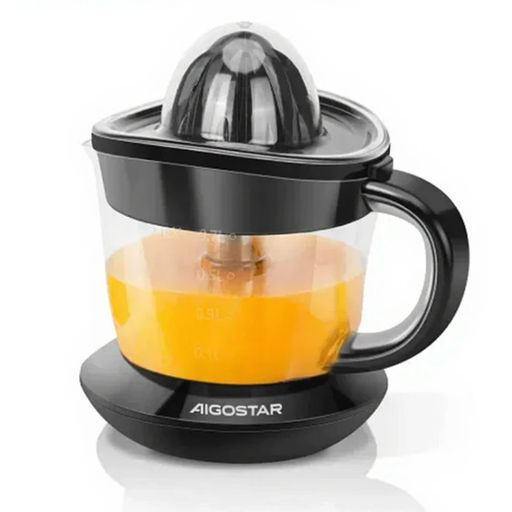
Why this model is a good fit: its compact design and 0.7 l reservoir suit one person or a couple who prepare juice a few times a week.
The product listing mentions two cones, bidirectional rotation and removable components. These details are more informative than a high power rating shown on its own.
40 W motor, 0.7 l reservoir, two cones and removable components listed as dishwasher-safe.
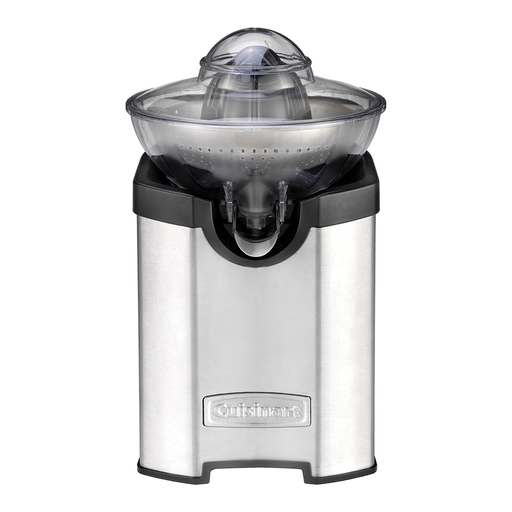
Why this model is a good fit: its brushed stainless-steel base, automatic cone and elongated pouring spout are ideal for those who want an appliance as polished as the rest of their kitchen.
The drip-stop system and removable components address two commonly underestimated issues: drips and cleaning.
Automatic cone, “Quick Press” function, long spout and drip-stop system listed in the product details.
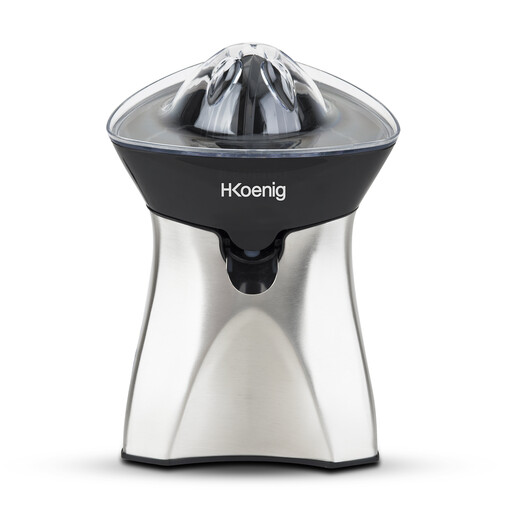
Why this model is a good fit: its two interchangeable cones make it easy to switch from lemons to oranges or grapefruit, with automatic pressure-activated operation.
The product details specify a drip-stop spout and protective cover—two small features that make a difference in everyday use.
60 W power, two cones and a drip-stop pouring spout. The removable components can be rinsed in warm, soapy water.
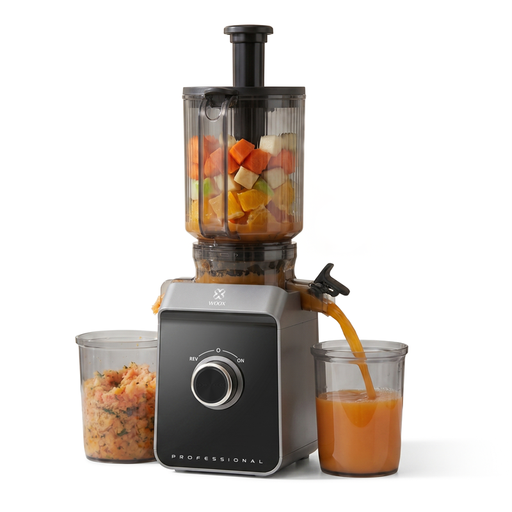
Why this model is a good fit: its 1.8 l chamber and fruit-and-vegetable-focused system are well suited to varied family-size preparations.
The chamber, juice glass and pulp container capacities are listed separately, making it easier to estimate the volumes genuinely available.
150 W motor, 1.8 l chamber, 726 ml juice glass, 836 ml pulp container and overheating protection.
We have curated an up-to-date selection of products that meet these selection criteria and the safety requirements applicable in France.
To keep your appliance in good condition, place it on a stable, dry and level surface. Cut the citrus fruit in half, select the appropriate cone and apply steady, progressive pressure. Avoid running the motor for longer than the duration specified in the instructions, and allow it to cool between cycles if necessary.
After every use:
With a slow juicer, follow the restrictions specific to your model: some appliances are not designed for ice cubes, frozen fruit, hard stones or sugar cane.
It depends on the motor’s power and how long the appliance is used. A 40- or 60 W appliance operated for just a few minutes generally uses very little electricity. A more powerful model may be worthwhile for other fruits and vegetables, but you should also consider preparation time and cleaning.
For one or two people, 400 to 700 ml may be enough. For several users, a capacity of 1 to 1.4 l reduces the need for repeated refills. However, check the reservoir’s usable volume and the space available on your worktop.
A citrus juicer is primarily designed for fruit cut in half and lets you prepare juice quickly. A slow juicer generally uses an auger or a similar mechanism to process a wider variety of fruits and vegetables. It often requires more chopping, disassembly and cleaning. The right choice therefore depends mainly on the produce you plan to prepare day to day.