
Livraison le jour même ou le lendemain

Qualité garantie

Débloquez vos offres de bienvenue: Livraison GRATUITE | Jusqu'à -80 % | 30 jours d'essai gratuits à JoyPlus
Téléchargez l'application
Making fresh orange juice at home sounds simple enough… until the appliance splashes all over the worktop, leaves too much pulp in your glass, or becomes a chore to clean. For families and daily fresh-juice lovers, choosing an electric citrus juicer is worth a bit of careful thought.
The market offers several technologies with sometimes misleading names: electric orange juicer, citrus juice extractor, citrus centrifuge, or even cold-press juicer. Yet these appliances serve very different needs.
High wattage doesn't automatically mean better yield. For a machine designed for oranges, lemons or grapefruits, the shape of the cone, the pressure applied and the quality of the rotation matter just as much as the number of watts.
A motor of 20 to 60 W is usually sufficient for everyday family use. A 200 W model, like some cold-press juicers, is better suited to multi-purpose use with chopped fruit and vegetables.
A filter that's too fine can slow down serving and clog quickly. On the other hand, a less thorough filter lets more bits through. If everyone at home prefers a different texture, it's best to choose an appliance with an adjustable pulp separation setting or several filtration levels.
The anti-drip function is also very handy: it limits drips when you remove your glass or stop the extraction. Of course, it doesn't replace cleaning after use.
Parts that come into contact with the juice must be easy to remove and rinse. A compact appliance with lots of hard-to-reach components is likely to end up at the back of the cupboard after a few uses. Also check whether the accessories are dishwasher-safe and whether a small cleaning brush is included.
Bidirectional rotation means the cone or mechanism changes direction during extraction. This feature can distribute pressure more evenly on the pulp and reduce blockages. You'll find it on several electric citrus juicer models from 20 to 60 W.
For occasional juice, automatic start by pressing down is usually enough. For a family, choose a motor designed to handle several fruits in a row and follow the rest times indicated in the manual to avoid overheating.
A 200 ml jug is fine for one or two glasses, while a capacity of 400 to 800 ml saves you from having to empty the appliance too often when serving several people. The ochama model boasts a 1.4 l capacity, but do check the space available in your cupboards and how easy the jug is to empty.
Measurement markings are useful for preparing a precise quantity. A spout that's high enough also lets you fill a glass directly, without having to transfer the juice.
The motor base must never be submerged. Removable parts should be taken off before washing, after unplugging the appliance. Also look for clear information about the materials that come into contact with food: the Bear CZJ-A04B1, for example, states it is BPA-free.
Stability matters just as much. A non-slip base stops the appliance from moving around on your worktop. Models without blades reduce the number of sharp parts, but moving parts should never be handled while the machine is running. Finally, check the electrical compliance and voltage compatibility with the UK mains supply on the product page.
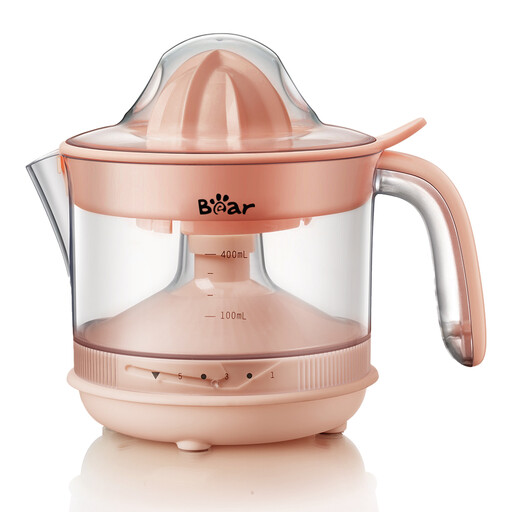
Why this choice suits this profile: Its compact size, 400 ml jug and 30 W power make it a reassuring choice for first-time use at home.
Its five pulp adjustment levels mean you're not stuck with one texture. The detachable design makes rinsing after each juice simple.
Five pulp settings, 110 mm feed chute, non-slip base and removable parts.
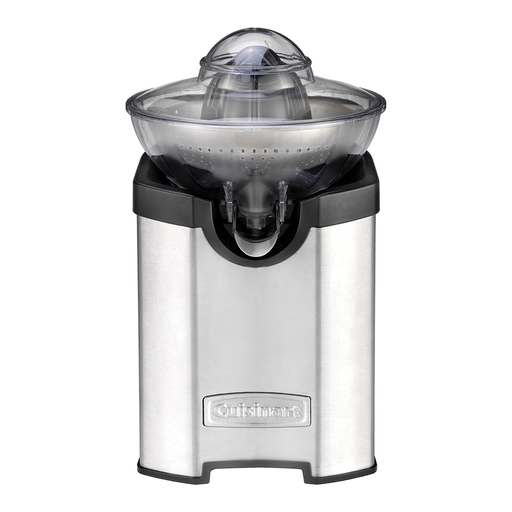
Why this choice suits this profile: Its brushed stainless steel base and compact design fit perfectly into a kitchen where the appliance stays out and ready to use.
The anti-drip system limits mess and the removable parts are designed for easy cleaning.
Quick Press lid, long spout compatible with several glass sizes and fast rotation function.
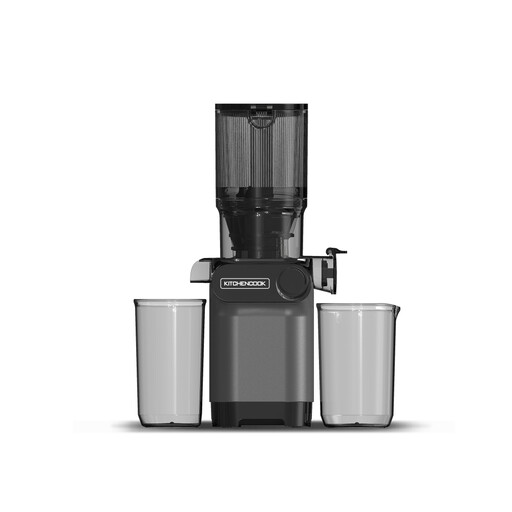
Why this choice suits this profile: This model is aimed at households that want to make citrus juices, but also process other fruit and vegetables with a single appliance.
The reverse function helps to unblock stuck ingredients. Automatic pulp separation saves you from having to strain each glass.
200 W power, stated speed of 45 to 70 rpm, 800 ml juice jug and anti-drip valve.
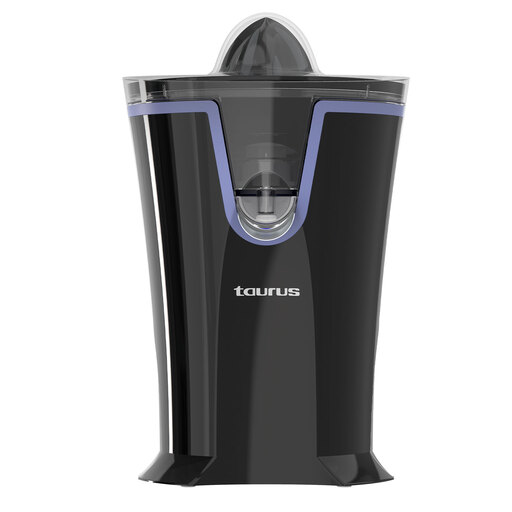
Why this choice suits this profile: Its two cones and graduated 200 ml jug make it easy to prepare small quantities, even with different citrus fruits.
The main parts, including the jug and cones, are stated to be dishwasher-safe.
40 W motor, dual-direction rotation, anti-drip spout and compatibility with glasses up to 14 cm tall.
We've put together a comprehensive, real-time updated list of products that meet these demanding selection criteria as well as European safety regulations.
An electric citrus juicer generally uses very little electricity, since each batch takes only a few minutes. The ongoing cost depends mainly on how often you make juice and the price of the fruit. To minimise waste, use fruit at room temperature and avoid letting juice or pulp dry inside the channels.
After each use:
An automatic citrus juicer of 20 to 60 W, with pressure-activated start, anti-drip spout and removable parts, is usually a great fit. For several people, a 400 to 800 ml jug will be more convenient.
A citrus juicer works mainly with fruit cut in half and a rotating cone. A cold-press juicer uses a screw or slow-pressure system, typically suited to pieces of fruit and vegetables. It's more versatile, but also bulkier and usually requires more preparation.
The lifespan depends on the quality of the materials, how often you use it and whether you respect the motor's rest periods. Regular cleaning, a stable base and not overloading it all help to preserve the appliance. Always check the manual for the permitted continuous running time.