
Livraison le jour même ou le lendemain

Qualité garantie

Débloquez vos offres de bienvenue: Livraison GRATUITE | Jusqu'à -80 % | 30 jours d'essai gratuits à JoyPlus
Téléchargez l'application
Making fresh orange juice for breakfast can be very straightforward, as long as you pick an appliance that genuinely matches your habits. A compact electric citrus juicer doesn’t meet the same needs as a cold-press juicer with a wide feed chute. Capacity, cleaning, rotation speed and pulp management all have a direct impact on everyday convenience.
Before you buy, three common mistakes keep cropping up.
For a single person or a couple, a reservoir of 200 to 400 ml can be perfectly adequate. A family would be better off looking at a model with 700 ml to 1.4 litres. Also check whether the juice collects in a dedicated jug or goes straight into a glass.
A citrus juicer that comes with several cones will generally handle lemons, oranges, limes and grapefruits. Different-sized cones are handy if you switch between small lemons and large citrus fruit. A wide opening makes preparation easier, but that doesn’t mean every fruit can be fed in whole.
For a classic electric orange juicer, a power rating of 30 to 60 W is usually enough for squeezing citrus fruit. Rotation in both directions helps you get more out of the pulp and cuts down on repetitive movements.
Cold-press juicers work differently. Their extraction screw turns slowly, often at 45 to 70 revolutions per minute, and can handle certain fruits and vegetables that have been cut up first. They are more versatile, but also bulkier and generally take longer to dismantle.
So power always needs to be considered in relation to the type of appliance. A 200 W electric juicer designed for slow extraction can’t be compared directly with a 40 W electric lemon squeezer.
Go for removable parts, surfaces that are easy to rinse and, where the manufacturer states it, components that are dishwasher-safe. The motor unit must never be submerged. Always unplug the appliance before taking it apart or cleaning it.
For family use, also check the stability of the base, whether there’s a drip-stop system and that no blades are accessible. These details help reduce splashes and make handling safer. The phrase “BPA-free” can be an extra consideration for parts that come into contact with food, but it doesn’t replace reading the manual and the manufacturer’s information.
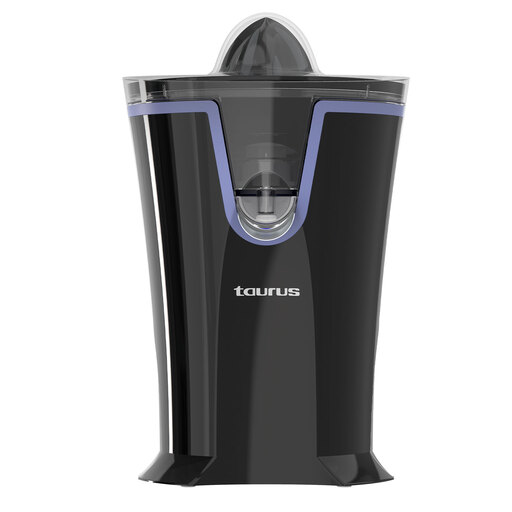
Why this choice suits this profile: With its 40 W motor, 200 ml reservoir and two cones, this model makes a good first juicer for one or two people.
The removable parts are said to be dishwasher-safe, cutting down the time spent on maintenance. The dual-direction rotation means you’re not relying on a single pressing motion.
Graduated 200 ml reservoir, two cones, drip-stop system and the ability to place a glass up to 14 cm high.
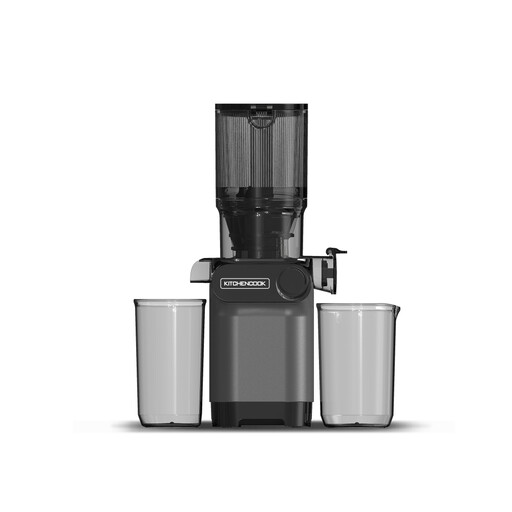
Why this choice suits this profile: This model is aimed at those who want to go beyond a simple automatic citrus juicer and prepare several types of juice at home.
The automatic pulp separation, reverse function and anti-drip spout help prevent blockages, residue build-up and overflow.
200 W power, stated speed of 45 to 70 rpm, 800 ml juice container, 600 ml pulp bin and a wide 108 mm feed chute.
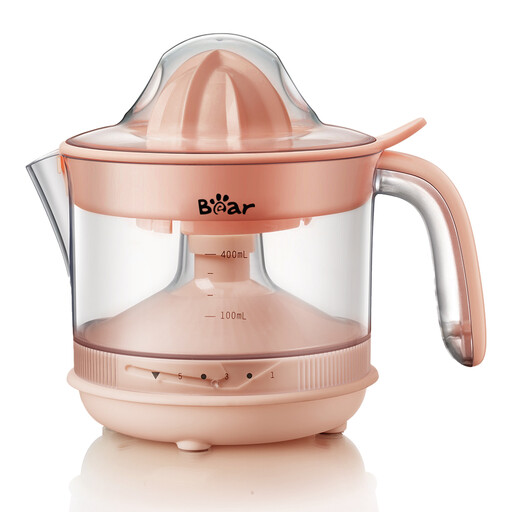
Why this choice suits this profile: Its 400 ml jug and five pulp settings make it easy to adjust the juice texture to suit individual preferences.
Its blade-free design and non-slip base meet the needs of family use, while the easy dismantling is said to simplify rinsing.
30 W power, 400 ml capacity, five pulp settings, BPA-free components and 220–240 V power supply.
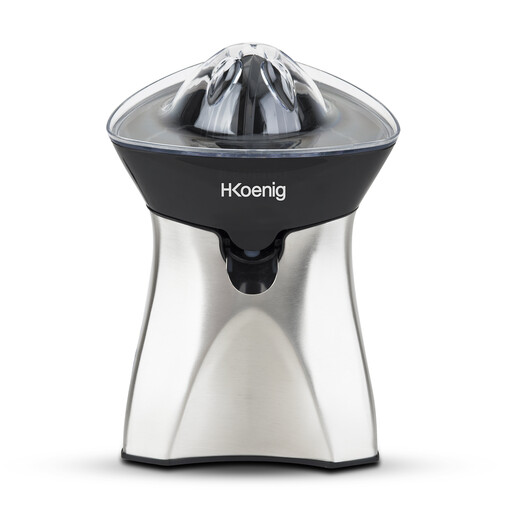
Why this choice suits this profile: Designed for citrus fruit and supplied with two cones, it lets you quickly prepare a single serving without accumulating extra accessories.
The drip-stop system helps keep your worktop clean, while the protective cover guides the handling during pressing.
60 W motor, two interchangeable cones, anti-drip spout and intended use for oranges, lemons, grapefruits and limes.
We’ve put together a comprehensive, real-time selection of products that meet these strict criteria as well as European safety regulations.
Models designed for citrus fruit typically have a modest power rating, between 30 and 60 W. Their consumption depends mainly on how long you use them. To avoid unnecessary cycles, prepare your fruit in advance, squeeze only what you need, then unplug the appliance after use.
Rinse the removable parts straight after squeezing to stop the pulp from drying on. Don’t overfill the jug, don’t press too hard on the cone, and stick to the operating times given in the manual. The motor unit can be wiped clean with a damp cloth, but must never be submerged in water.
The electric lemon squeezer is more compact and quicker for citrus fruit. The cold-press juicer is better suited to those who want to make blends of fruit and vegetables, with a generally larger capacity. So the right choice depends less on the stated power and more on the variety of recipes you have in mind and the volume you prepare each day.