
Livraison le jour même ou le lendemain

Qualité garantie

Débloquez vos offres de bienvenue: Livraison GRATUITE | Jusqu'à -80 % | 30 jours d'essai gratuits à JoyPlus
Téléchargez l'application
Preparing fresh homemade juice does not necessarily mean getting out a bulky appliance. An electric citrus juicer is all you need for morning oranges, lemons to add to drinks or grapefruit at the weekend. The key is to choose a model that suits your habits, rather than relying solely on the advertised power or promises of record yields.
A 150 W motor is not necessarily more effective than a 30 or 40 W model for juicing citrus fruit. An electric orange juicer relies above all on the rotation of a cone and the pressure applied to the fruit. For occasional use, moderate power is generally sufficient. A more powerful motor is mainly worthwhile if the appliance needs to run for longer or process a wider variety of foods.
Pulp and citrus membranes dry quickly in the filter. If the appliance is awkward to take apart, it may end up at the back of a cupboard after just a few uses. Before buying, check for removable parts, washing instructions and whether the cone, filter and reservoir can be rinsed quickly.
A large-capacity citrus juicer can be useful for a family, but its reservoir and base take up more room on the worktop and in cupboards. Also remember to distinguish between the stated capacity and the amount actually poured into a glass. For one person or a couple, a 400 to 700 ml bowl will often be easier to store.
Interchangeable cones make it easier to adapt the appliance to oranges, lemons, limes and grapefruit. Some appliances also offer an adjustable pulp setting. The Bear CZJ-A04B1, for example, advertises five adjustable pulp levels, allowing you to adjust the texture to suit everyone’s preferences.
A blade-free citrus juicer works with a pressing cone rather than a sharp blade. This design can make handling simpler, but it does not remove the need to follow the manufacturer’s instructions or keep your fingers away from moving parts during use.
For two people, a capacity of 400 to 700 ml is generally suitable for juice that will be consumed immediately. For a family, a reservoir of at least 1 litre means you will not need to refill it as often. The ochama model is advertised with a capacity of 1.4 L, while the WOOX MX0289 has a 1.8 L chamber and a juice cup advertised at 726 ml, with a maximum 600 ml graduation.
Here are the features to check:
The electrical power of a citrus juicer is generally moderate. Running costs therefore depend mainly on how often and how long it is used. In all cases, unplug the appliance before taking it apart or cleaning it.
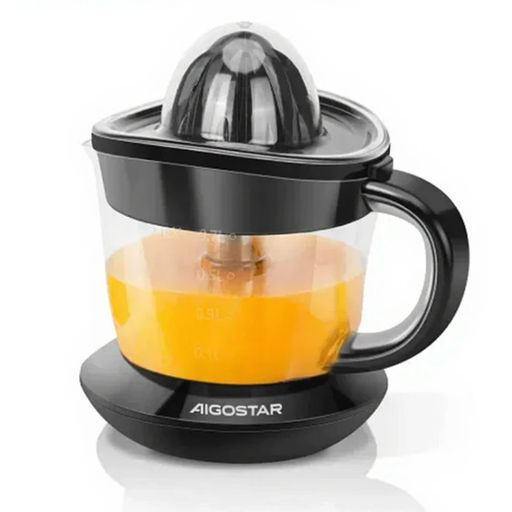
Why this choice suits this profile: its 0.7 L format is suitable for one person or a couple. Its two cones allow you to juice different sizes of citrus fruit without accumulating extra accessories.
The capacity is clearly stated, and the appliance does not rely entirely on high power: it combines a 40 W motor with rotation in both directions.
Two cones, 0.7 L capacity, compact design and removable parts advertised as dishwasher-safe.
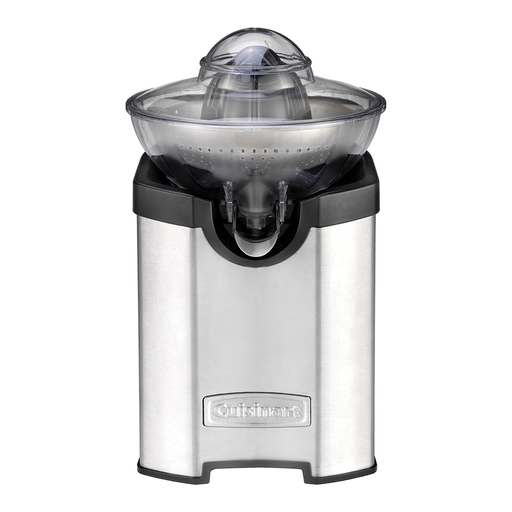
Why this choice suits this profile: its brushed stainless-steel base, automatic cone and drip-free system fit perfectly into a stylish kitchen that is used regularly.
The advertised removable components make washing easier. The long spout and drip-free system also help to prevent drips when serving.
Automatic cone, fast rotation, brushed stainless-steel filter and compact storage.
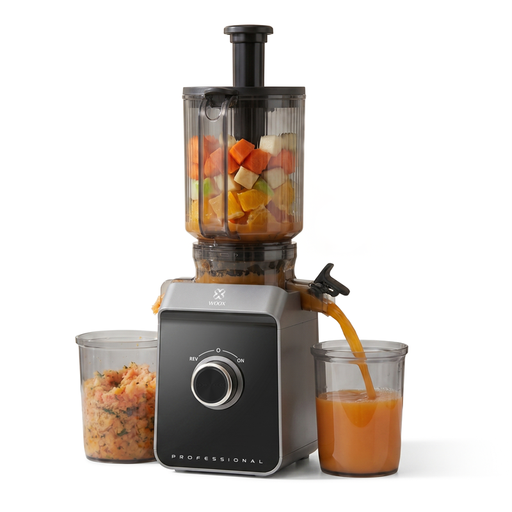
Why this choice suits this profile: it is designed for households that want to juice citrus fruit as well as certain fruit and vegetables, thanks to its 1.8 L chamber and separate juice cup.
Its large capacity reduces the need for refilling, while overheating protection and the advertised maximum continuous operating time of 10 minutes help to keep each session within safe limits.
150 W motor, 130 mm opening, separate collection containers and cleaning accessories included.
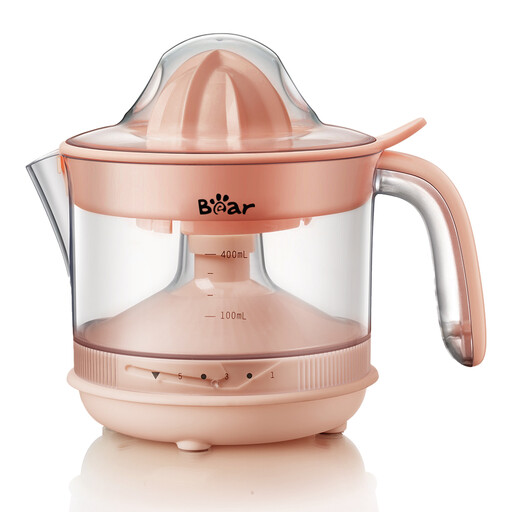
Why this choice suits this profile: its pressing action, 400 ml format and blade-free design are suitable for simple home use, preparing one quantity at a time.
The advertised easy disassembly makes cleaning simpler, while the non-slip base helps to prevent movement on a stable surface.
30 W power, five pulp settings, 110 mm chute, advertised BPA-free materials and detachable parts.
We have put together a complete, real-time updated selection of products that meet these demanding criteria, as well as European safety standards.
Cut the citrus fruit in half, choose the right cone and press down gradually. There is no need to force it if the motor starts to slow down. After each preparation, quickly rinse the filter and cone to prevent the pulp from drying. Clean the motor base with a damp cloth, never under the tap.
Whether you use an orange juicer or a versatile model, also follow the limits concerning the foods it can process. Some appliances cannot handle frozen fruit, ice cubes or very fibrous ingredients. Always consult the instructions to check the maximum continuous operating time and recommended cooling period.
An automatic citrus juicer with a rotating cone, drip-free spout and removable parts is generally very convenient. For one or two people, a capacity of 400 to 700 ml is often sufficient. For a family, it is better to choose a larger reservoir or a model that allows you to serve the juice directly into a jug.
It depends on the motor power and how long the appliance is used. The models featured have outputs of between 30 and 60 W for appliances designed for citrus fruit. As juicing generally takes only a few moments, consumption mainly depends on the number of preparations made each day and the duration of each cycle.
Its lifespan depends on the motor, how regularly it is cleaned, whether recommended breaks are observed and whether it is protected from overloading. Do not run the appliance for longer than the stated time, never immerse the motor unit in water and replace any damaged part before using it again.