
Livraison le jour même ou le lendemain

Qualité garantie

Débloquez vos offres de bienvenue: Livraison GRATUITE | Jusqu'à -80 % | 30 jours d'essai gratuits à JoyPlus
Téléchargez l'application
There’s nothing like freshly squeezed citrus juice to start your day right. A simple pleasure, in theory. In practice, however, choosing the right appliance can be a daunting task. Faced with an overwhelming number of models, it's easy to be tempted by the wrong one and watch your new purchase end up at the back of a cupboard. Our mission? To help you decode the technical specs and avoid marketing traps to find the appliance that’s truly right for you.
To make sure you don't make a mistake, here are the three most common errors to avoid:
To avoid buyer's remorse, here are the characteristics that really make a difference in day-to-day use.
It's simple: an easy-to-clean citrus juicer is a citrus juicer you'll actually use. There are two key things to check:
Unlike a juice extractor designed for root vegetables, an electric citrus juicer doesn't need an excessive amount of power. A power rating between 30 and 40W is more than enough to extract juice from oranges, lemons, or grapefruits without straining.
A much smarter feature to look for is the auto-reversing cone. This simple function allows the cone to alternate its rotation direction to squeeze the pulp down to the last drop. This optimises the yield, leaving no waste.
The design of the appliance should fit your habits.
To illustrate these criteria in practice, here are three models that meet very different needs.
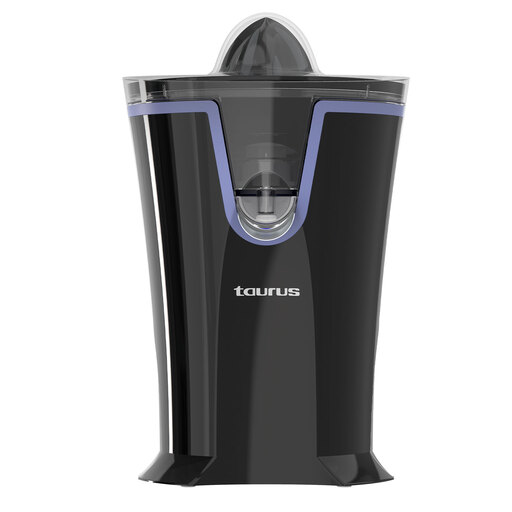
Who is it for? Perfect for a single person or a couple who wants fresh juice, right away. Its design allows you to juice directly into a glass (up to 14 cm high) for a no-fuss morning routine.
It avoids the tedious cleaning trap: its removable parts are dishwasher-safe, and its anti-drip system ensures a spotless countertop.
The direct-to-glass service, combined with the anti-drip system. Its 40W motor with an auto-reversing cone ensures optimal extraction.
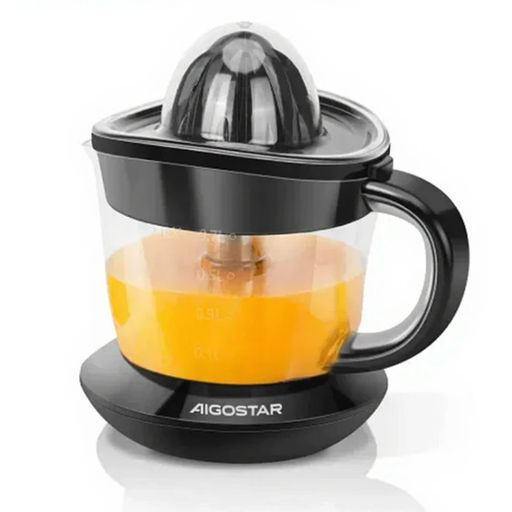
Who is it for? The versatile choice for couples or small families. Its 0.7-litre reservoir can prepare 2 to 3 glasses of juice at once, without taking over your countertop.
It doesn't sacrifice practicality for capacity. Its removable parts are dishwasher-safe, which solves the cleaning chore, even after a large batch of juice.
The perfect balance, with its 0.7L reservoir. It comes with two different-sized cones to accommodate both lemons and oranges.
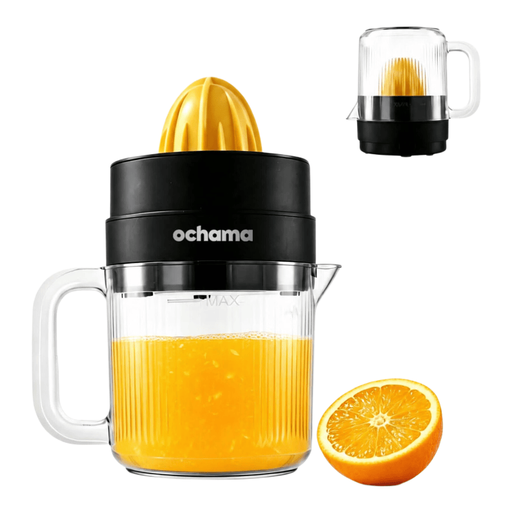
Who is it for? Designed for large families or those who love lots of juice. Its extra-large 1.4-litre pitcher is perfect for Sunday brunch, saving you from having to make another batch mid-meal.
Despite its generous size, its design makes disassembly and cleaning easy. The absence of exposed blades is also a safety feature, which is reassuring in a family kitchen.
Its very large 1.4L capacity, ideal for family use. All this with a safe design and removable parts for hassle-free maintenance.
Discover our full selection of products that meet our demanding selection criteria and current safety standards.
For citrus fruits like oranges, lemons, or grapefruits, a power of 30 to 40W is more than enough. There's no need to aim higher: a more powerful motor won't add anything but noise. The most important factors are the motor's torque and the cone's design.
The ideal choice is a model with removable parts (cone, filter, reservoir) that are dishwasher-safe. For hand washing, the secret is speed: rinse the parts under warm water immediately after use to prevent the pulp from drying and sticking.
It all depends on the build quality and how often you use it. A well-made model that is properly maintained can last for many years. Pro tip: avoid running the motor for too long continuously to prevent overheating and thus extend its lifespan.