
Livraison le jour même ou le lendemain

Qualité garantie

Débloquez vos offres de bienvenue: Livraison GRATUITE | Jusqu'à -80 % | 30 jours d'essai gratuits à JoyPlus
Téléchargez l'application
An electric charger can refer to anything from a car charging point to a 12V battery charger, a USB-C adapter or a power bank. This variety doesn't make choosing any easier: a very powerful model isn't necessarily compatible with your setup, and the phrase "fast charging" doesn't guarantee the same charging time from one device to another.
Before placing an order, three mistakes crop up time and again among private buyers in the UK:
For an electric or plug-in hybrid vehicle, start by checking the power your car can accept and what your home installation can supply.
For prolonged use at 16A, choose a UK 3-pin socket that is in perfect condition, properly earthed and, if possible, on a dedicated circuit. For a 32A wallbox, you must have a qualified electrician carry out the installation. The WOLFBOX AE07 model, for example, recommends installation by an approved electrician on a separate circuit with the correct residual current protection.
A Type 2 EV charger must match your vehicle's socket. The IEC 62196-2 standard is common on electric cars and plug-in hybrids sold in Europe. Also remember to check:
A versatile 12V and 24V battery charger must not be used without selecting the correct mode for your battery. For a motorbike, scooter or lawnmower, a compact 2A model may be sufficient. For a boat, lorry or large-capacity car battery, check the current and charging programme carefully.
The protections to look for include overvoltage, overheating, short-circuit, reverse polarity and leakage current protection. For outdoor use, water resistance should be interpreted with care: IP65 protects against dust and water jets, but does not mean the device can be submerged.
A timer, off-peak programming or a smart charger with an app can make daily use much easier. However, the app depends on your Wi-Fi connection, your phone and sometimes a third-party service. For a portable device, simple, reliable operation may be preferable to a connected feature you will hardly ever use.
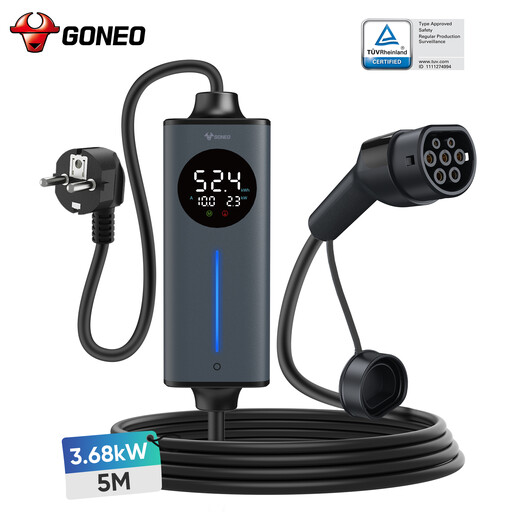
Why this choice suits this profile: This portable charger is ideal for drivers who want to start charging their car at home or take it with them, without installing a wallbox.
Voltage, current and charge status are displayed, while the current can be adjusted up to 16A. The listing also mentions earth detection and residual current protection.
Maximum power rated at 3.68kW, 5m cable, adjustable timer from 0 to 8 hours and protection against overheating and overvoltage.
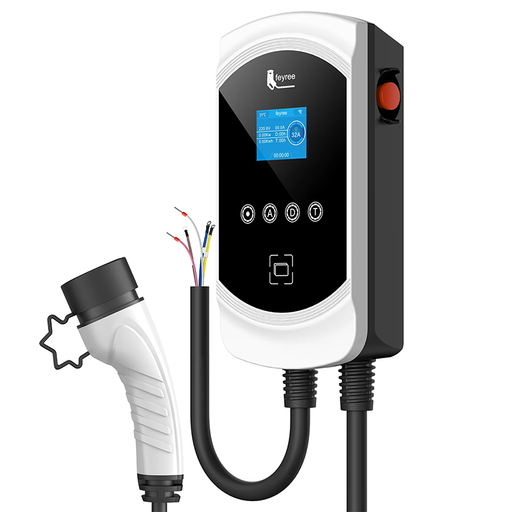
Why this choice suits this profile: This wallbox is aimed at households that charge their vehicle regularly and want to monitor their consumption from their phone.
The dynamic load balancing function adjusts the current according to the consumption of other appliances in the home, reducing the risk of overloading the circuit.
Adjustable up to 32A, rated power of 7.6kW, colour display, Tuya app, programmable timer and Type B residual current protection indicated.
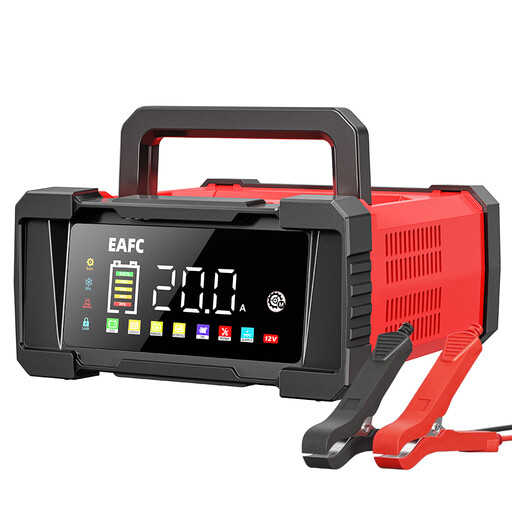
Why this choice suits this profile: It is suitable for motorists, bikers, boat owners and anyone with garden machinery who maintains several types of batteries.
Its seven modes let you select the battery type. The listing states that the pulse repair function is not suitable for completely flat or damaged batteries.
Compatibility stated for 12V and 24V batteries, maximum current of 20A in 12V mode, colour display and 2m cable.
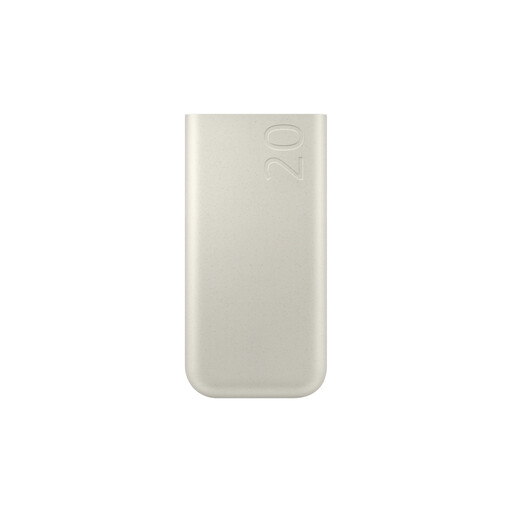
Why this choice suits this profile: This 20,000mAh power bank meets the needs of Samsung smartphone, iPhone, tablet or USB-C accessory users on the move.
The capacity, maximum power and number of ports are listed separately: three devices can be plugged in, but the available power depends on the combination used.
Three USB-C ports, maximum power rated at 45W and a 5A USB-C to USB-C cable supplied.
We have put together a comprehensive, real-time updated selection of products that meet these demanding criteria, as well as European safety regulations.
For a phone or earphones, choose a fast wireless charger or a 65W USB-C charger depending on the power your device can accept. The Baseus Cube Pro, for example, has two USB-C ports and one USB port, with a maximum power of 65W on one of the USB-C ports.
For an electric car, compare the parking time available, your electricity supply capacity and the cable length. A slow overnight charge can easily cover your daily journeys, without needing to install a more powerful charging point.
The cost depends on the energy consumed, the charger's efficiency and your electricity tariff. To estimate it, multiply the energy used in kWh by the price per kWh shown on your contract. Programming charging during off-peak hours can reduce your bill, but whether it is worthwhile depends on the difference between peak and off-peak rates and your usage habits.
A fixed 7kW charging point is not designed to be plugged directly into a standard socket. It must be installed on a circuit rated for the required current, with the necessary protections. For a domestic socket, choose a portable charger limited to a current that is compatible with your installation.
It depends on how often you use it, storage conditions, humidity and whether you observe correct polarity. Store the device in a dry place, protect it from knocks and regularly inspect the cable, clips and casing. A crack, a cable that gets hot or a battery that swells means you should stop using it immediately.