
Livraison le jour même ou le lendemain

Qualité garantie

Débloquez vos offres de bienvenue: Livraison GRATUITE | Jusqu'à -80 % | 30 jours d'essai gratuits à JoyPlus
Téléchargez l'application
Making the switch to an electric car is a major step, but the question of home charging can quickly become a daunting task. Between the different power levels, plug types, and smart features, it's easy to get lost. This guide is here to demystify the topic and help you choose the electric car charging station that is perfectly suited to your needs, your vehicle, and your home.
We break down the essential criteria to consider before you buy and present a selection of products that cater to every use case, from the high-performance wall-mounted Wallbox to the portable charger you can slip into your boot.
Before diving into our selection, a few technical basics are in order. To help you see more clearly, here are the three key points to master to refine your search.
Power, measured in kilowatts (kW), determines how fast your vehicle charges.
Crucial point: The installation of a charging station with a power level above 3.7?kW must be carried out by a qualified electrician (certified for EV infrastructure) to ensure a safe and compliant installation.
A smart Wi-Fi charger is no longer just a gimmick. Through a dedicated mobile app, it offers features that are as practical as they are economical:
The choice mainly depends on your situation (homeowner or tenant) and your driving habits.
Note that the majority of charging stations and vehicles in Europe use a Type 2 cable, which has become the continental standard.
Here is our selection of standout models, each designed to meet a specific need.
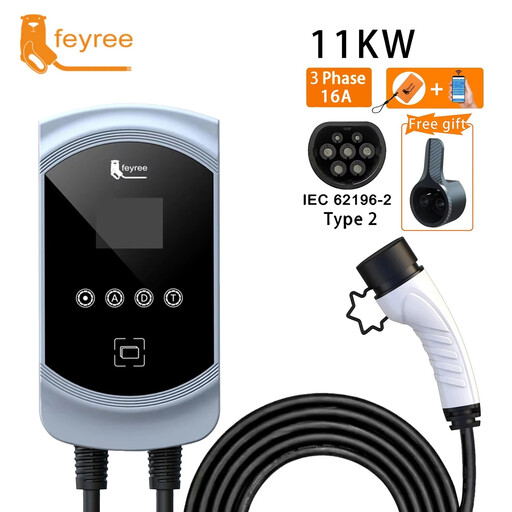
Its key feature: The performance of three-phase charging, combined with comprehensive smart management.
This wallbox is aimed at users seeking maximum efficiency. Its 11?kW capacity significantly reduces waiting times, provided you have a compatible electrical installation.
Advantages:
Who is it for? EV owners whose vehicles are compatible with three-phase AC charging, who have the appropriate electrical setup, and who want the ultimate in fast, connected home charging.
See details for the feyree 11 kW charger
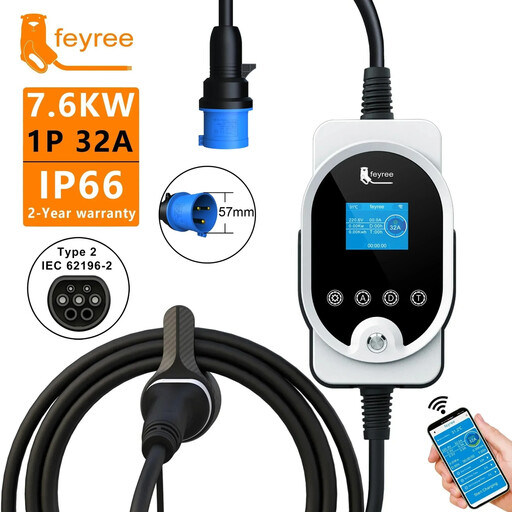
Its key feature: The perfect balance of performance, connectivity, and versatility for single-phase installations.
This 7?kW model is the ultimate versatile solution, suitable for the vast majority of users. It combines the robustness of a wall-mounted installation with the benefits of smart control, while being compatible with the most common electrical systems.
Advantages:
Who is it for? Drivers of EVs or plug-in hybrids looking for a connected and efficient solution for their single-phase installation, with the added flexibility of portable use.
Discover the feyree 7 kW charger
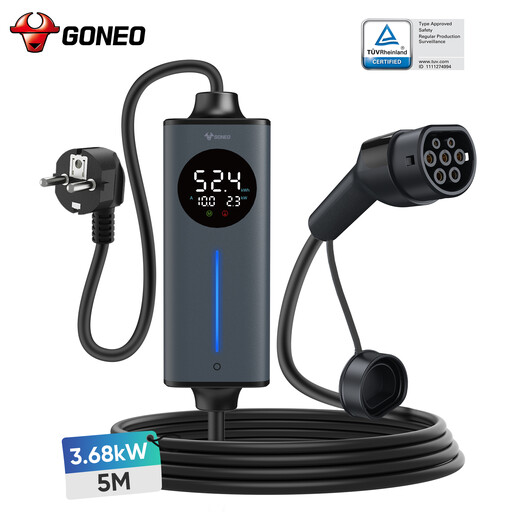
Its key feature: The absolute plug-and-play simplicity for on-the-go charging, with no installation required.
This portable electric car charger is the champion of convenience. It plugs directly into a standard domestic socket (Schuko socket), eliminating the need for a complex installation. It's the ideal solution for occasional charging or for when you're on the move.
Advantages:
Who is it for? Tenants, owners of plug-in hybrid vehicles (PHEVs) with small batteries, or any EV driver looking for a reliable and easy-to-transport backup solution for trips.
Check out the GONEO portable charger
This selection is just a glimpse of the solutions available on the market. Every vehicle and every driver has unique needs. If these models don't perfectly match your requirements, don't worry: the market is full of other options.
To discover a wider range of solutions, from cables to accessories, explore our complete category of electric chargers.
It all depends on your daily commute and your electrical installation.
Yes, it's possible using a portable electric car charger designed for a Schuko socket. However, the charging power will be limited (usually between 2.3 and 3.7?kW), which means much longer charging times. For regular use, it is safer to have your wiring checked by a professional.
Yes, and in most cases, it's a legal requirement. In many countries, regulations require the intervention of a qualified electrician with certification for EV charging infrastructure for any station with a power level above 3.7?kW. This is not only a guarantee of safety and compliance but also an essential condition for being eligible for government grants or being covered by your insurance.