
Livraison le jour même ou le lendemain

Qualité garantie

Débloquez vos offres de bienvenue: Livraison GRATUITE | Jusqu'à -80 % | 30 jours d'essai gratuits à JoyPlus
Téléchargez l'application
Making the switch to electric is a major step. But very quickly, the question of home charging comes up. While a standard household outlet can get you by in a pinch, it quickly proves to be insufficient and less than secure for daily use. Investing in a dedicated electric car charging station is the most reliable and convenient solution to recharge with complete peace of mind.
Power, connectivity, single-phase or three-phase installation… Navigating the jungle of available models can be daunting. This guide is here to demystify the topic and help you choose the perfect charger for your car, your home, and your lifestyle—all without any confusing jargon.
Before diving into our top picks, let's review the key points to consider to ensure you make the right choice.
The charger's power directly determines the charging speed. It must be compatible with both your vehicle's maximum charging capacity and your home's electrical service.
The choice will depend on your habits and where you park.
A smart charging station unlocks highly practical features via a mobile app:
Our editorial team has analyzed the market to bring you a selection of three products with compelling value, each tailored to specific needs.
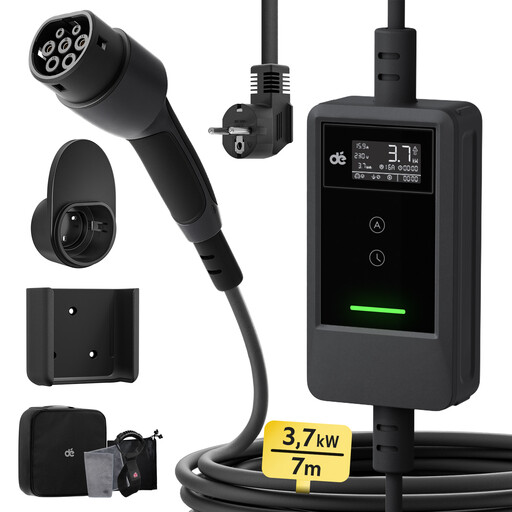
What sets it apart This portable EV charger is all about simplicity and versatility. It's the ultimate on-the-go solution: just plug it into a standard household outlet, select the amperage that suits your electrical system, and charging begins.
Key Features
Who is it for? For EV drivers on the move, renters, or anyone looking for a reliable, hassle-free backup charging solution. It's also an excellent choice for owners of plug-in hybrid vehicles (PHEVs), whose smaller batteries don't require high-power charging.
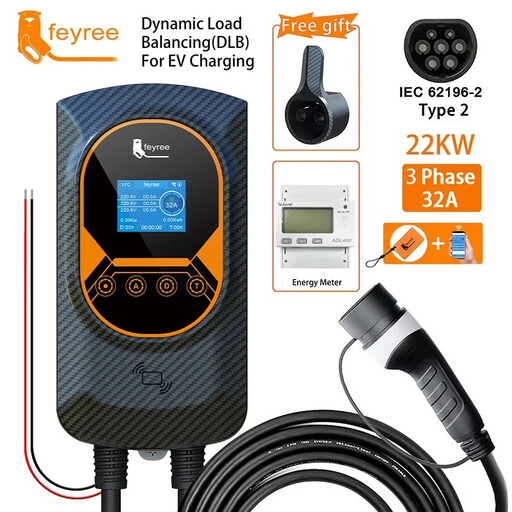
What sets it apart Here, we're kicking things up a notch. This 22 kW wallbox is built for performance. Its key advantage is the Dynamic Load Balancing (DLB) feature: the charger intelligently manages the power allocated to the car to never overload the home's electrical grid, even when other energy-hungry appliances are running.
Key Features
Who is it for? For homeowners with a three-phase electrical installation and a compatible vehicle. This is the go-to choice for anyone who wants the fastest possible home charging while intelligently managing their energy consumption.
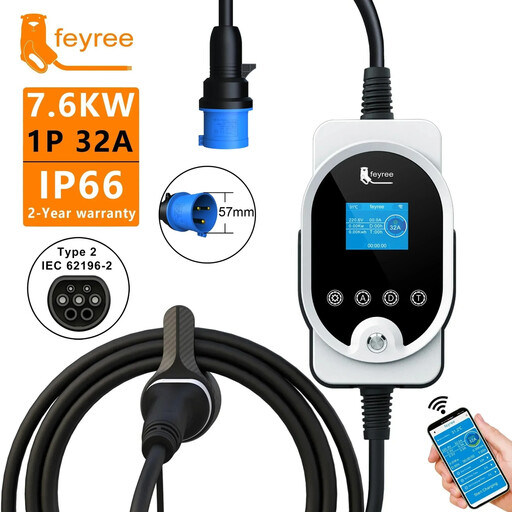
What sets it apart The Swiss Army knife of home charging. This 7 kW wallbox checks all the boxes: the ideal power for single-phase installations, comprehensive smart features, and a hybrid design that allows it to be used as a portable charger.
Key Features
Who is it for? For the vast majority of EV users in single-family homes with a single-phase installation. It offers the speed, safety, and smarts of a modern charger, with the added bonus of a versatility that's rare on the market.
Does your situation not fit any of these scenarios? Don't worry, the market is full of options. To find the model that's a perfect match for you, we invite you to explore a more comprehensive range.
? Discover our entire category of EV Charging Cables and Stations
1. What charger power level should I choose for my car? The ideal power depends on two factors: the maximum AC charging power your vehicle accepts (found in its documentation) and the capacity of your home's electrical service. A 7 kW wallbox is often the most balanced choice for a single-phase installation. A 22 kW wallbox only makes sense if your home has a three-phase supply AND your car can accept that power level.
2. Is it mandatory to hire a qualified electrician? For a portable charger that plugs into an existing outlet, professional installation is not required. However, it is highly recommended to have the outlet inspected by a professional if you plan to use a high current (16A) for extended periods. For the installation of a wall-mounted charger (Wallbox) of 7 kW or more, hiring a qualified electrician is strongly recommended and often legally required. This ensures a safe installation and is typically a condition for qualifying for government rebates or incentives.
3. What is dynamic load balancing and is it really useful? Dynamic load balancing is a feature that measures your home's total electricity consumption in real time. If you turn on several energy-hungry appliances (like an oven, heater, etc.), the charger automatically reduces the car's charging power to avoid exceeding your electrical service's limit and tripping the circuit breaker. It's an extremely practical feature for optimizing charging without needing to upgrade your electrical service, which can save you money on your utility bill.