
Livraison le jour même ou le lendemain

Qualité garantie

Débloquez vos offres de bienvenue: Livraison GRATUITE | Jusqu'à -80 % | 30 jours d'essai gratuits à JoyPlus
Téléchargez l'application
An electric blender can whip up a smoothie, soup, sauce or purée in just a few minutes. Yet some purchases quickly disappoint: an appliance that's too small for the whole family, a motor that overheats, fiddly accessories to clean, or a power rating that doesn't reflect real-world performance.
Before comparing prices, it's worth spotting the most common pitfalls and focusing on the criteria that will genuinely make a difference day to day.
Power, measured in watts, tells you about the motor, but it alone can't predict the texture you'll achieve. The shape of the jug, the blade design, the quantity of ingredients and the addition of liquid all play a part.
A powerful blender will handle frozen fruit or ice cubes with ease, but it can be overkill for a simple single drink. Conversely, a mini blender rated at 120–300 W will need smaller pieces and enough liquid to work properly.
A 1.5 or 2-litre jug doesn't necessarily fill right to the brim. You need to respect the maximum fill line and consider the volume actually recommended, especially for thick or hot preparations.
For one person, a personal blender of 500–700 ml can help you avoid making more than you need. For a couple or a family, a countertop blender with a larger jug will generally be more practical.
Fixed blades, awkward lid crevices and extra accessories can turn a quick blend into a real chore. Check whether the jug, cups and lids are dishwasher-safe, and also whether replacement parts are readily available.
Safety deserves the same attention: the motor base must never be submerged, blades should be handled with care, and the container must be properly locked before starting.
For simple smoothies, moderate power can be enough. If you plan to crush ice, frozen fruit or hard ingredients, go for a more powerful motor and a Pulse function, which lets you blend in short bursts.
Two speeds can work perfectly well for everyday use. A multi-function blender with several programmes offers more control, but also a higher price, a larger footprint and more parts to clean.
Stainless steel blades are fitted to most models intended for smoothies, sauces and chopped preparations. A glass jug resists odours and staining well, but it's heavier than a plastic container.
For chopping small amounts of onion, herbs, meat or spices, a mini chopper or a blender with a chopping bowl can be more suitable than a standard blender. Never exceed the stated capacity and follow the operating times given in the manual.
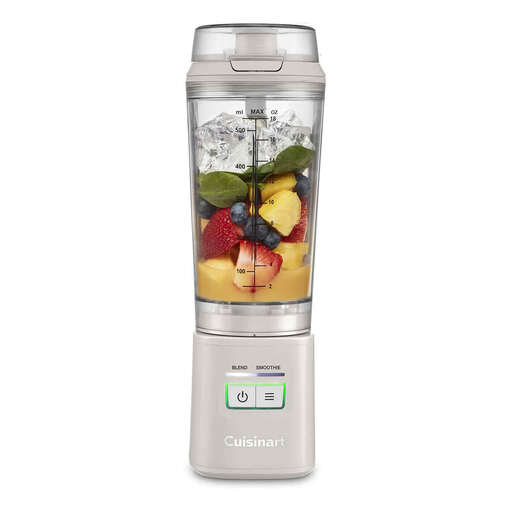
Why this choice suits this profile: Its compact design and 500 ml cup are ideal for smoothies, milkshakes and drinks made as single portions.
The stated capacity is clearly defined and the size keeps the footprint small. However, it's best to avoid this model for large quantities or very hard ingredients.
120 W motor, 500 ml capacity, stainless steel blades and a cup designed to take with you.
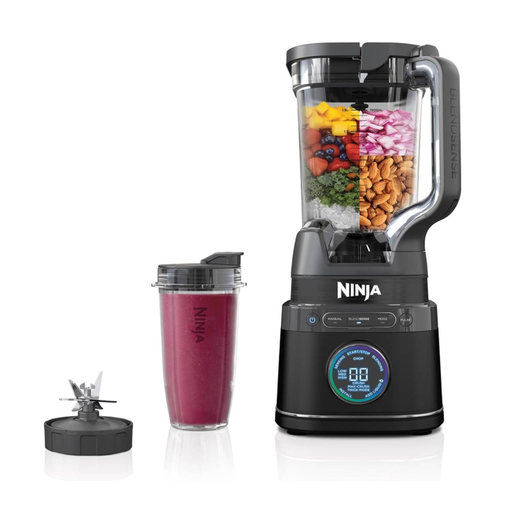
Why this choice suits this profile: This model combines a large jug and two individual cups, giving you variety in a family kitchen.
The maximum capacities are stated separately for the 2 L jug and the 680 ml cups. This distinction lets you plan portions without overloading the appliance.
1200 W power, 10 speeds, 15 stated functions, 2 L jug and removable parts compatible with the top rack of the dishwasher.
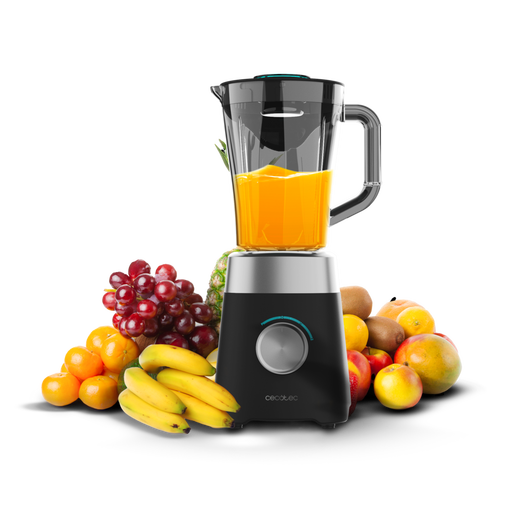
Why this choice suits this profile: Its 1.5 L jug and ice-crushing function suit a household that regularly makes drinks and recipes in quantity.
The power, volume and two speeds are listed separately. This lets you compare its specs against your recipes, rather than relying on a single marketing figure.
Stated 1300 W motor, 1.5 L jug, four blades and Pulse function with ice-crushing option.
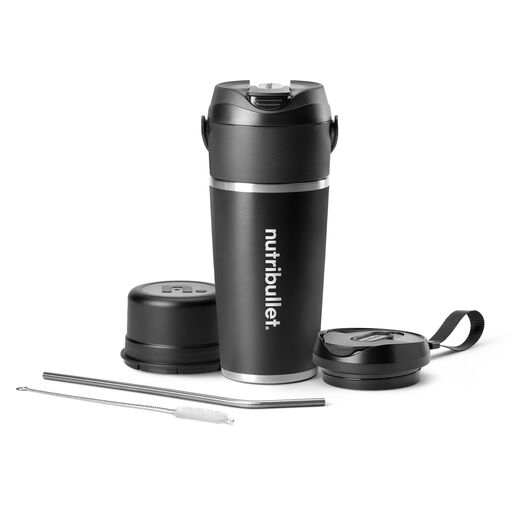
Why this choice suits this profile: Its rechargeable battery and insulated cup let you prepare a drink away from the kitchen, as long as you remember to charge it beforehand.
The stated battery life is given in 30-second cycles. A concrete benchmark, far more meaningful than a vague promise of portability.
590 ml stainless steel cup, USB-C charging, adapter included and a handy carry handle.
We've put together a comprehensive, real-time updated list of products that meet these demanding selection criteria and European safety standards.
For blending fresh fruit and liquid preparations, moderate power can be enough. If you regularly use frozen fruit, nuts or ice, also look at the Pulse function and the manufacturer's recommendations. Power alone doesn't guarantee a smooth texture.
It depends on the model. Some appliances recommend short cycles, for example 30 to 60 seconds, while others require a pause after a few minutes. Check the manual and let the motor cool down if using it repeatedly to reduce the risk of overheating.
Consumption depends on the motor power and the length of use. A 1200 W appliance used for one minute will use less energy than a 500 W model running for several minutes. To keep your bills in check, choose a size suited to the quantities you prepare, avoid running it empty and unplug the appliance after use.