
Livraison le jour même ou le lendemain

Qualité garantie

Débloquez vos offres de bienvenue: Livraison GRATUITE | Jusqu'à -80 % | 30 jours d'essai gratuits à JoyPlus
Téléchargez l'application
A homemade soup, a breakfast smoothie or a cake batter can quickly become a chore if the appliance isn’t right for the job. Behind the name electric kitchen blender lie several product categories: countertop blender, hand blender, portable blender, heating blender or stand mixer.
The risk isn’t just picking an appliance that’s underpowered. Some models take up a lot of space, are difficult to clean, or only serve one purpose. Others boast impressive power but impose very short cycles that end up slowing you down in the kitchen every day.
The wattage tells you about the stated electrical consumption or power, but it isn’t enough to predict the quality of the result. For a soup, sauce or purée, a 600 W hand blender can do the job perfectly. For crushing ice, blending frozen fruit or preparing large quantities, the blade design, container and programmes also play a key role.
Also remember to check the maximum continuous running time. Many multi-purpose appliances recommend cycles of one minute, followed by a cooling period. This information is often more telling than a simple power figure.
A 1.5 or 2 litre jug can’t always be filled to the brim. Hot liquids and mixtures that expand need a safety margin. For a family, choose a model where the usable capacity is clearly stated. For a single person or for on-the-go use, a portable blender of 475 to 570 ml will often be more practical and less bulky.
Removable blades, dishwasher-safe accessories and a detachable shaft can significantly cut down cleaning time. The motor block must never be submerged. And the blades remain sharp, even when the appliance is unplugged.
For hot preparations, always check the instruction manual. Some hand blenders advise against blending liquids above 60 °C, while a heating blender has its own programmes and guidelines. An automatic cleaning function doesn’t necessarily mean you can skip a manual rinse.
A variable-speed model lets you start gently to avoid splashes, then gradually increase the power. A turbo function can be handy for a quick burst, but it will never replace a suitable capacity or well-designed blades.
With a multi-function blender, check exactly what’s in the box: blending shaft, whisk, chopper, beaker or emulsifying accessories. A well-stocked kit can replace several small appliances, provided the accessories are easy to store and clean.
The parts that come into contact with food must be described clearly. Stainless steel is commonly used for shafts and blades. Some manufacturers also state the use of BPA-free plastics for beakers and bowls. These statements describe the product’s stated composition; they do not constitute medical advice.
For a family, a countertop blender of 1.2 to 2 litres will generally be more suitable than a single-serve model. Fans of plant-based drinks should also check the capacity, the heating function, the possibility of a delayed start and the cleaning instructions.
Measure the space available under wall units and in cupboards before you choose. A 5 litre stand mixer takes up much more room than a hand blender, but it will be far more comfortable with doughs, creams and whisked egg whites made regularly. Conversely, a milk frother runs on batteries and slips easily into a drawer.
Here is a selection organised by different usage profiles, to match against your recipes and the space you have in your kitchen.
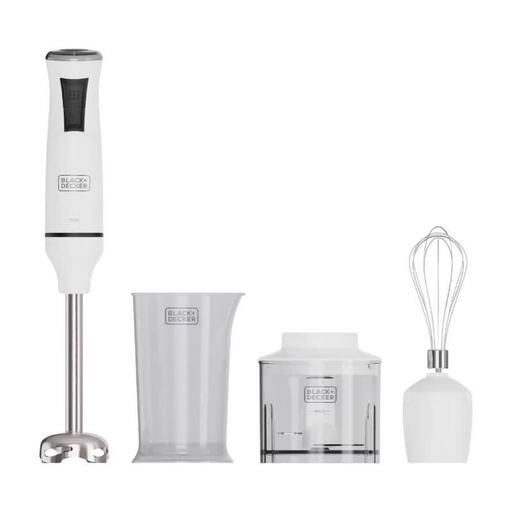
Why this choice suits this profile: Its compact design is ideal for everyday preparations: soups, purées, compotes, sauces and smoothies.
Its 20 speeds, turbo function and three accessories mean you don’t have to buy an appliance limited to a single task.
600 W motor, stainless steel shaft, removable dishwasher-safe parts and splash protection.
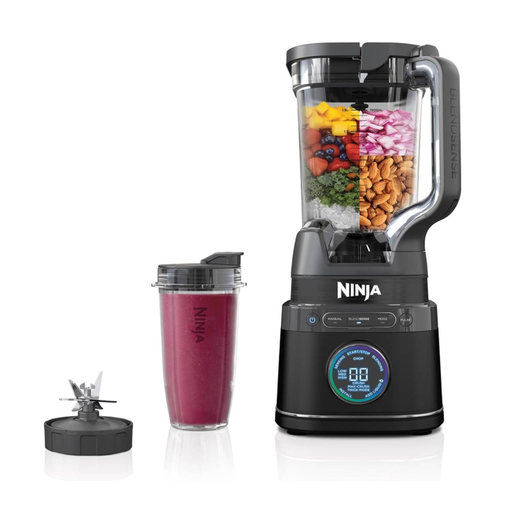
Why this choice suits this profile: It combines a large jug and two individual cups so you can vary quantities without needing multiple appliances.
The manual controls let you stay in charge rather than relying solely on an automatic programme.
Stated power of 1,200 W, 2 L jug, two 680 ml cups, 10 speeds and 15 modes.

Why this choice suits this profile: People who regularly make plant-based drinks benefit from dedicated programmes and a keep-warm function.
The 1,000 ml jug, level markings and automatic cleaning make repeated preparations easy.
Programmes for plant-based drinks, smoothies and boiling water, delayed start up to 12 hours and keep-warm stated for 2 hours.
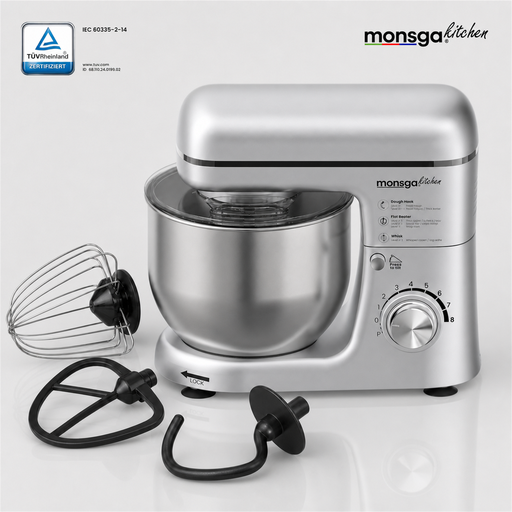
Why this choice suits this profile: Its stainless steel bowl and accessories are designed for doughs, creams, cakes and family-sized preparations.
The tilting head, splash guard and removable accessories make large-batch preparations easy.
Stated 1,000 W motor, 6 L bowl with a recommended capacity of 5 L, eight speeds, whisk and dough hook.
We’ve compiled a complete, real-time updated selection of products that meet these selection criteria as well as European safety requirements.
A hand blender is ideal if you blend food directly in a saucepan or tall container. Choose a detachable shaft, variable speed and a power level suited to the density of your preparations. For regular family use, a countertop blender generally offers a larger jug, but it also needs more storage space.
There is no ideal power for every recipe. With fresh fruit and liquids, a model of 300 to 600 W may be enough, depending on the manufacturer’s recommendations. Ice cubes, frozen fruit and nuts require an appliance designed for those ingredients, with suitable blades and capacity. So the wattage shouldn’t be your only criterion.
The lifespan depends on how often you use it, whether you follow the cycles, how you clean it and the storage conditions. Avoid overloading, never run the appliance empty and respect the stated cooling time. For daily use, also check the availability of accessories, the warranty period and the contact details of the responsible entity established in the European Union before placing your order.