
Livraison le jour même ou le lendemain

Qualité garantie

Débloquez vos offres de bienvenue: Livraison GRATUITE | Jusqu'à -80 % | 30 jours d'essai gratuits à JoyPlus
Téléchargez l'application
An electric bike can make commuting, city travel and weekend rides much easier. But a well-presented product page alone isn’t enough to make the right choice. Stated power, theoretical range, quick-fold design or off-road tyres can hide limitations that become frustrating in everyday use in the UK.
Here are the criteria to check before buying, along with a selection of models suited to different needs.
A 250 W electric bike generally corresponds to an electrically assisted pedal cycle that complies with the rules applicable to cycles in the UK, provided the other criteria are met: assistance only when pedalling and cut-off at 15.5 mph (25 km/h). The motor power alone is therefore not enough to determine whether a model is compliant.
A 500 W electric bike may be suitable for certain private or off-road uses. However, you need to check its category, assistance speed, whether it is type-approved and the conditions under which it can be used. A more powerful motor does not automatically mean the bike is legal on public roads.
Range varies depending on the weight carried, terrain, wind, temperature, tyre pressure, assistance level and how often you stop. A high-capacity battery can be appealing for a long-range electric bike, but you should compare its voltage, capacity in Wh, whether it is removable and the cost of a potential replacement.
A folding bike isn’t necessarily easy to carry. Its weight, dimensions when folded, whether it has a carry handle and the rigidity of the folding mechanism make all the difference when you have to climb stairs, take public transport or store it in a small flat. Also check that the folding system doesn’t strain the cables and that the lock is properly secured before every ride.
For everyday use, carefully read the manual and the declaration of conformity. In particular, check:
Models designed exclusively for private land, such as certain electric dirt bikes, should not be confused with a city bike. They may require specific protective equipment and are not necessarily allowed on public roads.
A 36 V, 10 Ah battery represents around 360 Wh, while a 48 V, 18 Ah model reaches around 864 Wh. This capacity gives a useful indication, but it doesn’t guarantee a precise distance. Look at the following points:
14- or 16-inch wheels favour compactness, while 20-inch wheels often offer a good compromise for an adult folding bike. On uneven surfaces, a suspension fork, suitable tyres and disc brakes can improve control. However, this doesn’t turn an urban model into an electric off-road bike.
A multi-speed transmission makes climbing and re-accelerating easier. Also remember to check the saddle height, handlebar position and total weight, especially if you regularly have to carry the bike.

Why this model suits this profile: Its 250 W motor, 36 V, 10 Ah battery and 14-inch tyres are ideal for short urban journeys where a compact footprint matters more than a long range.
The product page clearly details the motor and compact format, so you can assess the footprint without relying on a vague promise of mobility.
Folding design, stated 250 W motor and 36 V, 10 Ah battery.
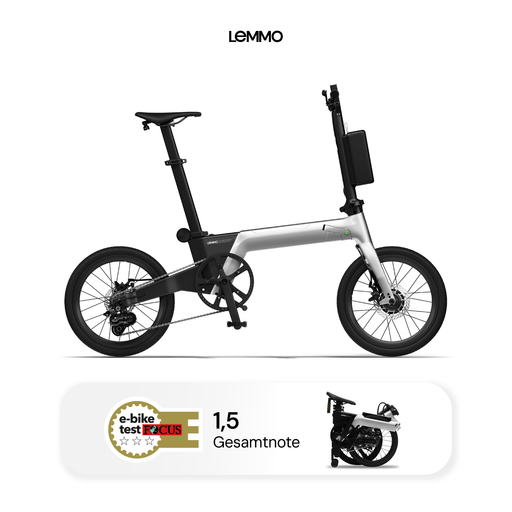
Why this model suits this profile: With its 16-inch wheels, stated range of 30 km and maximum user load of 120 kg, this model targets commuters who value storage and connected features.
The stated range is quantified, and the instructions specify the maximum load, the original charger and the checks to carry out on the brakes.
16-inch wheels, stated 159 Wh battery and tool-free folding.
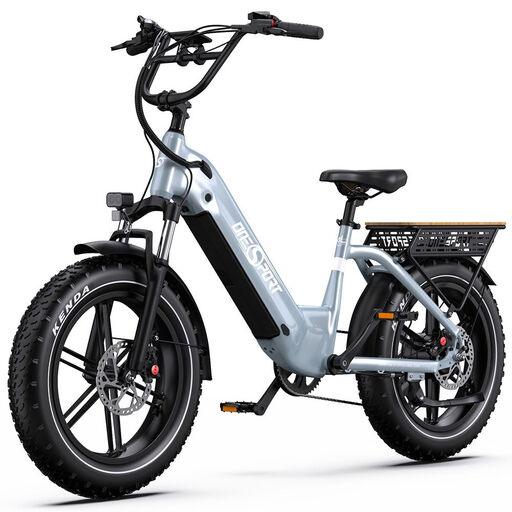
Why this model suits this profile: Geared towards all-terrain use, this bike features a 500 W motor, an 864 Wh battery, two disc brakes and a stated maximum load of 150 kg.
The battery, load and braking data allow you to compare the demands of heavy use against measurable specifications. However, check its status for road use.
Stated 864 Wh battery, 20-inch tyres and Shimano 7-speed transmission.
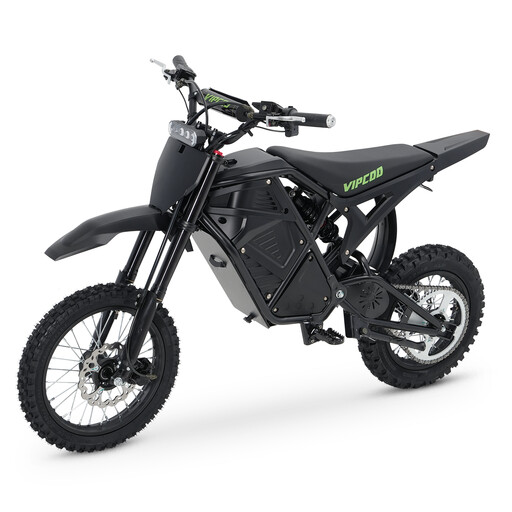
Why this model suits this profile: Its stated 3,500 W motor, full suspension and hydraulic brakes make it suitable for off-road use on private land or dedicated tracks.
The product page states that this model is not road-legal and is intended for private land or circuits only, in accordance with local regulations.
Removable 48 V, 23 Ah battery, front and rear suspension, hydraulic disc brakes.
We’ve compiled a comprehensive, real-time selection of products that meet these demanding criteria, as well as European safety regulations.
The cost depends on the battery capacity and your electricity tariff. To estimate it, multiply the capacity in kWh by the price per kWh, then add a small margin to account for charging losses. A 500 Wh battery corresponds to 0.5 kWh per full charge, excluding losses.
It depends on the number of charge cycles, storage conditions, temperature and maintenance. Avoid extreme temperatures, use the supplied charger and do not leave a battery completely empty for a long period. Before buying, check the price and availability of a replacement battery.
A helmet is strongly recommended for adults and compulsory for children under 12, whether they are riding the bike or are passengers. For a powerful model or one intended for private land, also plan suitable protection, including gloves and knee pads.