
Livraison le jour même ou le lendemain

Qualité garantie

Débloquez vos offres de bienvenue: Livraison GRATUITE | Jusqu'à -80 % | 30 jours d'essai gratuits à JoyPlus
Téléchargez l'application
Choosing educational toys for children isn’t just about spotting an appealing colour or a development promise on the packaging. Whether it’s for a birthday, Christmas or an activity at home, the right choice depends above all on the child’s age, safety, the toy’s durability and how it will actually be used.
Some pitfalls crop up time and again. A toy marketed as adaptable can become too simple after just a few uses. A game labelled ‘STEM’ may lack enough pieces or suitable challenges. And dimensions are sometimes underestimated: a bulky construction set is hard to accommodate in a small flat, while a puzzle containing small pieces should never be given to a young child.
The age shown on the product page serves as a guide for safety and use, but it doesn’t always tell you much about the level of progression on offer. For a 3-year-old, go for pieces that are easy to grip and simple rules. Between 6 and 10 years old, a STEM construction set or a puzzle can offer more combinations, logic and problem-solving.
Also check for small parts, especially in puzzles, blocks and removable accessories. Even an educational toy marked as suitable from 3 years may require adult supervision depending on its design.
Sounds, lights and buttons easily catch the eye, but they don’t replace genuine hands-on activity. VTech interactive animals, for example, run on two AAA batteries per animal and offer songs, melodies and various sounds. They can suit a child who enjoys sound-based interaction, as long as you’re prepared to replace the batteries and check that the volume is appropriate in a quiet environment.
On the other hand, a battery-free toy, such as a stacking pyramid or a friction-powered car, is ready to use straight away, both at home and on the go.
Toys used every day take knocks, dust and small stains, not to mention parts that eventually go missing. Before buying, consider the material, how easy it is to clean, the stability of the components and the storage instructions. ABS plastic surfaces can generally be wiped clean with a soft cloth, whereas stickers and articulated parts need more care.
The first thing to check is the recommended age, warnings and applicable markings. In France and the European Union, look in particular for the CE marking, the manufacturer’s or EU responsible person’s contact details, and warnings about choking hazards, batteries and adult supervision.
Magnetic blocks require extra vigilance: regularly check the condition of the pieces and immediately set aside any that are cracked or whose casing is coming loose. For a 2x3x3 puzzle cube, the small parts and stickers mean you must strictly follow the recommended age.
A toy that stays interesting over time offers several ways to play. Magnetic building blocks allow children to create free-form shapes, structures or courses. A stacking game for babies first supports grasping, then learning about colours, sizes and balance.
For older children, a rectangular puzzle like the 2x3x3 puzzle cube offers a spatial challenge that’s different from a classic cube. It requires no batteries and is easy to carry around.
In a flat, choose a game that’s easy to store and doesn’t require clearing a large surface area. For journeys, a compact model or a friction-powered off-road car will often be more practical. For an activity to share between parent and child, magnetic construction sets and logic games offer more opportunities to talk and think together.
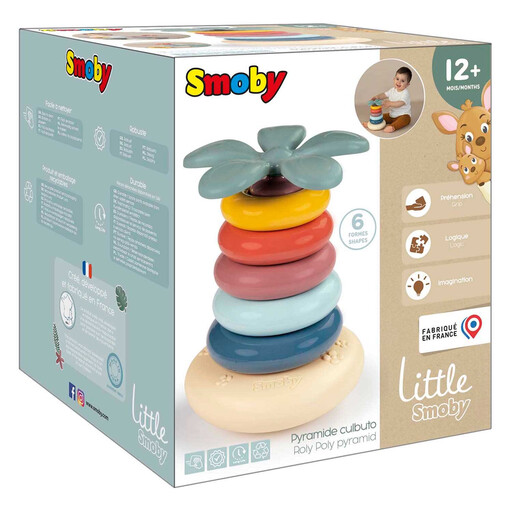
Why this choice suits this profile: From 12 months, this pyramid offers an easy-to-understand activity, suitable for first manipulations and simple to set up on a stable surface.
It doesn’t rely on an app or batteries. The five coloured rings allow the activity to evolve, from simple stacking to sorting and finding the balance.
A rocking rounded base, five rings and a rotating flower. The product is stated as made in France and works without batteries.
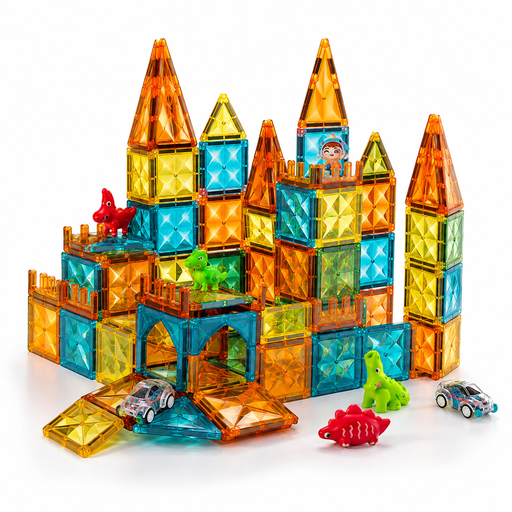
Why this choice suits this profile: Children aged 3 to 10 can build all sorts of shapes and enhance their creations with a light-up Ferris wheel, provided age and safety instructions are followed.
The construction isn’t limited to a single model: the magnetic tiles lend themselves equally well to free creations and varied scenarios.
Ultrasonically welded magnetic blocks according to the product sheet, plus an illuminated Ferris wheel. Plan dedicated storage to avoid losing pieces.
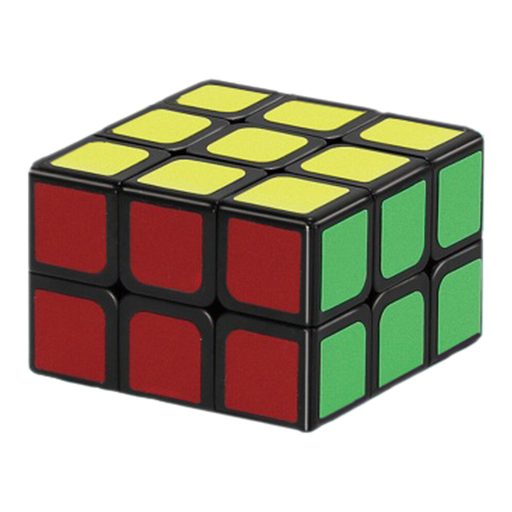
Why this choice suits this profile: From 6 years, this compact puzzle is ideal for children who enjoy logic challenges and for families looking for a calm, battery-free activity.
Its dimensions of 9 × 7 × 4 cm are stated on the product sheet, making storage and transport easy. The recommended age also helps avoid unsuitable purchases.
A 2x3x3 shape that changes appearance as you solve it, ABS material and manual operation, no batteries required.
We’ve put together a comprehensive, real-time updated list of products that meet these strict selection criteria and European safety regulations.
A stacking activity with large rings is generally more accessible than a complex puzzle. Check the minimum age, make sure there are no small detachable parts and set the toy up on a stable surface with an adult nearby.
Yes, they are ready to use straight away and have no running costs for batteries. Construction sets, logic cubes, stacking games and friction-powered cars also encourage direct hands-on play, without relying on sounds or lights.
Wipe surfaces with a slightly damp soft cloth when the instructions allow. Avoid immersing toys that have mechanisms, stickers or a battery compartment. Regularly check for cracks, edges, wheels, magnets and detachable parts. If any component is damaged, stop using the toy.