
Livraison le jour même ou le lendemain

Qualité garantie

Débloquez vos offres de bienvenue: Livraison GRATUITE | Jusqu'à -80 % | 30 jours d'essai gratuits à JoyPlus
Téléchargez l'application
Finding the perfect gift for a child can often be a real puzzle for parents, grandparents, and loved ones. How do you unearth that rare gem that will entertain while also contributing to their development? In an age where screens are everywhere, the search for a quality educational toy has never been more relevant. The goal is clear: to provide a play experience that sparks logic, creativity, and problem-solving skills.
As the Head of Product Recommendations at Joybuy, my role is to help you navigate the options. This article is designed to present you with inspiring choices and give you the keys to selecting a toy that will make a lasting impression, whether for a birthday gift or just for the joy of giving.
Before diving into our selection, let's review a few essential criteria for making the right choice. The idea isn't just to bring a moment of joy, but to find a toy that will captivate a child for the long haul.
A toy that's too simple will quickly become boring, while a challenge that's too difficult might be discouraging. Rely on the ages recommended by manufacturers, but always keep the child's unique maturity and interests in mind. A budding builder will be fascinated by an ambitious building set, whereas a curious mind might prefer to tackle a well-designed puzzle.
The best toys are often those that don't get old after the first playthrough. A creative toy or a logic game with progressive difficulty promises hours of discovery and fun. STEM (Science, Technology, Engineering, and Mathematics) toys are particularly interesting in this regard: they encourage experimentation and the search for new solutions with every play session.
For families on the go, a compact travel game is the perfect ally to keep children intelligently occupied during trips. Also, consider the quality of the materials. A sturdy toy ensures better resistance to the test of time and to sometimes... energetic handling. It's a much wiser investment in the long run.
We've selected three gems that stand out for their playful approach and their potential to develop key skills.
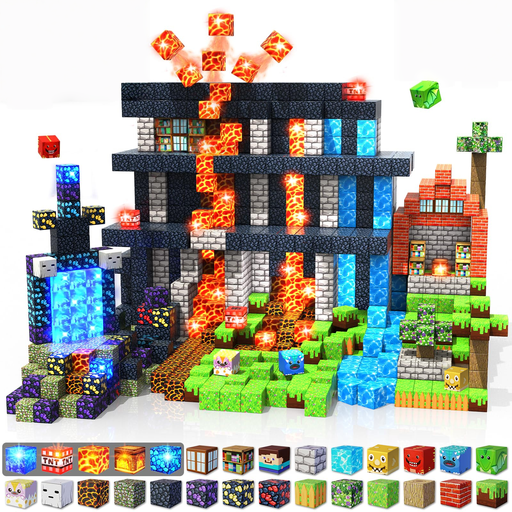
Why it stands out: This magnetic building set reinvents the genre. It includes 24 light-up blocks that add a touch of magic to your children's creations. With 150 cubes, characters, and an idea booklet, it provides a starting point for the imagination while allowing for complete creative freedom. It's an excellent screen-free alternative that promotes concentration and patience.
Key features:
Who is it for? Ideal for children ages 3 and up who love to build and invent their own worlds. An excellent gift idea to stimulate creativity and hand-eye coordination.
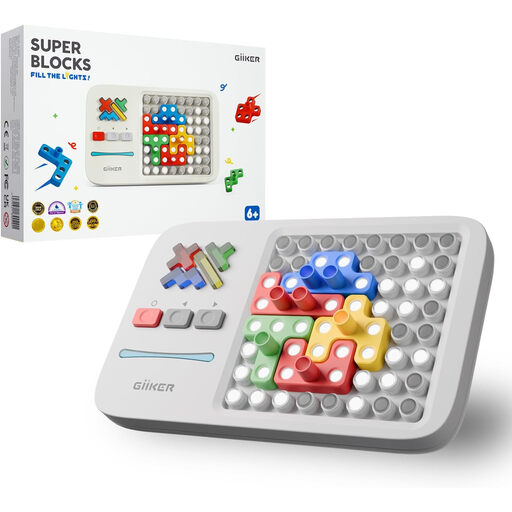
Why it stands out: The GiiKER Super Blocks is a portable electronic logic game that packs over 1,000 challenges. The concept is simple: the device displays a color combination, and the player must replicate it by placing the correct pieces on the board. With its learning and challenge modes, the difficulty adjusts and increases progressively, ensuring long-term engagement. Its pocket-sized format makes it the ultimate travel game.
Key features:
Who is it for? Recommended for children ages 6 and up, but also for teens and even adults who love brain teasers. An excellent tool for sharpening critical thinking skills while having fun.

Why it stands out: This little console gives classic Sudoku a modern twist. It offers 2,500 puzzles on 4x4 or 6x6 grids, making this classic logic game finally accessible to younger players. The device sets up the grid for each puzzle and validates (or flags) every move in real time. Features like a timer, hints, and even a two-player competition mode spice up the experience and make it more interactive.
Key features:
Who is it for? Perfect for introducing children ages 4 and up to the joy of Sudoku. Its compact size also makes it an ideal travel companion for screen-free fun.
Our selection is just a glimpse of the many possibilities for a gift that is both smart and fun. Every child is unique: the perfect toy will ultimately be the one that resonates with their personality and current passions.
To explore other options for a birthday gift or any other occasion, feel free to browse our complete collection.
Explore our Boys' Birthday Toys collection for more inspiration
An educational toy is designed to develop targeted skills (logic, motor skills, creativity) while still being, first and foremost, a toy. Unlike a classic toy focused on pure entertainment, it incorporates a learning dimension that helps a child structure their thinking and find solutions on their own.
Logic can be developed from a very young age! Starting at 2-3 years old, sorting games (by shape or color) are an excellent first step. Around 4-5 years, you can introduce more structured puzzles like a 4x4 Sudoku. From age 6, children are generally ready for more complex brain teasers that require planning and strategy.
To prevent a toy from gathering dust on a shelf, the secret is to truly understand the child's interests. If possible, involve them in the choice, or base it on their current passions (building, riddles, drawing...). Opt for games with high replay value (progressive difficulty levels, open-ended creation). Finally, a game that can be shared as a family has every chance of becoming a household classic.