
Livraison le jour même ou le lendemain

Qualité garantie

Débloquez vos offres de bienvenue: Livraison GRATUITE | Jusqu'à -80 % | 30 jours d'essai gratuits à JoyPlus
Téléchargez l'application
Choosing educational toys for children is about more than counting the pieces or being won over by the colours on the box. With promises of creativity and skill development, plus countless similar-looking kits, it is easy to end up with a product that is unsuitable for the child’s age, difficult to store or quickly abandoned.
To avoid disappointment, three common pitfalls are worth bearing in mind:
The right choice therefore depends on several factors: the child’s age, the space available, their level of independence and the type of activity they enjoy — construction, drawing, discovery, imagination or hands-on creativity.
The age stated by the manufacturer is a useful starting point, but it does not replace observing the child. A gift for a child aged 3 and over may suit a child who enjoys assembling, sorting and following instructions, while another may thrive more with an open-ended activity made up of larger pieces.
For children aged 3 to 5, look for:
Kits designed for older children generally contain more pieces, models to copy or more precise mechanisms. Read the warnings carefully before buying, particularly when a game contains magnets, gears or drawing accessories.
Magnetic construction sets and magnetic building blocks are appealing because they can be assembled quickly and offer plenty of creative possibilities. However, make sure that the magnets are properly integrated and that no part shows signs of cracking or coming loose.
Here are the points to check:
Any damaged part must be removed immediately. Magnetic toys are best stored in a closed box, out of reach of children who still put objects in their mouths.
Do not simply compare the number of pieces: consider their variety as well. A kit containing triangles, squares, wheels or decorative elements offers more possibilities than a set made up of just one shape.
For a STEM toy for children, look for a description that details the included components and the constructions that can be made. For a creative activity for children, check whether the tools, paper, accessories and instructions are included. Also think about storage: a dedicated bag or box helps prevent pieces from going missing and makes it easier to return to the activity.
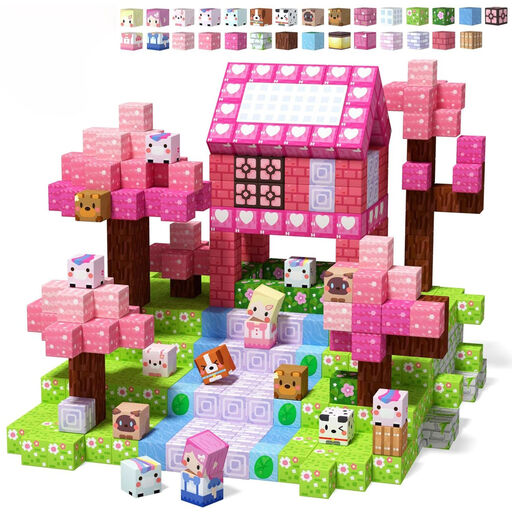
Why this choice suits this profile: With 100 ABS pieces and models focused on creative construction, this kit is a good introduction to magnetic building from the age of 3.
The product page states the material, number of pieces and recommended age — concrete information for comparing the kit’s actual contents.
100 pieces, magnetic assembly and a creative approach. Adult supervision is still recommended because of the small parts.
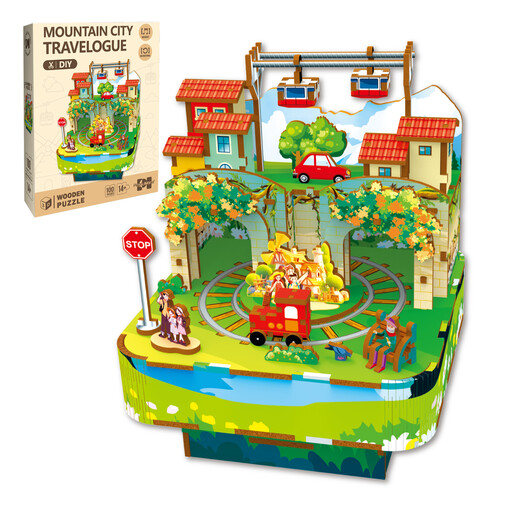
Why this choice suits this profile: This 3D wooden puzzle is designed for adults and fans of hands-on activities looking for a decorative construction project.
The 99 pieces and the model-building concept give you a clearer idea of the project than a simple kit described as ‘DIY’.
A wooden structure, 99 components and a music-box function stated in the product name. Check the difficulty level before buying.
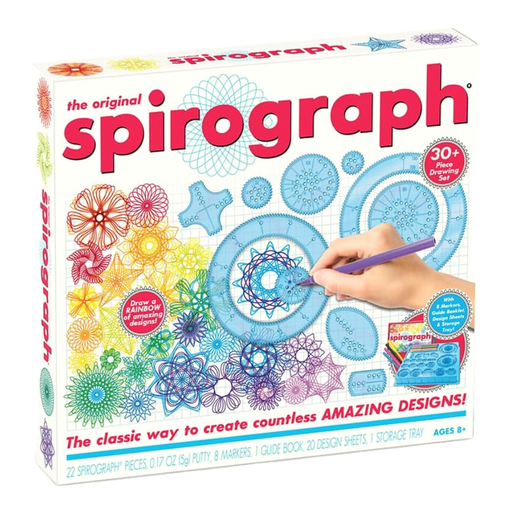
Why this choice suits this profile: Suitable from the age of 8, this creative game uses wheels and rings to create geometric patterns with felt-tip pens or pencils.
The kit details its accessories: discs, rings, water-based felt-tip pens, sheets, guide and storage box.
No batteries required, dimensions of 30,5 × 5,1 × 27,9 cm and supervision recommended for children under 10.
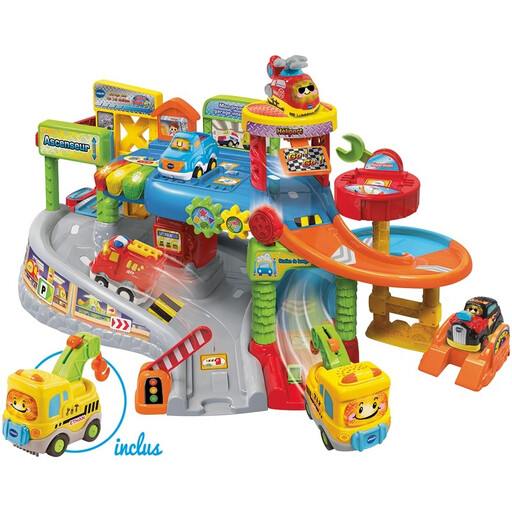
Why this choice suits this profile: This interactive VTech garage is designed for children aged 1 to 5. It includes a vehicle, ramps, a lift, a car wash and a petrol station.
The product page states that the kit includes one vehicle and that additional models are sold separately, so remember to factor in the cost of any potential extension.
More than 50 phrases, sounds and melodies, along with lights and SmartPoint technology. Use on a flat surface.
We have put together a complete, real-time updated selection of products that meet these demanding criteria as well as European safety requirements.
Start with an activity made up of large pieces, with only a few steps and intuitive handling. Magnetic construction sets, sorting games or a children’s car toy with a simple track may be suitable. Always check for small parts, magnets and any recommendation for adult supervision.
How long a toy stays engaging depends less on the number of pieces than on the variety of activities it offers. A kit that allows children to build freely, recreate models and then invent their own scenarios can support them through several stages of learning. Storing the pieces by category also helps them quickly find the different components.
A screen-free game encourages hands-on play, drawing and construction, while an electronic model can enhance the experience with sounds and responses. It all depends on your family’s routine and the child’s preferences. In every case, check the batteries required, sound volume, included accessories and the amount of playtime actually offered.