
Livraison le jour même ou le lendemain

Qualité garantie

Débloquez vos offres de bienvenue: Livraison GRATUITE | Jusqu'à -80 % | 30 jours d'essai gratuits à JoyPlus
Téléchargez l'application
Finding the right educational toy can quickly become a headache. Between marketing promises and overloaded shelves, it's hard to distinguish a future playmate from one that will gather dust in a toy box within days. As the Head of Product Curation at Joybuy, my mission is to help you cut through the noise. Together, let's break down the pitfalls to avoid and the criteria that truly matter to make the right choice.
Before you embark on your quest for the perfect birthday or Christmas gift, it's crucial to know how to spot a bad idea in disguise.
To avoid these traps, focus on a few technical and practical aspects that make all the difference.
This is the non-negotiable criterion. The European standard EN 71 guarantees that the toy has undergone rigorous testing. It covers several fundamental aspects:
Checking for this marking is THE first step you should take to ensure the child's safety.
A good educational toy is an evolving one that captivates a child over time. This is what we call "replay value." It should be usable in different ways and adapt to the child's development.
A toy's sturdiness is directly linked to the quality of its materials. A thick, resilient ABS plastic will withstand shocks and repeated handling better than a thin, brittle plastic. For wooden toys, opt for those made from sustainably managed forests and coated with non-toxic, water-based paints. This is a guarantee of both safety and longevity.
To move from theory to practice, here are a few options that cater to specific child profiles and needs.
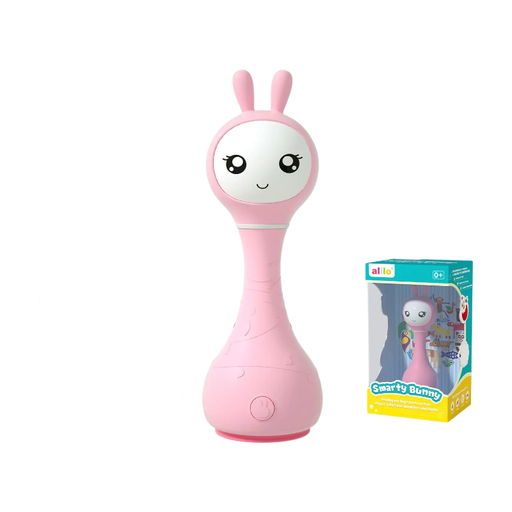
Why we chose it: This rattle is an excellent first toy. It combines sensory stimulation (sounds, soft lights, textures) with evolving functions to accompany a baby through their first discoveries.
It goes beyond being a simple rattle. With 5 music modes, lullabies, and a colour recognition function, it offers such rich content that it captures a child's attention for much longer than a single-function toy.
Its soft silicone ears are designed to be safely chewed on, and its USB-C rechargeable battery is both practical and economical.
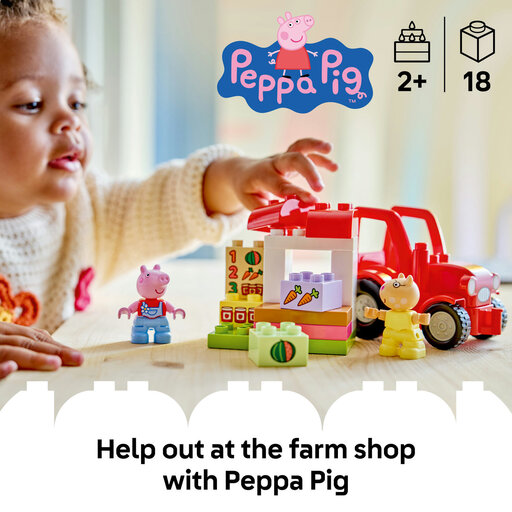
Why we chose it: This set combines a character beloved by children with the recognised benefits of a LEGO DUPLO construction toy. It's perfect for developing fine motor skills and encouraging role-play.
This is not a passive toy. The child builds, deconstructs, and invents stories. The quality and durability of LEGO bricks are proven, avoiding the trap of fragility. The replay value is nearly infinite.
DUPLO bricks are specifically designed to be handled easily and safely by small hands, promoting autonomy in play.
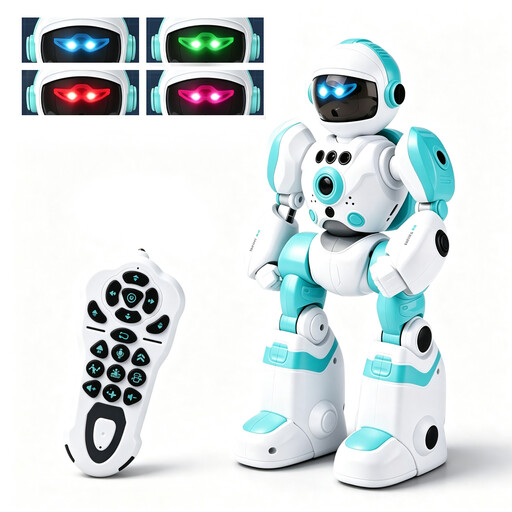
Why we chose it: This programmable robot is an excellent introduction to logic and technology. It offers rich interaction via voice, remote, and gesture control, making it a very comprehensive interactive toy.
Instead of being a passive gadget, it invites the child to become an active participant by programming up to 30 action sequences. This creative dimension, combined with varied content (stories, songs, poems), ensures long-term interest.
Its battery life of nearly 2 hours per charge is a real asset, allowing for long, uninterrupted play sessions. Its sturdy ABS plastic construction is built to last.
We have compiled a complete and up-to-date list of products that meet our demanding selection criteria and current safety standards.
The educational aspect of a toy depends on its suitability for the child's developmental stage. For a baby, a simple rattle that stimulates hearing and touch is educational. For a 5-year-old, a construction toy or a programmable robot that develops logic and creativity will be just as educational. The important thing is that the toy offers an age-appropriate challenge, without being either too simple or too frustrating.
A wooden toy is durable but requires minimal maintenance. Clean it with a slightly damp cloth and mild soap, then dry it immediately. Avoid soaking it in water, as the wood could swell or warp. Store it in a dry place, away from direct sunlight, to preserve its colours.
Not necessarily. Models designed for this age group, like the one featured, use very intuitive interfaces. Programming is often done through a sequence of simple buttons (forward, turn, dance) rather than code. This introduces the child to logical thinking (cause and effect) in a fun and accessible way, laying the groundwork for more complex skills without them even realising it.