
Same-day & Next-day Delivery

Quality Guaranteed

Unlock Your Welcome Offers: FREE Delivery | Up to 80% OFF | Free 30-day JoyPlus trial
Download the APP
An EDA planter with a water reservoir can genuinely simplify plant care on a terrace, balcony or in a bright room. But not all self-watering planters are created equal, and they don’t all meet the same needs. The wrong dimensions, poorly designed drainage or a material unsuited to outdoor use can quickly turn a decorative purchase into a daily hassle.
The EDA range includes the Volcania and Tuscany collections, designed to accommodate houseplants, flowering arrangements, shrubs and small fruit trees. Here are the criteria to consider before choosing a plant pot with a water reservoir.
An integrated reservoir allows you to water less frequently, but it doesn’t mean you can ignore the moisture level of the compost. Needs vary depending on the plant, temperature, light exposure and season. A Mediterranean plant obviously doesn’t need the same care as a tropical houseplant.
So check for a clearly described retention zone, as well as a perforation or drainage system. A constantly full reservoir can encourage excess moisture if the substrate or chosen plant species isn’t suitable.
A stone-effect finish or an anthracite colour blends easily into many décors, but you need to anticipate the total weight. A large planter filled with damp soil quickly becomes difficult to move and may exceed the load capacity of a balcony or raised terrace.
Before ordering, measure the available space, check access to the installation site and choose a perfectly stable surface. On a balcony, avoid placing a large-capacity planter against a railing without first assessing the load it can bear.
When placed outdoors, a pot must withstand UV rays, temperature fluctuations and sometimes frost. Look for an indication of UV protection and frost resistance, bearing in mind that damp compost can expand when it freezes.
Even a frost- and UV-resistant container must be installed with clear drainage. For sensitive plants, winter protection is still necessary, regardless of the pot’s material.
The dimensions should match the plant’s mature size, not just its size at the time of purchase. A volume of 21 litres suits a compact arrangement or certain balcony plants. With its 36 litres, a more generous container offers greater visual depth and can accommodate a plant that’s already well developed. For a shrub, a small fruit tree or a plentiful arrangement, a volume close to 98 litres will be more suitable, provided you anticipate the final weight.
Shape also plays a role. An anthracite square pot easily fits into a corner and can be paired with other containers. A tall model draws the eye and helps structure a terrace, but it must be placed on a stable, perfectly level surface.
A double-walled planter can offer a sturdy structure and separate the container from the reservoir zone. Some models also feature a decorative collar that gives the impression of a double wall, without this construction extending the full height.
Check the following points:
Recyclable polypropylene is appealing for its lightness and ease of maintenance. The references shown here indicate French manufacture or Origine France Garantie certification, depending on the model. This mention alone is not a general promise of quality: it tells you about the product’s certified origin, while its durability also depends on use and exposure conditions.
A stone-effect finish, like that of the Volcania collection, adds a mineral touch without the maintenance demands of a real stone container. In most cases, a soft cloth and water are enough to remove dust and surface marks.
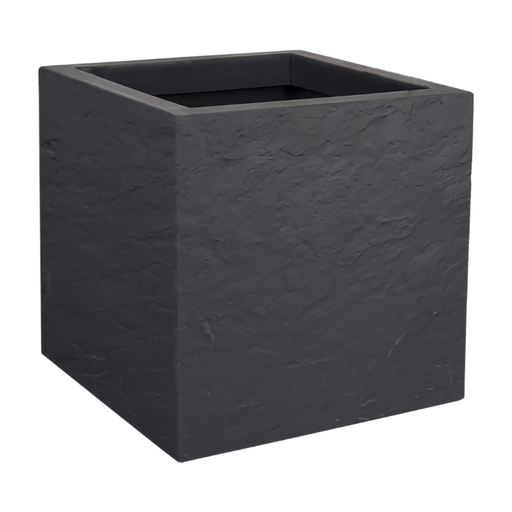
Why this choice suits this profile: Its square format of 29.5 × 29.5 × 29.5 cm and 21 L volume are ideal for small spaces, balconies and first plant arrangements.
The water reservoir and pre-prepared perforations mean you don’t have to improvise drainage at installation time.
Stackable and modular format, stone-effect finish and Origine France Garantie certification.
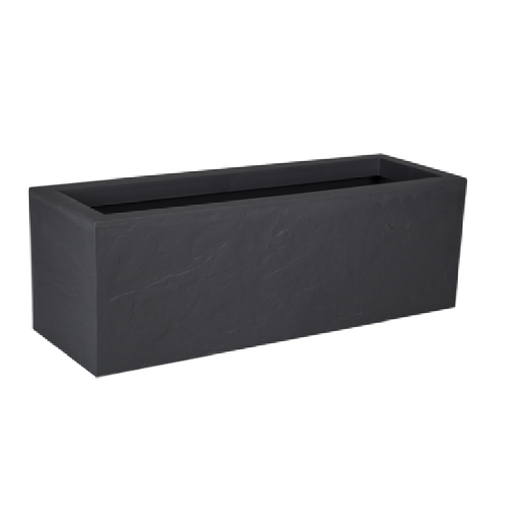
Why this choice suits this profile: Its beige stone effect and dimensions of 99.5 × 39.5 × 43.5 cm structure a terrace or entrance with strong decorative presence.
According to the product description, the double wall enhances stability and thermal insulation.
98 L volume, UV protection, frost resistance and 100% recyclable material.
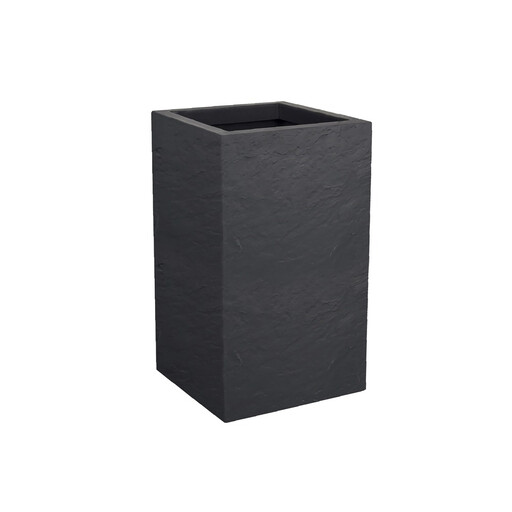
Why this choice suits this profile: Its height of 49.5 cm and 36 L volume suit larger plants and layouts that visually structure a terrace.
The base with reservoir and pre-drilled holes make watering management easy, without needing extra drilling.
Tall square format, UV protection, frost resistance and Origine France Garantie certification.
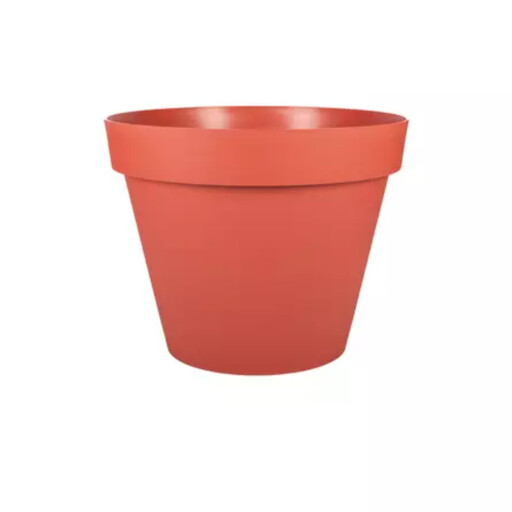
Why this choice suits this profile: Its diameter of 39.5 cm and 23 L volume fit naturally into an entrance, conservatory, patio or bright indoor room.
The retention system and perforation under the base prevent you from choosing a purely decorative pot with no water management solution.
100% recyclable polypropylene, integrated UV protection and a stated 7-year guarantee in mainland France.
We’ve put together a comprehensive, real-time updated selection of products that meet these strict criteria and European safety regulations.
To install an EDA planter with a water reservoir, place it on a flat surface and make sure the openings aren’t blocked by compost. Indoors, add a suitable tray to protect the floor from any overflow.
To minimise moisture problems:
A planter placed at height must remain perfectly stable. Also avoid moving it when it’s full of damp soil: you could damage the floor, the container or injure yourself.
Start by filling the container with a suitable substrate, then water gradually. The reservoir fills as water drains into the designated zone. Refer to the instructions for your specific model and monitor the compost moisture during the first few weeks.
Models advertised as frost- and UV-resistant are designed for outdoor use, but local conditions still play a decisive role. Freezing of very damp compost can put significant pressure on the container. For sensitive plants or during a cold snap, it’s best to provide extra protection.
The reservoir can space out watering, but it doesn’t remove the need to check moisture levels or clean the drainage holes. The maintenance cost mainly depends on the compost, the plant, the exposure and any eventual plant replacement.