
Livraison le jour même ou le lendemain

Qualité garantie

Débloquez vos offres de bienvenue: Livraison GRATUITE | Jusqu'à -80 % | 30 jours d'essai gratuits à JoyPlus
Téléchargez l'application
An ECOODA inchiku jig can be used to search different depths of water, but its weight should not be chosen at random or based solely on price or colour. In the Mediterranean, along the Atlantic coast and in fresh water, the current, depth and power of your tackle directly affect how the lure is presented.
Before buying, three common mistakes are worth avoiding:
Here are the key points to consider when choosing a model that is genuinely suited to the way you fish.
Weight is the first factor to consider when choosing an inchiku jig. ECOODA AVANZATO models are available in several weights: 60 g, 80 g, 100 g, 120 g, 150 g and 200 g.
An inchiku jig weighing 60 g or 80 g is generally suitable for lighter fishing when the current remains moderate and the depth does not require a fast descent. These weights can also be paired with relatively light tackle, provided the rod rating and line strength are suitable.
The 100 g and 120 g models offer more control when fishing deeper or maintaining regular contact with the bottom. They are versatile sizes for trips where the current and drift may change throughout the day.
For deep-sea fishing, a fast-drifting boat or rougher seas, the 150 g and 200 g versions make it easier to get the lure down and help keep it in the target zone. However, a heavier weight requires suitably powerful tackle: the rod, reel, braid, leader and knots must all be compatible.
Weight alone therefore does not determine a lure’s effectiveness. It should be selected according to the depth, drift speed, strength of the current and the action you want to impart.
The AVANZATO references featured here are advertised in six colours. This variety lets you adapt the lure’s appearance to the light levels, water clarity or your own preferences. Naturally, it cannot guarantee that fish will respond in every situation.
To avoid building up a collection of unnecessary purchases, a simple selection is usually enough:
The main benefit of having several colours is practical: you are not dependent on a single option. However, check the exact reference and the images shown on the product page, as several listings may correspond to the same weight.
An inchiku jig is designed for a vertical presentation or for working close to the bottom. It is aimed at anglers who want to search a precise area, particularly from a boat. A minnow, on the other hand, is mainly used during a retrieve or for trolling.
The ECOODA Cyan Blue Minnow 165DD is presented as a deep dive lure, with a stated diving depth of up to 10 m, a weight of 64 g, a body measuring 165 mm and SIKE 3509 5X no. 2 hooks. According to the information provided, its bib measures 37 mm wide and 66 mm long. These specifications position it more as a deep-water trolling lure than as a jig designed to work close to the bottom.
The 165MD versions are also listed as trolling minnows. The product page consulted provides fewer technical details than the 165DD listing, so check the available specifications before buying, particularly the diving depth, weight and hooks.
In salt water as well as fresh water, rinse the lure with clean water after every trip, dry it thoroughly and inspect the hooks. This routine helps limit salt deposits and makes it easier to spot a blunt point or signs of corrosion.
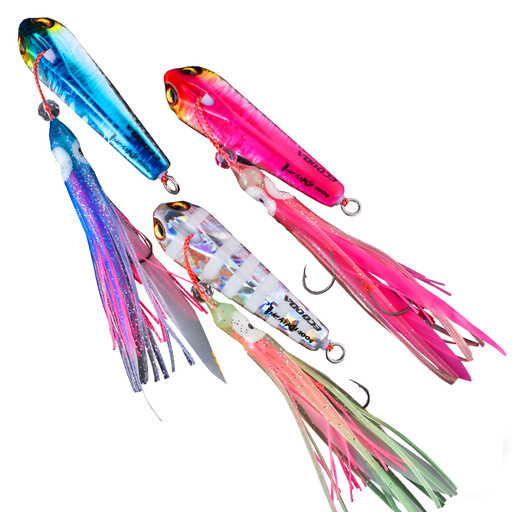
Why this choice suits this profile : its 60 g weight lets you start with a light inchiku jig when the current and depth remain moderate.
It avoids starting with a weight that is too heavy, which would make the lure harder to work and require more powerful tackle.
A clearly specified weight and six advertised colours for varying your presentations.
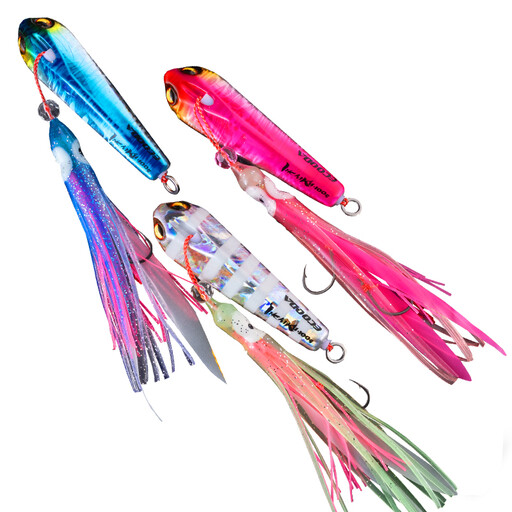
Why this choice suits this profile : the 120 g size offers plenty of control when switching between different depths and drift conditions.
It reduces the risk of choosing a model that is too light when the current quickly pulls the lure away from the vertical.
An intermediate weight and six colours listed in the reference.
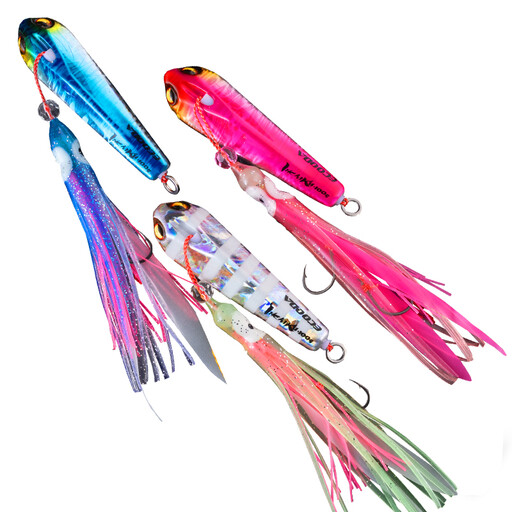
Why this choice suits this profile : this weight is intended for tackle capable of working in demanding conditions, close to powerful predators.
It highlights that a heavy jig should be chosen according to the current and depth, not simply because of its stated weight.
A weight of 200 g and six advertised colours for deep-sea fishing.
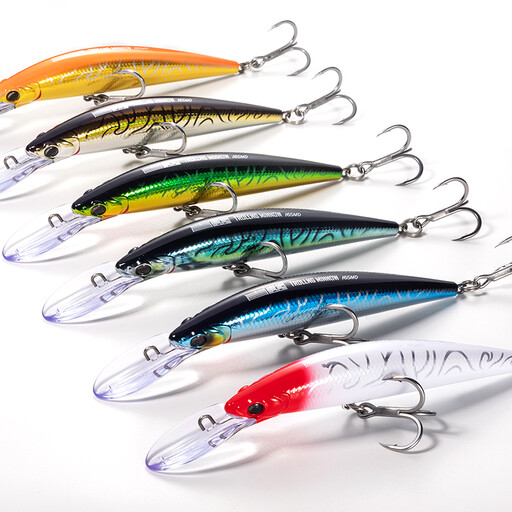
Why this choice suits this profile : its diving minnow design and stated depth of up to 10 m make it suitable for trolling in both sea and fresh water.
It clearly distinguishes a 165DD trolling lure from a vertical jig, helping you choose the right model for your technique.
A hard-plastic body, a weight of 64 g, a stated depth of up to 10 m and SIKE 3509 5X no. 2 hooks.
We have put together a complete, real-time updated list of products that fully meet these strict selection criteria and European safety regulations.
Before your first trip, check that the lure is compatible with your tackle. For the 165DD minnow, the product page recommends attaching the line directly to the front eyelet using a reliable knot, such as a Palomar knot or an improved clinch knot.
After every use:
The hooks are particularly sharp. Handle them with care, especially when casting, unhooking and storing the lure. The compliance information states that the manufacturer is WEIHAI ECOODA OUTDOOR PRODUCTS CO., LTD. and that the responsible person in the European Union is JINGDONG RETAIL (FRANCE) SAS. Always consult the product page for your chosen model to access the latest information.
Start by considering the depth, current and drift speed. The 60 g or 80 g models are suitable for a lighter approach. The 100 g and 120 g sizes are more versatile, while the 150 g and 200 g versions are intended for deep or fast-flowing areas, with appropriately rated tackle.
The 165DD product page states that it is designed for offshore and deep-water trolling, with a stated depth of up to 10 m. Rinse it after every trip at sea and check the hooks before putting it back in the water.
Rinsing with fresh water, drying the lure completely and regularly inspecting the hooks are essential. Replace or maintain any components showing signs of corrosion, a blunt point or deformation. Storing the lure in a ventilated box also helps limit prolonged exposure to moisture.