
Livraison le jour même ou le lendemain

Qualité garantie

Débloquez vos offres de bienvenue: Livraison GRATUITE | Jusqu'à -80 % | 30 jours d'essai gratuits à JoyPlus
Téléchargez l'application
Choosing ECOODA fishing tackle for rivers, lakes, streams or the sea is not simply a matter of comparing prices. A rod marketed as versatile may lack the precision needed for lure fishing, while a reel that looks appealing on paper may not be suitable for your line diameter or fishing style.
To avoid disappointing purchases, start by identifying the technique you use, the fish you are targeting and the information actually provided on the product page. Here are the criteria to review before choosing an ECOODA fishing rod, a spinning reel, hooks or a fighting accessory.
A rod advertised for trout, bass and carp will not necessarily meet the same requirements in every situation. Its length, action, power and lure weight range directly affect casting accuracy and your ability to stay in control during the fight.
Before ordering, check the following in particular:
A freshwater and saltwater fishing rod can reduce the amount of equipment you need to carry, but it must be rinsed thoroughly after every saltwater trip.
The term ‘carbon’ describes a material, not the complete behaviour of a rod. A carbon lure rod may be light and responsive, but the quality of the joints, finish and guides has just as much impact on comfort and durability.
Some ECOODA models also mention Fuji SIC guides. This name refers to a type of guide stated in the product name, but it does not remove the need to check the rod length, power and type of line used.
An ECOODA spinning reel exposed to sand, moisture or salt needs regular maintenance. Friction may come from the spool, line roller or incorrect spool loading, not just from the internal mechanism.
Accessories deserve the same level of attention. Choose a hook according to the size of the bait and the fish you are targeting. A fighting belt or gimbal, meanwhile, must be compatible with the way you fish from a boat, a breakwater or the shore.
For stream trout, an easy-to-handle rod designed for small lures makes short, accurate casts easier. For shore bass fishing, a longer and more powerful rod can help you reach distant spots and control a fish in the current. Carp fishing generally requires a different approach, with suitable power reserves and a suitable rig.
Models labelled ‘bass’, ‘trout’ or ‘carp’ should therefore be assessed against the way you actually fish, rather than chosen solely on the basis of their commercial name.
A two-section rod, such as the Protolure CC 2sec models, is easier to transport than a single-section rod of the same length. Measure the available space in your vehicle and check the rod’s length once dismantled.
While you are at it, inspect the joints: they should fit together correctly and show no visible play once the rod is assembled.
With a spinning reel, check its compatibility with the line you use, the stated spool capacity and the reel size. For river or lake fishing, a lightweight setup is comfortable during repeated casting. At sea, rinsing with fresh water and drying the equipment should be part of your routine, as well as being factored into the long-term cost of use.
The product page should also provide compliance information and, where required by regulations, the contact details of the responsible person established in the European Union. For the ECOODA products featured here, the available information specifically names JINGDONG RETAIL (FRANCE) SAS as the responsible person in the European Union.
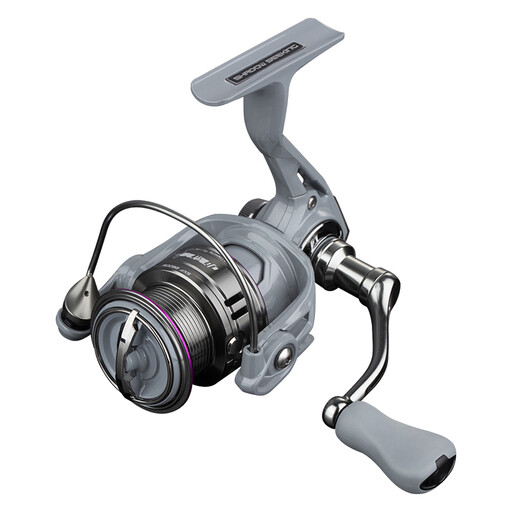
Why this choice suits this profile : This reel is presented for river, lake and stream fishing. It could form the basis of a first freshwater spinning setup, provided you check its size and line capacity on the product page.
Its name specifies the intended environments, reducing the risk of choosing a reel that is unsuitable for freshwater fishing.
Spinning reel; model presented for river, lake and stream fishing.
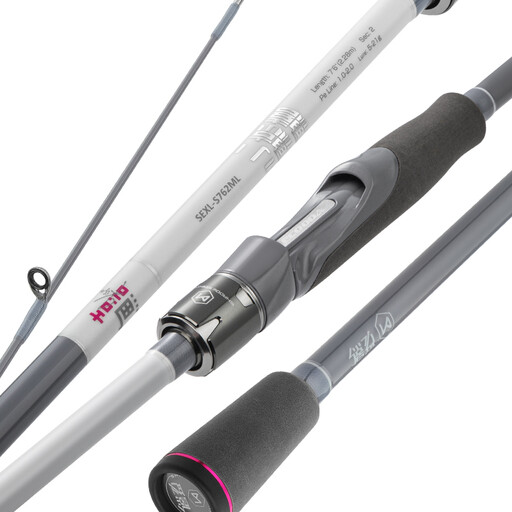
Why this choice suits this profile : This model is designed for several species and highlights a carbon construction together with Fuji SIC guides. It is aimed at anglers who take the time to compare finish details before ordering.
The product page highlights tangible features: carbon construction, Fuji SIC guides and use for bass, trout and carp. However, the power and action still need to be checked.
Carbon construction; Fuji SIC guides; model suitable for several species.
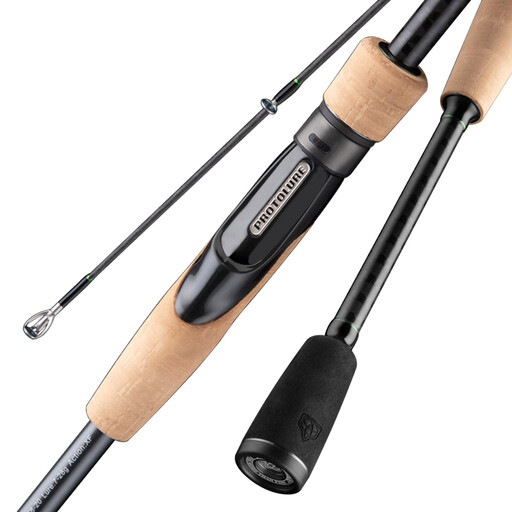
Why this choice suits this profile : This two-section rod is advertised for bass fishing in both fresh and salt water. It is suitable for varied trips, especially when transport and versatility really matter.
The two-section design and clear freshwater/saltwater designation make its intended use clearer than a simple promise of versatility.
Two-section model; advertised for bass fishing, freshwater and saltwater.
We have put together a complete, real-time updated selection of products that meet these choice criteria as well as European safety requirements.
To complete your rod and reel, a few accessories may prove useful depending on how you fish:
After a sea fishing trip, rinse the rod, reel and accessories with fresh water, without using a high-pressure jet. Dry everything thoroughly before putting the equipment away, then loosen the reel drag to reduce strain during storage.
Start by pairing a rod whose power range genuinely matches your lures with a suitably sized spinning reel. For trout and small streams, choose a lightweight, easy-to-handle setup. For bass, check the rod power, length and line strength before buying.
Some models, such as the Protolure CC 2sec Sea Bass Rod, are advertised for both freshwater and saltwater. This versatility does not remove the need for careful maintenance: after every sea fishing trip, rinse the rod with fresh water, allow it to dry completely and inspect its guides.
Avoid placing it in the sand, rinse it without excessive pressure after a sea fishing trip and regularly check the line roller, spool and drag. Replace the line as soon as it shows signs of wear or develops recurring knots. This will help keep maintenance costs under control and prevent you from having to replace the entire setup prematurely.