
Livraison le jour même ou le lendemain

Qualité garantie

Débloquez vos offres de bienvenue: Livraison GRATUITE | Jusqu'à -80 % | 30 jours d'essai gratuits à JoyPlus
Téléchargez l'application
Buying an ECOODA fishing lure without checking its type, weight or diving depth can quickly lead to the wrong choice. A model designed for coastal trolling won't necessarily suit an angler fishing from a boat in deeper waters. Similarly, a jig that's too light risks losing stability when the current picks up.
Before comparing different references, keep three common pitfalls in mind:
A trolling lure is designed to be towed behind a boat. Its balance and lip determine its action as the boat moves forward. For sea fishing or on large reservoirs, make sure the model matches the trolling speed you use and the depth you're targeting.
An Inchiku jig works differently: you let it sink before working it with lifts and drops. The ECOODA AVANZATO range comes in 60 g, 80 g, 100 g, 120 g and 200 g. This range lets you adjust the sink rate and hold in the current, but these weights are obviously not interchangeable.
Whether you're fishing in fresh or salt water, also consider the strength of your leader, the reliability of your knots and the condition of your hooks. The "freshwater and saltwater" label doesn't mean you can skip maintenance after each trip.
The ECOODA Cyan Blue Minnow 165DD is described as a lure diving to 10 m. Its specifications show a body length of 165 mm, a weight of 64 g, a lip of 66 mm and a diving bill length of 130 mm.
These figures describe the lure's design, but they don't guarantee the same depth in every condition. The actual depth reached varies depending on the length of line deployed, line diameter, boat speed and current strength.
The 165MD and 165DD versions should not be treated as interchangeable without checking the specifications of the model you choose. If you're looking for a 165 mm minnow lure for offshore trolling, carefully check the reference and the suffix that indicates diving depth before ordering.
The weight of the lure affects sink rate, feel during the retrieve and the load placed on your entire setup. A 60 g Inchiku jig can work well with a light rod and in shallow areas. The 80 g and 100 g versions offer a versatile compromise. The 120 g and 200 g models are better suited to situations where depth or current demand a faster, more stable descent.
Your choice must remain consistent with your rod power, reel, braid and leader. A lure designed for big predators will never make up for underpowered tackle.
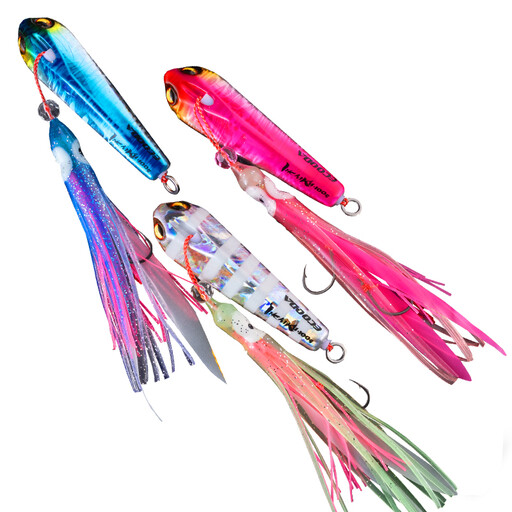
Why this suits this profile: At 60 g, this jig offers a simple starting point for discovering this technique in areas where a very heavy model isn't necessary.
The weight is clearly stated in the reference, which reduces the risk of confusing this light model with a version designed for strong currents.
A stated weight of 60 g and six colours to vary your presentation without changing lure category.
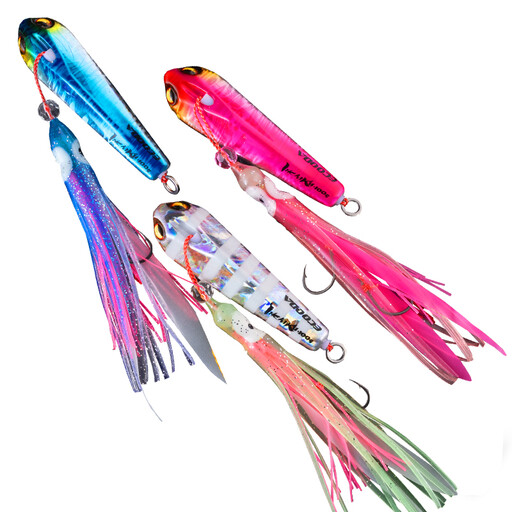
Why this suits this profile: Its 200 g weight is aimed at anglers already equipped for deep water or strong currents.
The reference clearly shows the 200 g weight. You can check compatibility with your rod before buying, rather than relying on the lure's appearance.
A 200 g weight and six stated colours, with a clear focus on heavy jig fishing.
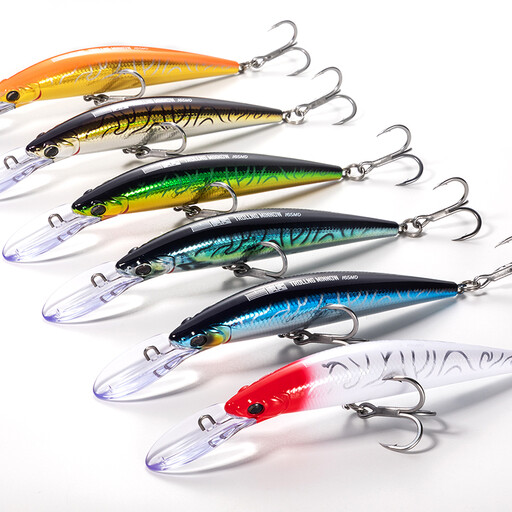
Why this suits this profile: This 165 mm minnow is designed for trolling in salt or fresh water, when your aim is to fish down to 10 m.
The product page clearly states the 165DD model, a maximum depth of 10 m and a weight of 64 g, rather than relying on a vague promise.
A hard plastic body, deep lip, SIKE 3509 5X size 2 hooks and a stated depth of up to 10 m.
We've put together a comprehensive, real-time updated list of products that fully meet these strict selection criteria and European safety regulations.
After a sea fishing session, rinse the lure with fresh water, dry it thoroughly and inspect the hooks. For the 165DD model, the product page specifically recommends checking for rust, blunt points or damage to the lure body.
Attach your line to the front eyelet with a suitable knot, such as a Palomar knot or an improved clinch knot. The hooks are particularly sharp: handle them with care, especially when unhooking fish and storing your gear.
The 60 g is suitable for a light approach when depth and current are moderate. The 80 g, 100 g and 120 g weights cover intermediate situations. The 200 g requires a rod and line capable of handling that load. Always check your equipment manufacturer's recommendations.
The product page states a maximum depth of 10 m. However, this value depends on trolling speed, the length of line let out, line diameter and water conditions. It should therefore be treated as a guide for choosing your lure, not as a guarantee that applies in every situation.
Rinse it with fresh water after each trip, dry the hooks thoroughly and store it in a dry box, away from direct sunlight. Before your next session, also inspect the split rings, hooks and lip.