
Livraison le jour même ou le lendemain

Qualité garantie

Débloquez vos offres de bienvenue: Livraison GRATUITE | Jusqu'à -80 % | 30 jours d'essai gratuits à JoyPlus
Téléchargez l'application
From size 5 onwards, your child’s needs can change quickly. They’ll move around more, may spend several hours in their nappy and sometimes drink a lot during the night. So when looking for eco-friendly nappies for 11–25 kg that offer comfort, absorbency and a reasonable price, it’s worth looking beyond the claims on the pack.
Words such as ‘natural’, ‘hypoallergenic’ or ‘leak-proof’ aren’t always enough to help you choose between two products. Here are the things to check before you buy, along with a selection of pack sizes to suit different needs.
A nappy can contain a proportion of bio-based materials while also including synthetic components needed for absorbency, elasticated edges or fastening. So check the percentage stated and which parts it applies to.
For the Love & Green size 5 nappies featured here, the product listing states that 71% of the components are bio-based, including an absorbent section made from 100% bio-based materials. This doesn’t mean the whole nappy is biodegradable or plastic-free.
Size 5 doesn’t fit exactly the same way across every brand. For a child weighing 11–25 kg, pay particular attention to:
A nappy that’s too big can leave gaps where leaks may escape. On the other hand, a nappy that’s too snug may restrict movement and leave marks on your child’s skin.
A monthly pack of 160 nappies can be handy for reducing the number of orders you need to place and the cost per nappy. However, this size may be less worthwhile if your child is nearing the next size, already wears pull-ups or goes through nappies at a very variable rate.
Before ordering four packs of 40, estimate how many changes you make each day and check any batch details or use-by dates shown on the packaging.
Claims such as ‘enhanced absorbency’ or ‘leak protection’ are best treated as guidance, not a guarantee for every situation. How well a nappy performs also depends on your child’s build, how often you change them and how the nappy is positioned.
An FSC-certified baby nappy may contain cellulose from certified forests, but the FSC label alone doesn’t tell you how absorbent it is. For the Love & Green product, the cellulose in the absorbent section is stated to be FSC certified and bleached without elemental chlorine.
If you’re looking for nappies without perfume or lotion, check the materials list and the information provided by the manufacturer. The Love & Green size 5 nappy is described as fragrance- and lotion-free, with a topsheet in contact with the skin made from Green PE derived from sugar cane and PLA.
The term hypoallergenic baby nappies tells you about the product’s formulation, but it can’t predict how every child will react. If irritation persists, stop using the product and seek advice from a healthcare professional.
The product listing mentions Ecolabel, FSC, Dermatest 5 stars, Vegan and Cruelty Free. These certifications or claims don’t all relate to the same things: the origin of fibres, skin testing, animal welfare or environmental standards. Always check the exact scope of each label on the packaging or with the manufacturer.
The product is stated to be designed in France and made in Spain. It should therefore not be described as made in France.
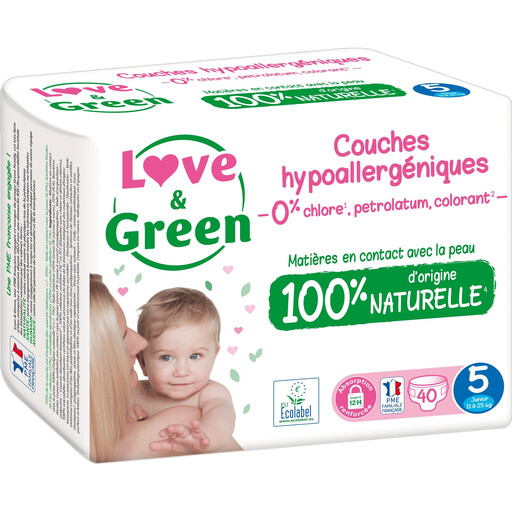
Why this is a good choice for this type of shopper : A pack of 40 nappies lets you try the size, fit and how well your child’s skin tolerates them before buying a larger pack.
The smaller pack reduces the risk of being left with an unusable stockpile if the fit isn’t right for your child.
Stated weight range of 11–25 kg, 71% bio-based components according to the product listing, and no perfume or lotion.
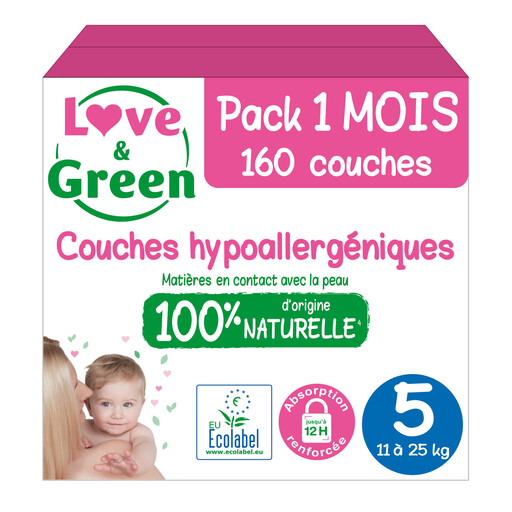
Why this is a good choice for this type of shopper : The 160-nappy pack suits families who use size 5 regularly and prefer to plan their shopping for the month.
The four separate packs are easy to store and mean you don’t have to open the whole stock at once.
160 nappies in total, packaging stated to be made from recycled and recyclable plastic, designed in France and made in Spain.
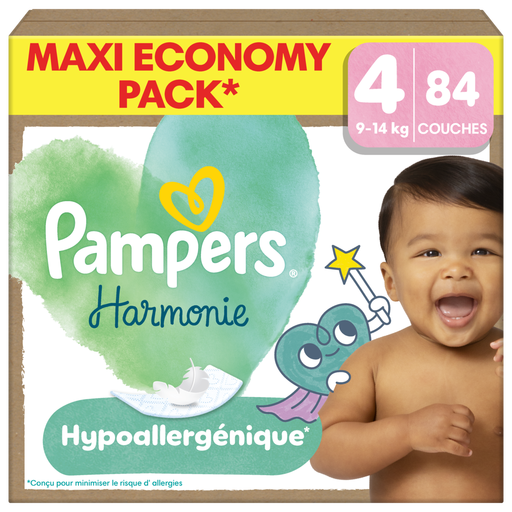
Why this is a good choice for this type of shopper : This alternative may suit a child weighing 9–14 kg if size 5 is still too roomy and comfort is your top priority.
The clearly stated weight range helps you avoid moving up to a size that’s too big too soon.
Topsheet stated to contain 50% plant-based components, cellulose from FSC-certified sources and a wetness indicator.
We’ve selected a comprehensive range of products, updated in real time, that meet these exacting criteria and European safety standards.
How many you use depends on your child’s age, whether they’re potty training and how often you change them during the night. A pack of 160 nappies may last some children around a month, but the most reliable approach is to track your usage for a week before buying in bulk.
Choose a size based on your child’s weight, then carefully pull out the leak guards around their thighs. The nappy should fit snugly without pinching. If leaks keep happening, check how it sits at the back, the direction of the fastenings and whether the size suits your child’s build.
No. Vegan and cruelty-free claims generally refer to the absence of animal-derived ingredients and animal testing, according to the manufacturer’s or label’s criteria. They don’t mean the whole nappy is compostable or biodegradable. Always check the materials, recycling instructions and disposal guidance on the packaging.