
Livraison le jour même ou le lendemain

Qualité garantie

Débloquez vos offres de bienvenue: Livraison GRATUITE | Jusqu'à -80 % | 30 jours d'essai gratuits à JoyPlus
Téléchargez l'application
Choosing eco-friendly home and baby products isn’t just about spotting a green leaf or the word “natural” on the packaging. With environmental claims that are hard to compare, awkward formats, and formulas that don’t suit every use, certain mistakes can quickly add to the household budget.
Here are the key criteria to consider before buying, along with a selection tailored to different types of households.
A product may contain cotton, bamboo or plant fibres without being fully biodegradable, compostable or free from synthetic elements. An eco-friendly baby nappy, for example, often combines several materials: cellulose, plant-based polymers, elastics and adhesives.
So take the time to check the full ingredients list, rather than relying solely on the material highlighted on the front of the pack.
The term hypoallergenic generally means the product has been designed to limit certain risks of irritation. However, it does not guarantee that no user will have a reaction. For sensitive skin, choose products without fragrance, without colourants and without lotions, depending on your needs.
If a reaction occurs, stop using the product and seek advice from a healthcare professional. Hygiene and cleaning items are never a substitute for medical advice.
A product marketed as eco-friendly may not be economical if you need to use a large amount or replace it frequently. Compare the number of washes, nappies, sheets or wipes per pack. For cleaning, a reusable cloth can reduce product consumption, while a concentrated laundry detergent should be dosed according to the load and level of soiling.
For an eco-friendly hypoallergenic laundry detergent, check in particular:
The EU Ecolabel covers several environmental and usage-related criteria. However, it does not mean the product poses no risk of reaction for all skin types.
For nappies, certifications such as FSC, the EU Ecolabel or dermatological tests can provide additional guidance. Also check the size matches your child’s weight and monitor their skin condition regularly.
The terms “biodegradable”, “compostable” and “recyclable” do not mean the same thing. A compostable kitchen towel must be disposed of according to the facilities available in your local area. Wipes, even those marketed as biodegradable, must never be flushed down the toilet.
Most disposable hygiene products, particularly nappies, should be placed in the general household waste. Always check your local disposal guidelines.
For durable kitchen accessories, consider the dimensions, washing method and resistance to moisture. Wood and bamboo often require hand washing, followed by thorough drying. A natural fibre basket should be kept away from standing water and heat sources.
For cleaning windows, a reusable microfibre window cloth can be used with just water, following the manufacturer’s instructions. Avoid fabric softener, as it may reduce the fibres’ effectiveness.
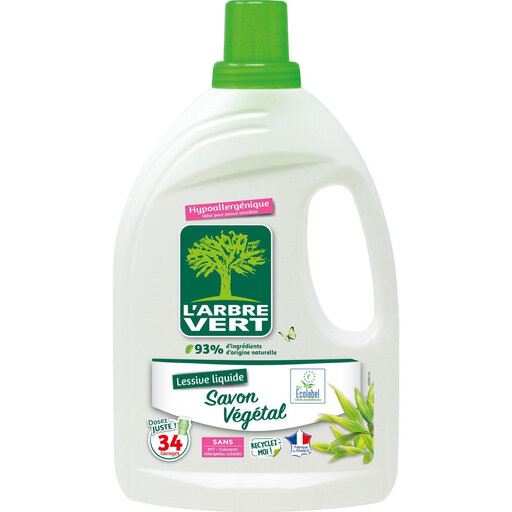
Why this choice suits this profile: Its 34-wash format is ideal for households wanting to try a detergent marketed as hypoallergenic and plant-based, without stocking up on multiple products.
The product page states 93% naturally derived ingredients, no colourants or optical brighteners, and a refillable, recyclable bottle. However, dosage must follow the label instructions.
EU Ecolabel stated on the product page, 1.53 L bottle and a formula suitable for both white and coloured laundry.
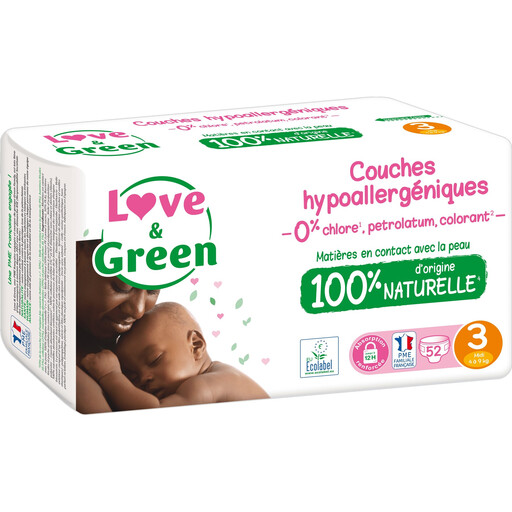
Why this choice suits this profile: This option is aimed at parents who are attentive to the ingredients, the certifications shown and the nappy’s fit according to their child’s weight.
The product page specifies a 68% bio-based composition, a bio-based absorbent core and the absence of fragrance and lotion. Size 3 is suitable for babies weighing 4 to 9 kg.
52 nappies per pack, FSC-certified cellulose and packaging made from recycled and recyclable plastic according to the product page.
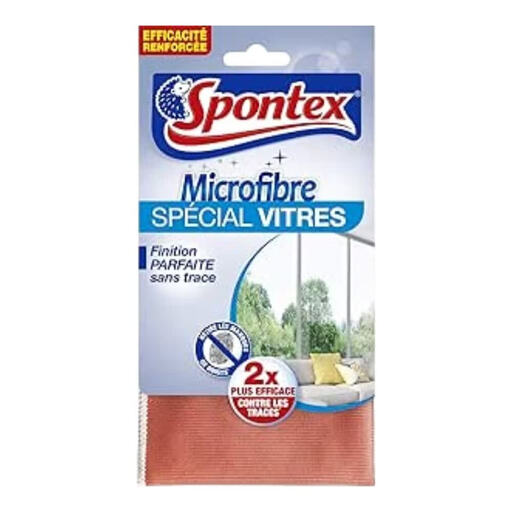
Why this choice suits this profile: Households that regularly clean patio doors, mirrors and glass surfaces will benefit from a reusable accessory that is easy to store.
According to the product page, it can be used with just water, which may eliminate the need for an additional cleaner. Machine wash at 60 °C, without fabric softener or tumble drying.
35 × 35 cm size, designed for windows and glass surfaces, with a construction described as recyclable.
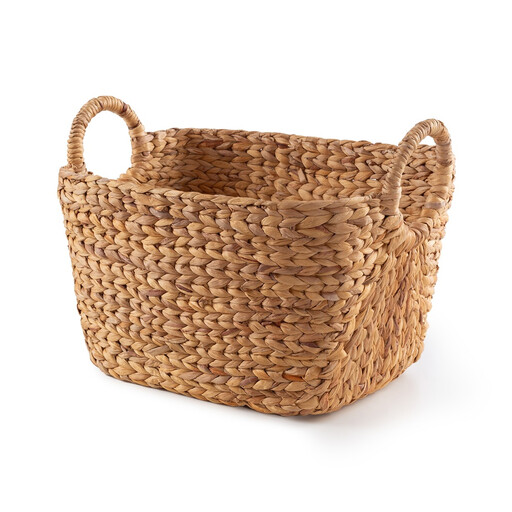
Why this choice suits this profile: Its large size can find a place in a child’s bedroom, hallway or utility room for storing toys, laundry, throws or cushions.
Its dimensions are clearly stated: 51 × 30 × 30.5 cm. Water hyacinth should be cleaned dry or with a slightly damp cloth, without submerging.
Woven finish, described as handmade and a volume suitable for household storage.
We have compiled a comprehensive, real-time updated list of products that meet these strict selection criteria and European safety regulations.
Depending on your habits, you might also be interested in biodegradable wipes, cotton handkerchiefs, compostable kitchen towel, anti-discolouration sheets and eco-friendly cleaning products. In the kitchen, bamboo accessories, FSC-certified wooden utensils, biodegradable tableware and cork coasters can gradually complement your approach.
For a family table, eco-friendly table decorations should be stable, washable where possible and suitable for the age of the children. Items made of glass or containing small parts require particular care.
Not necessarily. The unit price may be higher, but the lifespan, the ability to refill the product or the number of washes changes its real cost. Compare the price per wash, per nappy, per sheet or per use.
Start by checking the weight stated on the pack, then look at the presence or absence of fragrance, lotion, colourants and chlorine, according to your preferences. A nappy described as hypoallergenic does not eliminate all risk of reaction. Monitor your baby’s skin and change them regularly.
No. Even when marketed as biodegradable, wipes must be placed in the appropriate bin, unless very specific local guidelines state otherwise. Toilets are reserved for waste designed to be disposed of through the sanitary system.