
Livraison le jour même ou le lendemain

Qualité garantie

Débloquez vos offres de bienvenue: Livraison GRATUITE | Jusqu'à -80 % | 30 jours d'essai gratuits à JoyPlus
Téléchargez l'application
Choosing an eco-friendly dish soap? In theory, it's simple. Yet, between marketing promises and daily reality, it's easy to end up with a product that cleans poorly, irritates your skin, or has a much murkier environmental impact than advertised. Our mission: to help you decode the labels and make a truly informed choice that combines effectiveness with respect for the environment.
To start, let's review the most common pitfalls that could make you regret your purchase.
A few objective criteria are all you need to avoid these disappointments. They are the true guarantors of an eco-friendly dish soap's quality.
The most reliable way to verify a brand's promises is to trust independent labels. The most recognised in Europe is the European Ecolabel.
The term organic dish soap can be misleading. It often indicates that some ingredients (like essential oils) are from organic farming, but it doesn't guarantee anything about the entire product. To get a clearer picture, check these points:
Rather than an endless list, we've matched specific products to concrete needs, based on the objective criteria we've just reviewed.
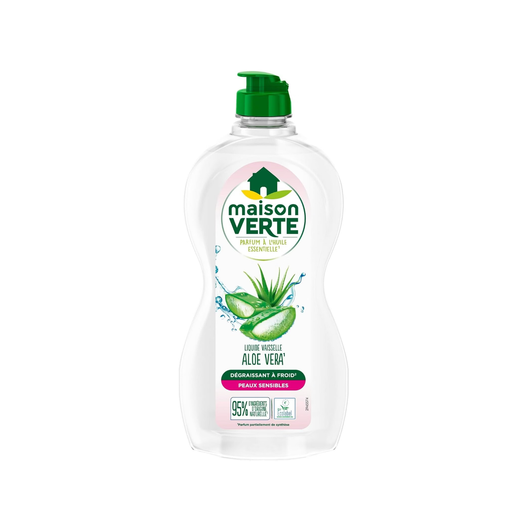
Why we recommend it: This product is the solution for those who wash dishes by hand every day and dread dryness or irritation. Its formula is designed primarily for skin comfort.
It directly addresses the pitfall of hidden harshness. The "dermatologically tested" claim and its hypoallergenic formulation offer a real guarantee, far more reliable than the simple word "natural."
Its cold-water degreasing formula is effective from 20 °C, allowing for significant energy savings. It is, of course, certified with the European Ecolabel.
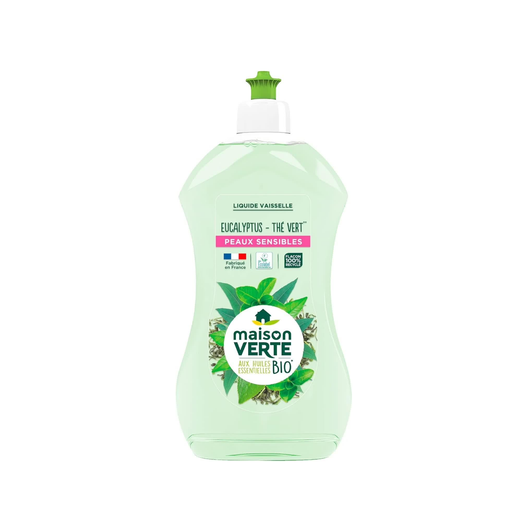
Why we recommend it: For those who want an eco-friendly product with no compromise on performance, while enjoying a pleasant sensory experience thanks to a fresh, subtle fragrance.
It avoids the pitfall of sacrificed effectiveness. The European Ecolabel certification requires strict performance tests, guaranteeing a degreasing power that meets expectations, even on very dirty dishes.
Made in France, it contains organic essential oils and its bottle is made from 100% recycled plastic. The icing on the cake: the fragrance was developed with a renowned French perfumery.
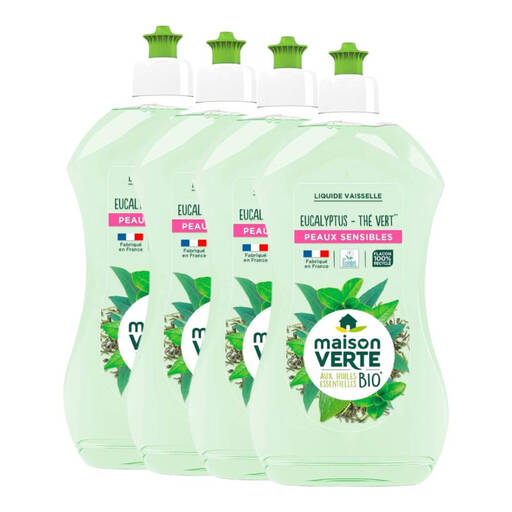
Why we recommend it: Ideal for families or anyone looking to optimise their budget and make fewer shopping trips. Buying in bulk is both more economical and more ecological.
This bulk format provides access to a certified eco-friendly product at a much more attractive cost per litre. It debunks the myth that a responsible choice must be more expensive. Here, you don't have to sacrifice quality or your wallet.
The 2-litre format (4 bottles) reduces packaging waste in the long run and ensures you have a comfortable supply. It naturally retains all the guarantees of the single-bottle product: Ecolabel, effectiveness, and French manufacturing.
Explore our full selection of products that meet these demanding selection criteria and current regulations.
Yes, provided you choose it carefully. A product certified with the European Ecolabel has mandatory performance tests that guarantee a washing effectiveness comparable to that of market leaders. Modern formulas, like those in the Maison Verte range, are specially designed to dissolve the toughest grease.
The term "organic" on a cleaning product refers to the presence of ingredients from organic farming (essential oils, plant extracts...). It in no way means that 100% of the components are organic. For a complete picture of a product's ecological commitment, the European Ecolabel remains the most reliable indicator.
The balance lies entirely in the choice of ingredients. Formulas for sensitive skin use plant-based cleaning agents (surfactants), which are much less harsh than some petrochemical derivatives. They are also formulated without dyes, with hypoallergenic fragrances, and are dermatologically tested to ensure optimal skin tolerance.