
Livraison le jour même ou le lendemain

Qualité garantie

Débloquez vos offres de bienvenue: Livraison GRATUITE | Jusqu'à -80 % | 30 jours d'essai gratuits à JoyPlus
Téléchargez l'application
Giving your baby the best while protecting the planet: this is the dual challenge facing many parents today. The eco-friendly baby diaper aisle has never been more crowded, but how can you navigate the marketing promises to find what's real? It's a genuine headache. Some "green" claims hide compromises, while seemingly minor features can make all the difference for your child's comfort.
To avoid falling into the trap (and prevent unnecessary expenses), here are the most common pitfalls:
To make an informed choice, forget the slogans and focus on objective criteria.
Beyond size, three criteria are essential to ensure your baby's comfort and your peace of mind.
This is THE number one criterion for diapers for sensitive skin. The thin layer of fabric in direct contact with your baby's epidermis must be as neutral and soft as possible.
Labels and certifications are your best allies for verifying brand promises. They are issued by independent organizations and provide an objective guarantee.
These certifications are a mark of quality for healthy diapers that are more respectful of the environment.
For hypoallergenic diapers, the golden rule is simplicity. A short, transparent ingredient list is a good sign. Ensure the product is formulated chemical-free, specifically avoiding:
To guide you, here is our selection of products that check all the boxes for composition and certification, tailored to specific needs.
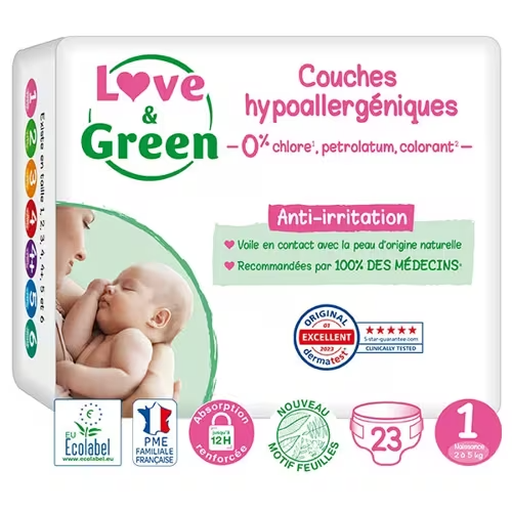
Why we chose it: Perfect for the first few days, this pack size lets you test a product designed for the ultra-delicate skin of newborns without committing to a large quantity.
It sidesteps the sensitive skin trap by offering a 100% natural origin topsheet (from cornstarch and sugarcane), with no petroleum-based plastic.
Hypoallergenic composition (0% chlorine, fragrance, lotion) and EU Ecolabel certified for optimal respect for skin and the environment.
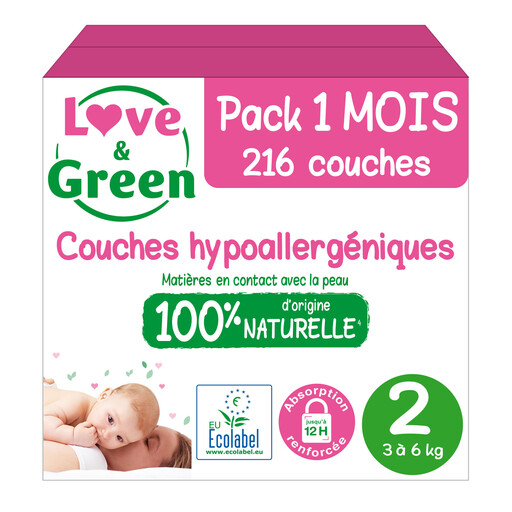
Why we chose it: The practical and economical solution for parents who have confirmed the right size and want to stock up for the month, while benefiting from an optimized cost-per-diaper.
This monthly pack sidesteps the trap of frequent, more expensive purchases. It ensures you have a comfortable stock and peace of mind to focus on what matters most.
The perfect blend of value and high quality: natural origin topsheet, 0% unwanted ingredients, and EU Ecolabel certification.
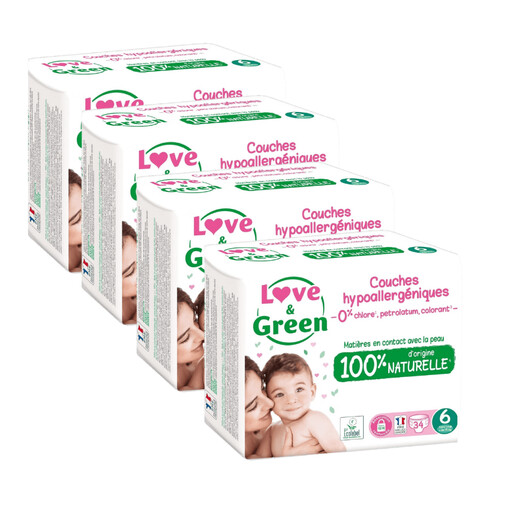
Why we chose it: Designed for children 15 kg and up, this diaper combines a healthy composition with a comfortable structure, adapted to the boundless energy of older kids.
This model makes no compromises on its composition. It maintains a 100% natural origin topsheet, whereas many competitors switch back to plastic for larger sizes.
Optimal comfort for active children thanks to its soft tabs and ultra-soft absorbent core, all while being FSC certified.
We have selected a complete range of products that meet these demanding selection criteria and French regulations.
The term "eco-friendly" refers to a product that minimizes its environmental impact (renewable materials, certifications like the EU Ecolabel). The term "organic diapers" should, in theory, apply to diapers containing raw materials from organic farming (e.g., organic cotton). In practice, the distinction is often blurry. Your best bet: scrutinize the ingredient list and look for labels like FSC or TCF.
The changing frequency is no different from that of a conventional diaper. For perfect hygiene and to prevent irritation, it is advisable to change your baby every 2 to 3 hours and, of course, as soon as the diaper is soiled. The promise of up to 12 hours of protection, advertised by brands like Love & Green, is primarily designed to ensure peaceful nights.
Absolutely. The technology has made enormous progress. Today's natural baby diapers feature high-performance absorbent cores, often made from FSC certified wood pulp, combined with just the right amount of super-absorbent microbeads (sodium polyacrylate). In fact, reputable brands don't hesitate to publicize their excellent results in absorption tests, which easily rival those of conventional diapers.