
Livraison le jour même ou le lendemain

Qualité garantie

Débloquez vos offres de bienvenue: Livraison GRATUITE | Jusqu'à -80 % | 30 jours d'essai gratuits à JoyPlus
Téléchargez l'application
Reducing chemicals at home or limiting the impact of packaging isn’t simply a matter of choosing the first bottle decorated with a green leaf. Eco-friendly cleaning products cover a wide range of options: certified detergents, naturally derived formulas, eco-refills, vegan products and recycled packaging.
To avoid unwelcome surprises, it’s best to check the intended use, the stated ingredients and the safety instructions. Here are the criteria to consider before choosing an eco-friendly laundry detergent, washing-up liquid or car cleaning product.
A claim such as ‘natural’, ‘green’ or ‘planet-friendly’ does not necessarily refer to a specific standard. To compare products on a firmer basis, look for an ECOCERT-certified product or an Ecolabel-certified product, then check the exact name of the standard shown on the packaging.
These certifications do not mean that a product is risk-free or completely free from synthetic ingredients. They are based on specific criteria covering formulation, environmental impact and packaging, among other aspects. Reading the label is therefore still essential.
A wheel cleaner cannot replace a product designed for fabrics. Similarly, a car glass cleaner may be suitable for certain glass surfaces, but not necessarily for screens, delicate plastics or hot surfaces.
An acid-free wheel cleaner can be a useful choice if you want to limit the use of harsh formulas. However, you must follow the recommended contact time, rinse thoroughly and avoid allowing the product to dry on the surface.
A larger bottle is not necessarily more economical if the recommended dosage is high. For laundry detergent, compare the number of washes, the total volume and the amount required per cycle. An eco-refill can reduce the amount of plastic used, but its benefits also depend on the format, transport and whether the container can genuinely be reused.
A product bearing the EU Ecolabel or ECOCERT Greenlife certification must be identified precisely. Check:
A formula described as vegan or free from microplastics meets a specific criterion, but that does not mean you can skip checking the rest of the label.
For your car, choose a product designed for the area you want to clean:
Test the product on an inconspicuous area whenever recommended by the manufacturer. Never apply a product to a hot surface, and avoid brakes, controls or screens when they are not listed as suitable for use.
A spray bottle with a level indicator makes it easy to monitor how much product remains. For laundry, an eco-refill can reduce plastic use compared with a conventional bottle. However, concentrated products must be dosed accurately: using more does not automatically make the wash more effective.
For coloured laundry, colour-catcher sheets can complement your routine when washing mixed colours. They do not replace sorting clothes or following care instructions.
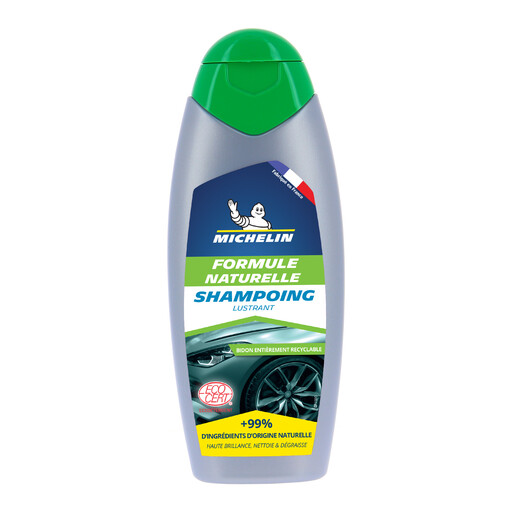
Why this choice suits this profile : A 500 ml format for regular bodywork care, without having to buy multiple different products.
It is clearly intended for lacquered, metallic or pearlescent paintwork, with dilution instructions shown on the bottle.
More than 99 % of the ingredients are stated to be naturally derived, and the product is certified as an eco-friendly detergent by ECOCERT Greenlife.
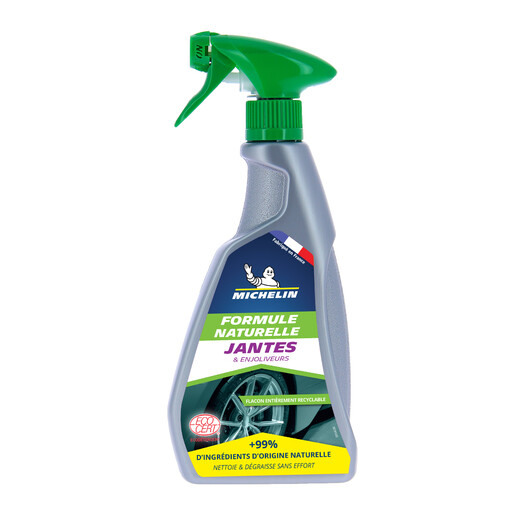
Why this choice suits this profile : A dedicated solution for wheels and hubcaps, designed for drivers who want to protect their vehicle’s finishes.
The formula is stated to be acid-free and suitable for tyres and braking systems. However, it requires thorough rinsing.
An ergonomic 500 ml spray bottle, a level indicator and a stated biodegradable formula certified by ECOCERT Greenlife.
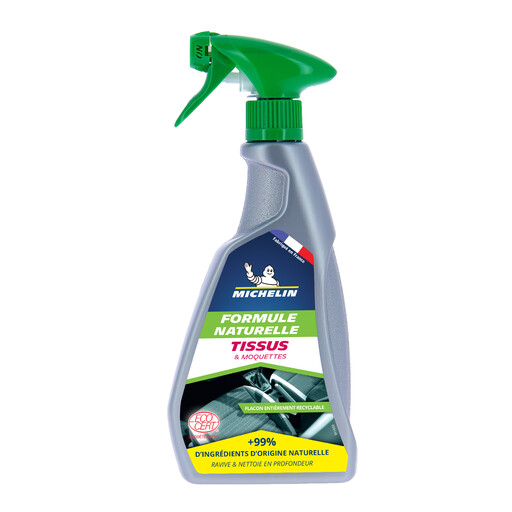
Why this choice suits this profile : Suitable for the seats, mats, carpets and headlining of a family car or a heavily used vehicle.
It is designed for car upholstery rather than being a general-purpose cleaner. Testing it on an inconspicuous area is still recommended before applying it more widely.
The 500 ml spray is stated to be fast-drying, and the formula contains more than 99 % naturally derived ingredients.
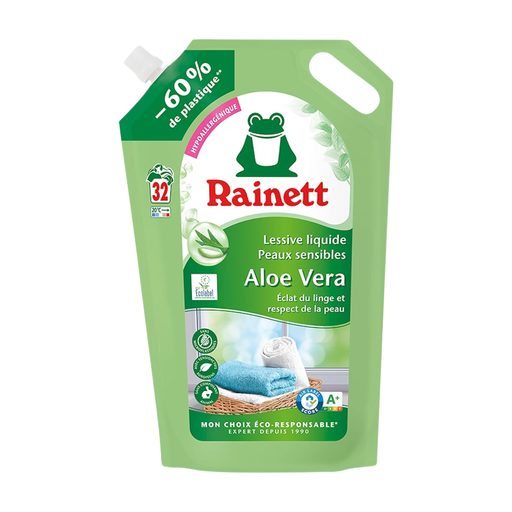
Why this choice suits this profile : A 1.6 L format stated to provide 32 washes, suitable for low-temperature washing according to the garment label.
The ‘for sensitive skin’ claim is accompanied by a stated dermatological test and precise instructions. However, it is not a medical guarantee.
A stated vegan formula, EU Ecolabel certification, aloe vera and an eco-refill format designed to reduce plastic use.
A well-planned routine can remain very simple:
For your car, avoid mixing several cleaning products in the same container. Use a clean microfibre cloth for each area to prevent abrasive particles from being transferred from the bodywork to the glass surfaces.
We’ve put together a complete, real-time-updated list of products that meet these strict selection criteria, as well as European safety regulations.
Some are, depending on the information provided by the manufacturer and the certification obtained. ‘Biodegradable’ does not mean that the product can be released directly into the environment. Follow the dosage, rinsing and disposal instructions shown on the label.
Some formulas are stated to be effective from 20 °C. Results depend on the fabric, dosage, drum load and level of soiling. Always follow the garment label and the product instructions.
Shelf life depends on the formula and storage conditions. Keep the bottle closed, away from heat and sunlight, and out of children’s reach. To find the expiry date and batch number, check the packaging directly.