
Livraison le jour même ou le lendemain

Qualité garantie

Débloquez vos offres de bienvenue: Livraison GRATUITE | Jusqu'à -80 % | 30 jours d'essai gratuits à JoyPlus
Téléchargez l'application
Switching to eco-friendly cleaning products helps cut down on unnecessary packaging and favours formulas with better-documented ingredients. But labels like “natural”, “plant-based” or “environmentally friendly” aren’t enough to tell two products apart. A poorly dosed eco-friendly laundry detergent can end up costing more per wash, while a refill that isn’t compatible with your bottle might languish at the back of a cupboard.
Here are the criteria to consider before buying an eco-friendly laundry detergent, an eco-friendly washing-up liquid, dishwasher tablets or a household cleaner.
Even a product with a high proportion of naturally derived ingredients can irritate eyes or skin. Pay close attention to the list of fragrances, preservatives and certain surfactants. In a home with children or sensitive individuals, choose a fragrance-free formula, a hypoallergenic claim where stated by the manufacturer, and clearly indicated usage precautions.
The term natural household products doesn’t mean you can skip reading the ingredients list or checking the hazard pictograms.
Recyclable packaging isn’t necessarily reusable, and a refill is only worthwhile if it genuinely prevents you from buying a new bottle. Check the volume you get after dilution, the number of washes stated, and the recycling instructions applicable in your area.
Labels provide a more precise framework. The EU Ecolabel takes into account several criteria related to formulation, performance and environmental impact. Ecocert, depending on the specific standard, governs the origin of certain ingredients and manufacturing practices. However, these certifications don’t mean the product is risk-free or suitable for every use.
Two 1.5-litre bottles won’t necessarily give you the same number of washes. Compare the price per wash, the recommended dose based on water hardness and the level of soiling. A concentrated laundry detergent can work out more economical despite a higher shelf price, if each cycle requires less product.
To choose an ecolabelled household product, look for the official logo on the packaging and check the product details. Claims like “phosphate-free”, “dye-free” or “free from MIT, BIT and CMIT” give useful pointers, but they only describe part of the formula.
Also read the warnings: many detergents can cause eye irritation. Keep them out of reach of children, never mix them, and wear gloves if the instructions recommend it.
A household cleaning refill often reduces the amount of plastic or water transported. However, it does require a compatible bottle and careful adherence to the dosage. Some sachets need to be diluted with a precise amount of tap water. Incorrect dilution can alter the product’s texture and effectiveness.
When it comes to packaging, understand the difference between recycled and recyclable: the former refers to material already used in manufacturing, while the latter means it can be processed after use. Options vary depending on local recycling facilities.
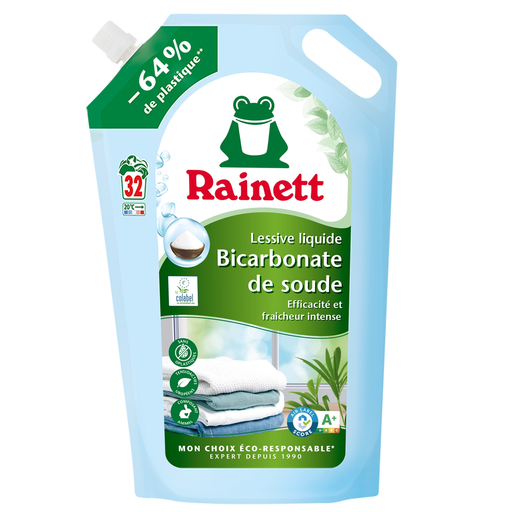
Why this choice suits this profile: This format makes switching to eco-friendly laundry detergent easy, with 32 washes stated and effectiveness indicated from 20°C to 95°C.
The number of washes lets you compare the cost per cycle, rather than just looking at the bottle price. The refill format also reduces the need for a new bottle.
Stated EU Ecolabel certification, bicarbonate formula and claimed absence of MIT, BIT and CMIT.
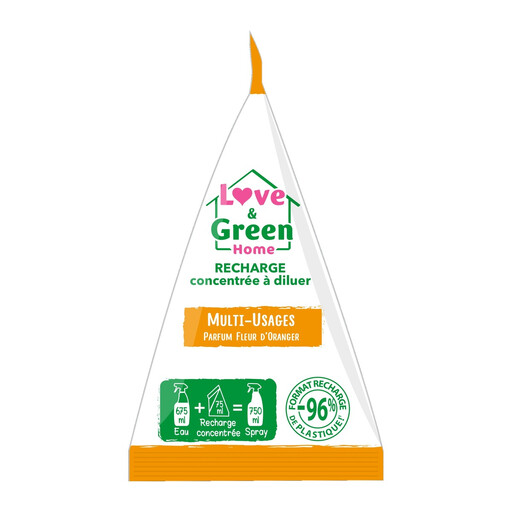
Why this choice suits this profile: This concentrate is ideal for those who want to reduce packaging while keeping a reusable spray bottle for daily cleaning.
The dilution is clearly stated: 75ml of concentrate to 675ml of water. According to the product details, the bottle can be reused up to seven times.
Two 75ml refills, 99% naturally derived ingredients stated and Ecocert Ecodetergent certification.
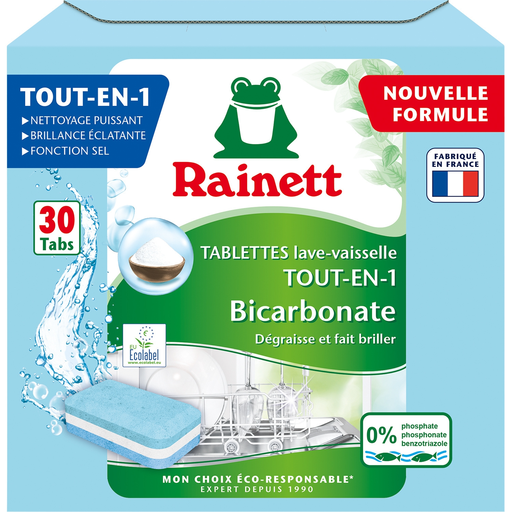
Why this choice suits this profile: One tablet per cycle simplifies dosing for households that use their dishwasher regularly.
The product details state it is for automatic dishwashers and recommend salt or rinse aid if the water exceeds 38°f.
Formula stated to be free from phosphates and phosphonates, EU Ecolabel certification and recycled and recyclable cardboard.
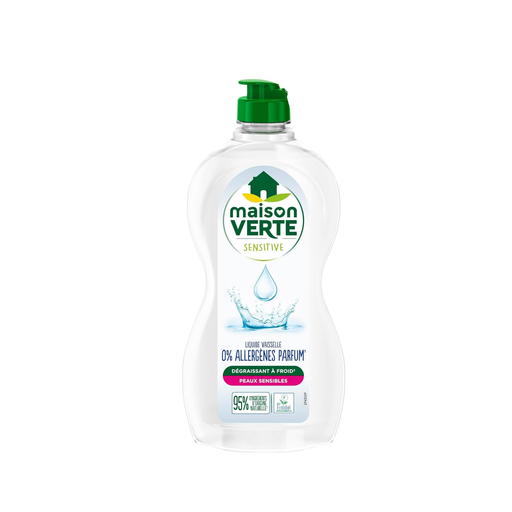
Why this choice suits this profile: This product is suitable for kitchens where you want to avoid added fragrances when washing dishes by hand.
The product details state 0% fragrance and allergens, and it can be used at 20°C for cold degreasing.
Stated hypoallergenic formula, EU Ecolabel certification and intended for hand washing.
We’ve put together a comprehensive, real-time updated list of products that meet these demanding selection criteria and European safety regulations.
Some formulas state they can be used from 20 or 30°C, but the result depends on the stain, the fabric, the dosage and how full the machine is. Pre-treat stubborn stains and always follow the garment care label. A lower temperature can reduce energy consumption, but it may not deliver exactly the same result in every situation.
Not necessarily. Compare the price per wash or per litre of ready-to-use product. For a concentrate, check the amount of water to add and how many times the bottle can be reused. A household cleaning refill becomes genuinely worthwhile when the container is actually reused and the dilution instructions are followed.
No, unless the packaging explicitly allows it. A washing-up liquid designed for hand washing can create too much foam in a machine. Only use eco-friendly dishwasher tablets or a detergent designed for the appliance, taking into account water hardness and the manufacturer’s recommendations.