
Livraison le jour même ou le lendemain

Qualité garantie

Débloquez vos offres de bienvenue: Livraison GRATUITE | Jusqu'à -80 % | 30 jours d'essai gratuits à JoyPlus
Téléchargez l'application
Choosing a new motorcycle helmet can be a daunting task, especially since the new ECE 22.06 safety standard came into effect. Between helmet types, features, and protection levels, it's easy to get lost. This guide is here to shed light on the essential criteria and present a selection of helmets that tick all the boxes for safety and comfort. The goal? To help you make the right choice, fully informed.
As a product expert for Joybuy, my mission is simple: to give you clear, objective advice, free of marketing jargon, to guide you to the helmet that's right for you.
Before we dive into specific models, let's review the fundamentals that define an excellent helmet in 2026.
This is THE major revolution in the world of helmets: ECE 22.06 certification is now mandatory for all new models. Much more demanding than the old 22.05 standard, it imposes drastic tests:
Choosing an ECE 22.06-certified motorcycle helmet means ensuring a much higher level of safety, whether for your daily commute or long weekend rides.
The modular motorcycle helmet shines with its versatility: its chin bar flips up, transforming it into a jet-style helmet for a quick stop, while still offering the protection of a full-face helmet when you're on the move. It's the ideal companion for urban scooter riders and long-distance motorcyclists alike.
The game-changing detail: dual P/J certification.
A P/J modular helmet therefore guarantees you complete, legally-compliant flexibility.
A safe helmet is good. A safe AND comfortable helmet is better. Here are the details that matter:
We have selected models for you that combine the new ECE 22.06 standard with well-thought-out features.
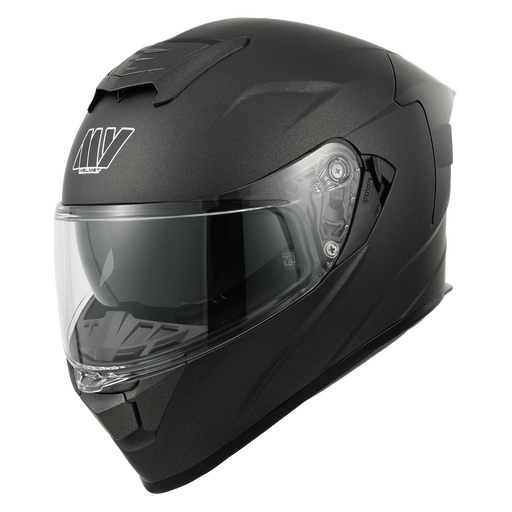
Why we chose it Although it's not a modular helmet, this full-face model is an excellent entry point for anyone seeking maximum protection without sacrificing comfort. Its ABS shell and multi-density EPS liner ensure optimal shock absorption, in full compliance with the ECE 22.06 standard.
Key features
Who is it for?? For motorcyclists and scooter riders who prioritise the safety of a full-face helmet but don't want to give up the convenience of a sun visor for their daily commutes.
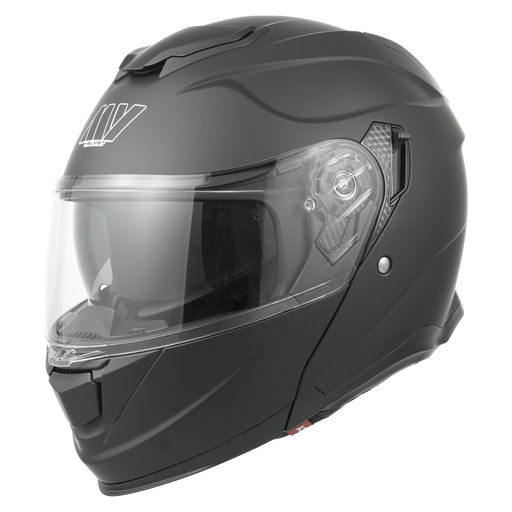
Why we chose it The MY-935 is the quintessential modern modular helmet. It combines the freedom of its flip-up chin bar with the safety of the ECE 22.06 standard. Its understated matte black motorcycle helmet finish makes it a choice that is as stylish as it is versatile.
Key features
Who is it for?? For versatile riders, from urban commutes on a scooter helmet to long weekend getaways. Ideal for those who want the flexibility of a modular helmet and the option to integrate a communication system.
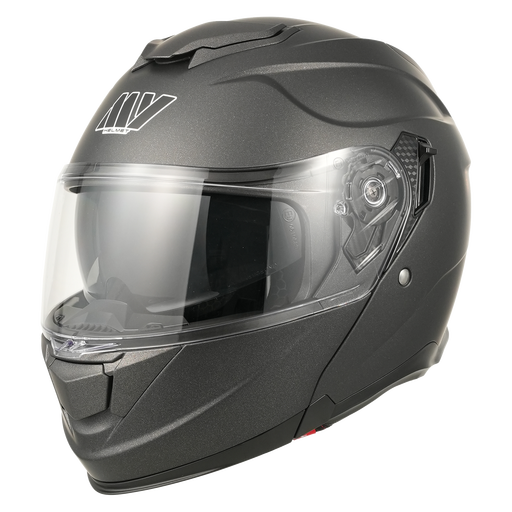
Why we chose it Here we find all the qualities of the MY-935, but in a matte titanium finish that stands out from the crowd. Same ECE 22.06 protection, same versatility, and the same comfort with its dual-visor helmet design and intercom-ready features.
Key features
Who is it for?? For male and female riders looking for a functional and safe modular helmet with an extra touch of style. Its wide range of sizes makes it just as suitable as a women's motorcycle helmet as it is a men's motorcycle helmet.
If our selection doesn't quite match what you're looking for, or if you want to complete your gear, feel free to explore other options. For female riders wishing to customise their gear, our selection of visors for ladies and other accessories is an excellent starting point.
The ECE 22.06 standard is much stricter. It requires impact tests at multiple speeds (high and low), increases the number of control points on the shell, and, most importantly, incorporates an oblique impact test. This test assesses the helmet's ability to manage rotational forces, a major cause of brain injuries.
Due to its one-piece design, a full-face helmet inherently offers the best structural integrity. However, a good modular motorcycle helmet, certified ECE 22.06 and equipped with a reliable chin bar locking mechanism, provides an excellent level of protection. If the helmet has dual P/J certification, it means its chin bar has been tested and approved for use in the closed position, just like a full-face helmet.
Take a flexible measuring tape and measure the circumference of your head, passing it about 2.5 cm (1 inch) above your eyebrows and over the most prominent bump at the back of your skull. Then, refer to the manufacturer's size guide. A new helmet should fit snugly all around without creating painful pressure points. Remember that the inner padding will compress slightly after a few hours of use.