
Livraison le jour même ou le lendemain

Qualité garantie

Débloquez vos offres de bienvenue: Livraison GRATUITE | Jusqu'à -80 % | 30 jours d'essai gratuits à JoyPlus
Téléchargez l'application
With the arrival of the new ECE 22.06 standard, choosing a helmet has become more crucial than ever for the safety of motorcycle and scooter riders. By imposing much stricter tests, this regulation significantly raises the required level of protection. But with an overwhelming number of options, how do you find your way? This guide breaks down the key points of the standard and presents our selection of the best models to help you make the right choice.
Before you fall for a particular model, let's review the essential criteria for finding the perfect helmet for your needs and your head.
What's the big revolution of the ECE 22.06 standard compared to the old one (22.05)? Much more extensive impact tests. Helmets are now tested on 18 impact points (up from 6), at various speeds. Most importantly, they undergo a new oblique impact test that measures their ability to resist rotational forces, which are particularly dangerous for the brain. In practical terms, an ECE 22.06 certified helmet guarantees far more realistic protection, as it's analysed from every angle to better simulate the conditions of a real accident.
The choice between a full-face helmet and a modular helmet primarily comes down to your riding habits.
Safety is fundamental. But on the road, comfort is just as crucial, especially as the miles add up. A helmet with an integrated sun visor is a game-changer: no more fumbling with sunglasses or changing visors mid-ride. A simple gesture is all it takes to adapt to the light. Also, consider connectivity: most recent helmets have dedicated slots to accommodate a Bluetooth communication kit. Ideal for chatting with your passenger, following a GPS, or riding in a group.
Let's get practical with models that tick all the boxes of the ECE 22.06 standard, chosen for their excellent value and versatility.
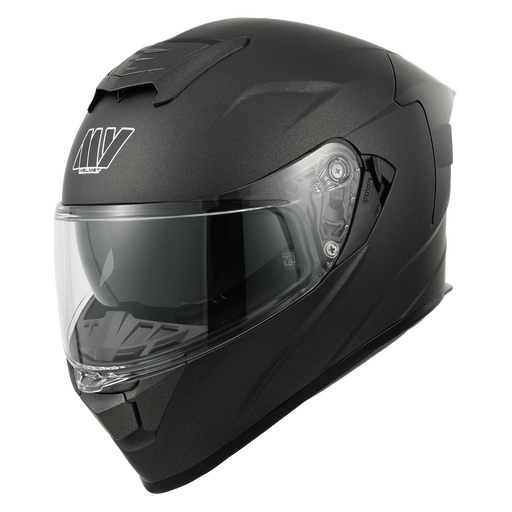
Why It Stands Out
The MY-936 is a full-face helmet that gets straight to the point: serious protection and useful everyday features. Its ABS (Acrylonitrile Butadiene Styrene) shell and high-density EPS (Expanded Polystyrene) liner ensure excellent shock absorption. With its clean design and matte titanium finish, it combines simplicity and modernity.
Advantages
Who Is It For? The ideal companion for motorcycle and scooter riders looking for a reliable unisex motorcycle helmet for daily commutes and weekend rides. It's perfect for those who want the security of a full-face helmet without sacrificing the convenience of a sun visor.
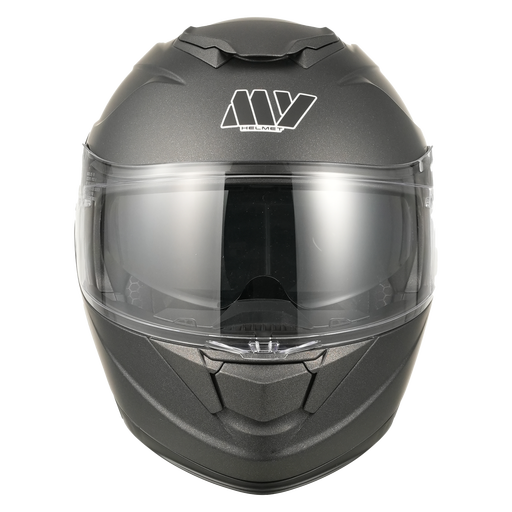
Why It Stands Out
The MY-935 combines the versatility of a modular helmet with the safety of ECE 22.06 certification. Its flip-up chin bar is a major asset for frequent stops in urban environments. It is, of course, equipped with a dual-visor system: a clear main visor and an internal sun visor.
Advantages
Who Is It For? Perfect for city scooter enthusiasts and touring fans who want the practicality of a modular helmet for daily use and travel. It's the smart choice for those who like to chat on their intercom or simply enjoy a breath of fresh air at the petrol station.
Our selection highlights two very versatile models, but the world of helmets is vast. Whether you're a track day enthusiast, a custom bike rider, or an adventurer, there's a model for every type of riding, with specific materials and designs.
️ Discover our complete collection of superbike helmets for more choices.
The certification is visible on a white label sewn onto the chinstrap. Look for the circle containing the letter "E" followed by a number (the country of certification). The accompanying serial number must begin with "06" to certify compliance with the ECE 22.06 standard.
Yes, it is perfectly legal to continue using your ECE 22.05 certified helmet. The ECE 22.06 standard, in effect since July 2023, only applies to the manufacturing and sale of new helmets. However, for any new purchase, we can only advise you to choose a 22.06 model to benefit from the best level of protection available today.
Generally, manufacturers agree on a lifespan of 5 years, even if your helmet has never been in a crash. Over time, the materials it's made of (foams, resins, etc.) lose their effectiveness due to UV rays, sweat, or temperature changes. Their ability to absorb shocks diminishes. And the golden rule is: a helmet must absolutely be replaced after any fall or impact, even if no damage is visible to the naked eye.