
Livraison le jour même ou le lendemain

Qualité garantie

Débloquez vos offres de bienvenue: Livraison GRATUITE | Jusqu'à -80 % | 30 jours d'essai gratuits à JoyPlus
Téléchargez l'application
By the Joybuy Editorial Team, July 28, 2026
On two wheels, safety is non-negotiable. With the new standard now in effect, purchasing an ECE 22.06 certified motorcycle helmet has become essential for every rider of motorcycles, scooters, or new mobility vehicles. But with an overwhelming number of options, how do you choose? Our guide is here to break down the key points and present a selection of models that tick all the boxes: safety, comfort, and features.
Before we review our selection, let's go over the criteria that separate an excellent helmet from a basic, entry-level model. Here are the points to check to ensure you make the right choice.
The ECE 22.06 standard replaces the old 22.05 certification by drastically raising the requirements. Helmets that earn this new approval are subjected to a much more rigorous battery of tests, which now include:
In short, choosing an ECE 22.06 helmet means you're getting the highest level of protection available today, validated by the most demanding protocols.
The choice between a full-face helmet, a modular helmet, or a jet helmet depends mainly on your riding habits.
Whether you're looking for a men's motorcycle helmet or a women's motorcycle helmet, the most important thing is to find a size and shape that perfectly fits your head for impeccable comfort and a secure fit.
Beyond protection, user comfort is paramount. Features like a helmet with an integrated sun visor quickly prove to be essential for adapting to changing light conditions. Also, consider checking the quality of the inner padding (ideally removable and washable for hygiene), the effectiveness of the ventilation system, and whether there is a dedicated space to accommodate a Bluetooth communication kit.
To help you make an informed decision, we have selected three standout models, each designed for a specific use, but all compliant with the new standard.
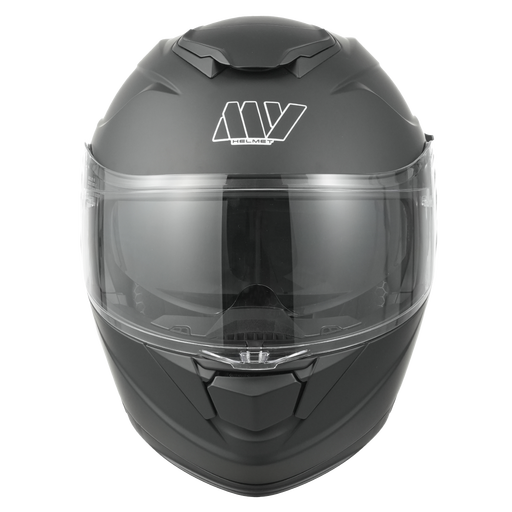
Why it stands out: The MY-935 is the perfect embodiment of the modern modular helmet. It combines the security of a full-face with the convenience of a jet style, thanks to its flip-up chin bar. Its high-resistance ABS shell and multi-density EPS liner ensure optimal shock absorption, earning it its ECE R 22.06 certification.
Advantages:
Who is it for?: For motorcycle and scooter riders looking for the ultimate do-it-all helmet, equally at home in the city during the week and on the open road on weekends, without ever compromising on safety.
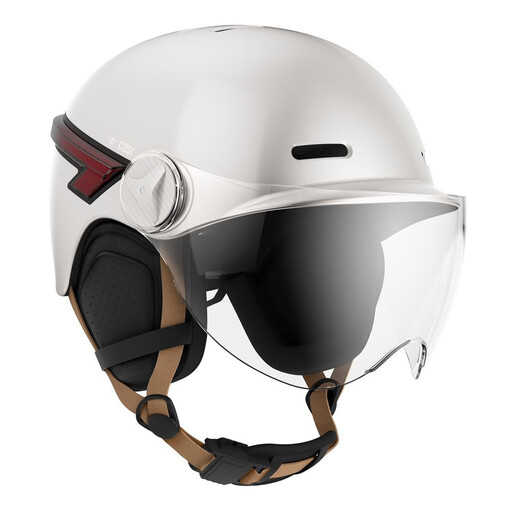
Why it stands out: This helmet is specifically designed for the dangers of the urban jungle. Its key feature is its integrated lighting system. Its translucent shell diffuses 360-degree LED lighting, while the integrated turn signals, controlled by a handlebar remote, clearly indicate your changes in direction.
Advantages:
Who is it for?: For daily bike commuters, electric scooter riders, and users of other personal mobility devices who navigate the city and for whom visibility is not an option, but an absolute necessity.
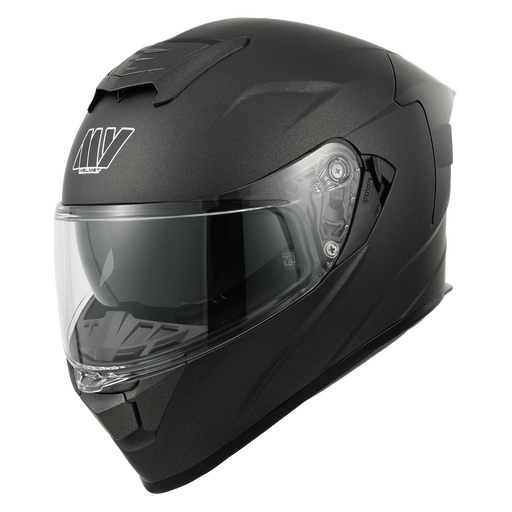
Why it stands out: The MY-936 is a full-face helmet that gets straight to the point: offering maximum protection. Certified ECE 22.06, it completely envelops the head for optimal safety in the event of an impact. Its understated design and matte finish make it a discreet and effective choice.
Advantages:
Who is it for?: For high-mileage riders, on motorcycles or scooters, who clock up the miles daily or on long trips and for whom protection takes priority over everything else.
This selection is, of course, just a glimpse of the possibilities available today. Because every rider is unique, feel free to explore other models to find the one that's a perfect match for you.
To discover a wider range, browse our complete category of motorcycle helmets and gear.
The ECE 22.06 standard is much more demanding. It requires impact tests on more points of the helmet, at various speeds (slower and faster), and introduces an oblique impact test to measure protection against rotational forces. Visors and sun shields are also subjected to stricter resistance tests.
Yes, absolutely. A motorcycle helmet, whether full-face or modular, offers a much higher level of protection than helmets designed solely for bicycles or scooters. Using an ECE 22.06 certified motorcycle helmet for your urban commutes is therefore a guarantee of maximum safety.
It is imperative to replace a helmet after any impact, even if it shows no visible damage. The impact may have compromised its internal absorption structure. In the absence of an impact, it is recommended to replace your helmet approximately every 5 years, as the materials it is made of (foams, resins) degrade over time due to exposure to UV rays, sweat, and temperature changes.