
Livraison le jour même ou le lendemain

Qualité garantie

Débloquez vos offres de bienvenue: Livraison GRATUITE | Jusqu'à -80 % | 30 jours d'essai gratuits à JoyPlus
Téléchargez l'application
Finding the ideal duvet can sometimes be a real headache. Between summer nights when you're trying to escape any source of heat and winter evenings when you dream of a cosy cocoon, the right choice can transform your sleep. So, natural or synthetic filling? What size should you choose to avoid stealing the covers in the middle of the night?
Our guide is here to give you clear, practical advice. Forget the marketing jargon: we're going to break down the criteria that really matter to help you find the duvet that's right for you.
Before you jump on the first model you see, it's essential to master the three criteria that make all the difference: the filling, the warmth rating, and the size.
The choice of filling directly impacts the comfort, maintenance, and thermal performance of your duvet.
It's the famous fill weight (expressed in gsm or g/m?) that determines the duvet's warmth level. The higher it is, the warmer the duvet.
The golden rule for maximum comfort: the duvet should hang generously over each side of the bed (a minimum of 20 to 30 cm).
Let's get to the specifics! Here are a few models that stand out, each meeting a very specific need.

Why it stands out: This model is designed as a practical, all-in-one solution for 365-day use. Its synthetic filling promises a good balance between warmth and breathability, seeing you through the seasons without any fuss.
Key features:
Who is it for? For those who prioritise simplicity above all: a single, low-maintenance duvet for the entire year.
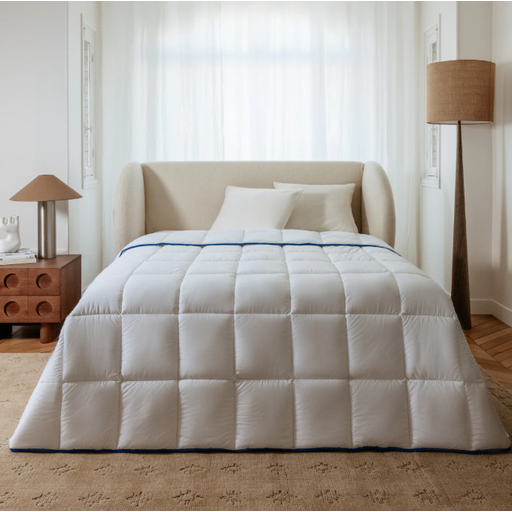
Why it stands out: The ultimate weapon against heatwaves. This summer duvet combines a soft 100% cotton percale cover with a feather-light filling of siliconised hollow fibres. Its tight weave (91 threads/cm?) is a guarantee of softness and durability.
Key features:
Who is it for? The obvious choice for those who always feel too hot at night or are looking for a dedicated solution for warmer weather.

Why it stands out: This natural duvet champions authenticity and thermal performance with its duck feather and down filling. It's a true shield against the cold, a winter duvet designed for the most frigid nights.
Key features:
Who is it for? For those who always feel the cold, for purists of comfort, and for those living in regions where winter is no joke. If you love the authentic comfort of a natural duvet, this one is for you.
When the temperature skyrockets, even the thinnest duvet can be too much. Other options are available, such as lightweight blankets or simple bedspreads.
To explore these alternatives, take a look at our dedicated selection. ? Discover our range of Summer Blankets as a duvet alternative
1. How do I machine wash my duvet? First instinct: read the label! Generally, a synthetic duvet can be washed at 40°C, while a natural duvet requires a delicate cycle. Make sure to use a large-capacity washing machine (12 kg or more) to avoid compressing it. The pro tip: toss a few tennis balls into the dryer drum to restore the filling's loft.
2. What's the difference between a synthetic and a natural duvet? It's all in the filling. The synthetic duvet, with its polyester fibres, is hypoallergenic and very easy to maintain. The natural duvet, filled with feathers and down, offers superior thermoregulation and loft, but it requires more care and is not recommended for people with allergies.
3. When should I replace my duvet? It all depends on its quality and how well you care for it. On average, a synthetic duvet should be replaced every 5 to 7 years, compared to nearly 10 years for a well-maintained natural duvet. The tell-tale signs: it's losing its loft, the filling is clumping, or stubborn stains appear.
By the Joybuy Product Recommendation Officer