
Livraison le jour même ou le lendemain

Qualité garantie

Débloquez vos offres de bienvenue: Livraison GRATUITE | Jusqu'à -80 % | 30 jours d'essai gratuits à JoyPlus
Téléchargez l'application
Choosing a new duvet can often feel like a puzzle. Between marketing promises and opaque technical jargon, it's easy to feel lost and end up regretting your purchase. As the Head of Product Curation at Joybuy, my mission is to help you see things more clearly. Let's break down the common pitfalls together to help you make an informed choice that prioritises comfort and durability above all else.
To make the right choice, focus on three objective criteria that determine the performance and comfort of your future duvet.
The fill weight, which measures the weight of the filling per square metre (g/m?), is the main indicator of warmth level.
This is the heart of the duvet. It determines its comfort, breathability, and ease of care.
A correctly sized duvet ensures optimal comfort and an elegant drape on each side of the bed.
Here are a few models that meet specific needs, selected based on our criteria for quality and transparency.
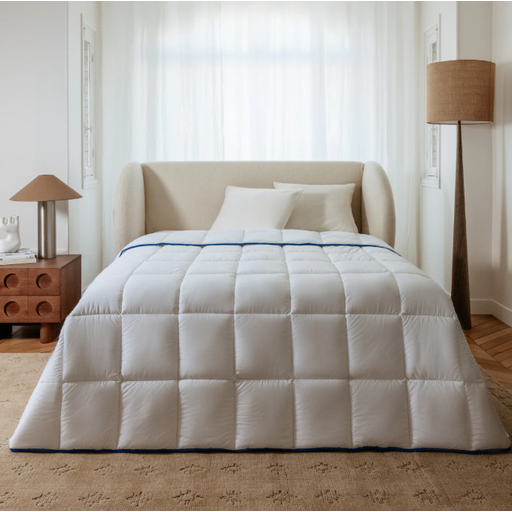
Why we love it: Perfect for those who tend to get hot at night, this duvet combines a breathable cotton percale cover with a lightweight 250 g/m? siliconised hollowfibre filling. The result? Excellent air circulation.
It doesn't market itself as a one-size-fits-all miracle solution. It's a clearly identified summer duvet, with a fill weight perfectly suited to prevent overheating.
Its multiple certifications (Oeko-Tex, Certipur, Sanitized) guarantee a healthy sleeping environment, free from harmful substances and with an effective antibacterial treatment.
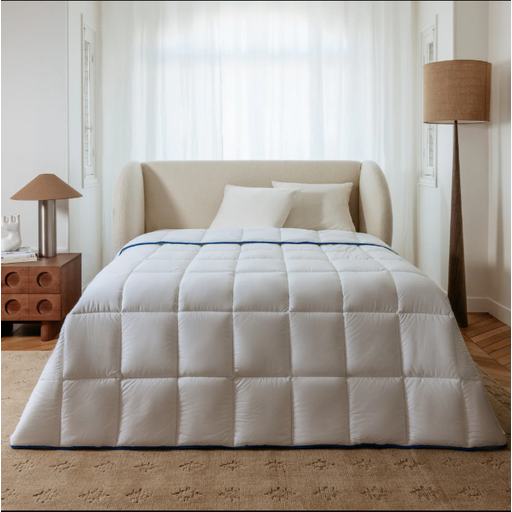
Why we love it: Designed for maximum warmth, this thick (5 cm) duvet features a siliconised hollowfibre filling for high-performance insulation, while remaining lightweight and lofty. Perfect for poorly heated rooms.
It doesn't rely solely on fill weight. It's the quality of its siliconised hollowfibre that ensures enveloping warmth, without the excessive weight of a low-end filling.
Certified Oeko-Tex Standard 100 and hypoallergenic, it combines high thermal comfort with total safety for sensitive skin. Its cotton percale cover guarantees softness and breathability.
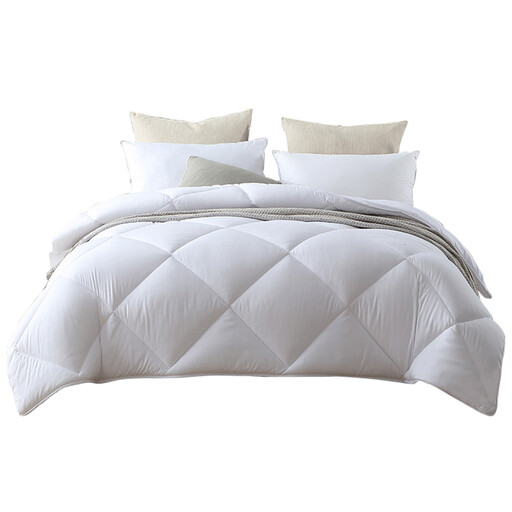
Why we love it: This model was designed with allergy sufferers in mind: it's not only hypoallergenic but also very easy to wash. Its synthetic filling inhibits the growth of dust mites, and its machine-washable design allows for impeccable hygiene.
It goes beyond a simple "hypoallergenic" label. It provides a concrete solution: a synthetic filling and easy, regular washing—the most effective method for eliminating allergens.
Versatile and ultra-easy to maintain, it's the ultimate pragmatic choice for daily use, without sacrificing comfort and breathability.
We have curated a complete selection of duvets that meet our quality criteria and safety standards.
On average, a duvet lasts for 5 to 10 years. A high-quality natural duvet made of down, if well-maintained, can last for 10 years or even longer. A synthetic duvet will have a slightly shorter lifespan, around 5 to 7 years, as its fibres eventually lose their loft with repeated washing.
First things first: always check the manufacturer's label. Most synthetic duvets can be machine-washed at 30 or 40°C. Make sure to use a large-capacity machine (7 kg minimum) to avoid compressing it. For a natural duvet, professional dry cleaning is often the best option. If you wash it yourself, use a delicate cycle and a mild detergent. Drying is a crucial step: use a low-temperature machine setting with dryer balls (or tennis balls) to help the filling regain its full loft.
Yes, provided you choose the right one. A genuine hypoallergenic duvet can be identified by several objective criteria: