
Livraison le jour même ou le lendemain

Qualité garantie

Débloquez vos offres de bienvenue: Livraison GRATUITE | Jusqu'à -80 % | 30 jours d'essai gratuits à JoyPlus
Téléchargez l'application
Buying a duvet and duvet cover sounds simple… until the duvet slips, the cover is the wrong size or the warmth quickly becomes stifling. To avoid disappointment, it is worth looking beyond colour and marketing claims.
A thick duvet is not necessarily the best choice for a cold bedroom. The type of filling, its weight and its ability to trap air play a much more important role in thermal comfort. A lightweight duvet weighing 250 g/m² will generally be more comfortable in a heated room or on warm nights than a 400 g/m² model.
Conversely, a winter duvet or warm duvet may be too much for a bedroom kept at a high temperature. Consider the room temperature, your sleeping habits and how sensitive you are to the cold before making your choice.
A cover that is too small compresses the filling and prevents the duvet from retaining its loft. If it is too large, the duvet can shift during the night. Internal ties, fastenings at all four corners or a zip can help to minimise this problem.
Do not rely solely on the description ‘double bed’. Compare the exact dimensions, particularly for a 140x200 duvet, a 200x200 duvet, a 155x220 duvet cover or a 260x240 cover.
A textile certification does not mean that the product will suit every sensitivity. The STANDARD 100 by OEKO-TEX label, for example, indicates that the textile has been tested according to the criteria of the relevant standard. You should still check the composition, washing instructions and information provided by the manufacturer.
The filling directly affects the weight, warmth and care requirements:
For a summer duvet, a weight of around 250 g/m² is described on some product listings as suitable for rooms from 20°C upwards. For winter, a 400 g/m² model contains more filling, but this figure alone cannot guarantee a warmth level perfectly suited to your home.
A cotton duvet, particularly one made from percale, has a woven, breathable outer fabric. Product listings may specify the weave density, for example 91 threads/cm². A polyester microfibre outer fabric is generally appealing for its softness and ease of care.
For a duvet cover, check in particular:
Start by measuring the mattress, then consider how much overhang you would like on the sides. For a single bed, the 140x200 duvet remains a very common size. A 200x200 model may suit a compact double bed or someone who wants more room.
The duvet cover should match the duvet dimensions. A 155x220 cover is not suitable for a 200x200 duvet, while a 260x240 cover is designed for a larger duvet. If you are buying a bed set, remember to check the dimensions of the pillowcases included too.
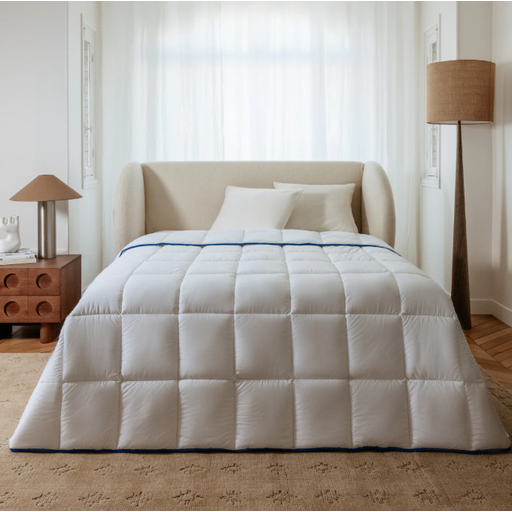
Why this choice suits this profile : Its single-bed size and 250 g/m² filling make it easy to refresh your bedding in a heated bedroom or for the warmest nights.
The product listing states a thickness of 3 cm, a cotton percale outer fabric and machine washing at 40°C. This information makes it quick and easy to check whether the duvet is suitable for its intended use.
100% cotton percale, siliconised hollow polyester fibres and the following stated certifications: STANDARD 100 by OEKO-TEX, CertiPUR, Sanitized and ISO 9001.

Why this choice suits this profile : This size is suitable for a double bed. Its natural filling may appeal to anyone looking for a cosy, enveloping feel on cold nights.
The stated composition distinguishes between 90% duck down and 10% feathers. This is useful information to help you avoid confusing a genuine duck down duvet with an item simply described as ‘feathers’.
Stated outer fabric in organic cotton sateen, quilted stitching and several sizes available according to the product listing.
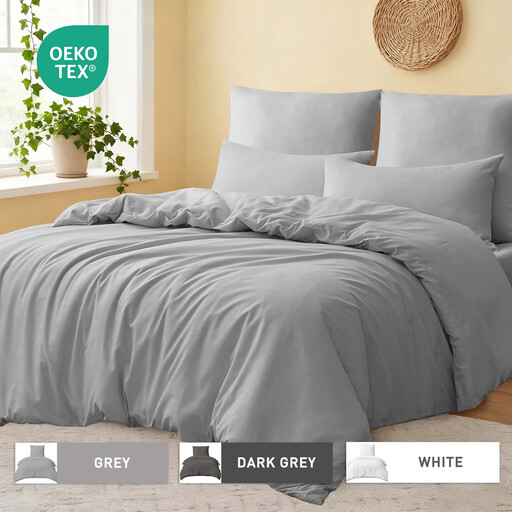
Why this choice suits this profile : Its large cover and two pillowcases are ideal for couples who regularly refresh their bedding and want to make the bed quickly.
The listing specifies that the duvet and pillows are not included. This means you will not accidentally order just a cover thinking you are receiving the complete bedding set.
100% polyester microfibre, concealed zip, ties at all four corners and machine washing at 30°C, according to the listing.
We have put together a complete, real-time updated selection of products that meet these demanding criteria and European safety standards.
A duvet’s lifespan depends on its manufacturing quality, how it is used and how well it is cared for. Air it regularly, but do not leave it exposed to high humidity for too long. A washable cover helps reduce how often the filling itself needs to be washed.
Before buying, also check your washing machine’s capacity. Some duvets require a drum of at least 12 kg. Follow the recommended temperature, do not use bleach when the manufacturer advises against it and dry the duvet completely to prevent odours and residual moisture.
For a hypoallergenic duvet, examine the information shown on the product listing carefully. A certification or textile treatment relates to a defined standard, but it is not a personalised medical guarantee.
Choose a cover in the same size: 140x200 cm. A 155x220 cm cover is not an exact match for this duvet and may create excess fabric or allow the filling to move around.
It depends on your bedroom temperature and how sensitive you are to the cold. A lightweight summer duvet is suitable for warm rooms, while a thicker model will be preferable during colder periods. Two duvets let you adjust your comfort more precisely throughout the seasons, but an all-season duvet takes up less storage space.
Start by following the instructions on the manufacturer’s label. A duvet cover can be washed regularly, while the duvet itself generally requires less frequent cleaning. Check your washing machine’s capacity and make sure the filling is completely dry before putting the duvet back on the bed.