
Same-day & Next-day Delivery

Quality Guaranteed

Unlock Your Welcome Offers: FREE Delivery | Up to 80% OFF | Free 30-day JoyPlus trial
Download the APP
A duvet cover can sometimes transform a bedroom completely. But when it's poorly chosen, its flaws won't stay hidden for long: approximate dimensions, tricky-to-care-for fabric or an impractical fastening can quickly spoil the experience.
Before ordering your bed linen, check three essential points: the exact dimensions of your duvet, the textile composition and the washing instructions. Here are the criteria to consider when finding a cover suitable for a double, queen-size or king-size bed.
A duvet cover should be chosen based on the dimensions of your duvet, not just the width of your mattress. A duvet measuring 220 × 240 cm therefore needs a 220x240 duvet cover. For a wider duvet, you may need to opt for a 240x260 or 260x240 model, depending on the order of dimensions stated by the manufacturer.
A cover that is too small risks compressing the filling. Conversely, a model that is too large will allow the duvet to move around inside, resulting in cold spots and uneven distribution of down or fibre.
The thread count per cm² gives an initial indication of weave density, but it isn't enough to predict comfort. The composition, type of weave, finish and care instructions also play a significant role.
A cotton duvet cover generally offers a soft feel and good breathability. Linen has a more authentic texture and natural temperature regulation. Hemp is another interesting option, with a feel that can soften over repeated washes.
A fiddly fastening can turn every bedding change into a chore. Concealed buttons, flaps and openings that let you grab the corners of the duvet make installation much simpler.
Also check the permitted washing temperature. A machine-washable cover, following the instructions on its label, will be far more practical day-to-day than a model requiring special precautions.
Here are some common sizes:
Measure your duvet before ordering and check the width × length order shown on the product page. The terms "double", "queen-size" and "king-size" can vary from one collection to another.
A reversible duvet cover can also allow you to quickly change the mood of your bedroom. Just check that both sides and their patterns match your taste.
The OEKO-TEX label corresponds to a certification associated with checks on certain substances present in textiles. It does not replace the need to check the composition, usage precautions and care label.
Also remember to check:
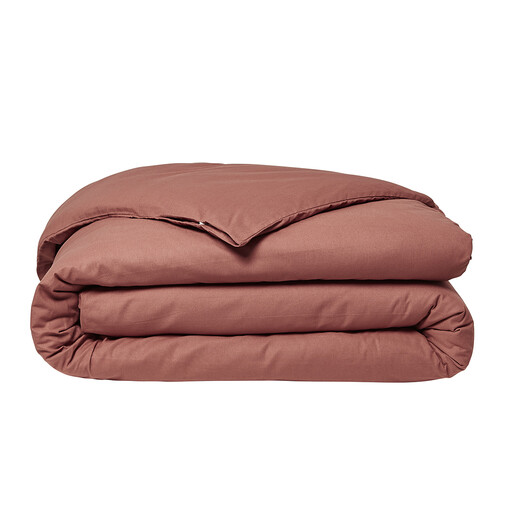
Why this choice suits this profile: This 220x240 cotton duvet cover is perfect for a first set-up. Its terracotta shade coordinates easily with different styles of bed linen.
Its 100% cotton composition, concealed button fastening and hand-access openings make fitting easy.
100% cotton, 57 threads/cm², stated OEKO-TEX certification and machine washable at 60 °C according to the product page.
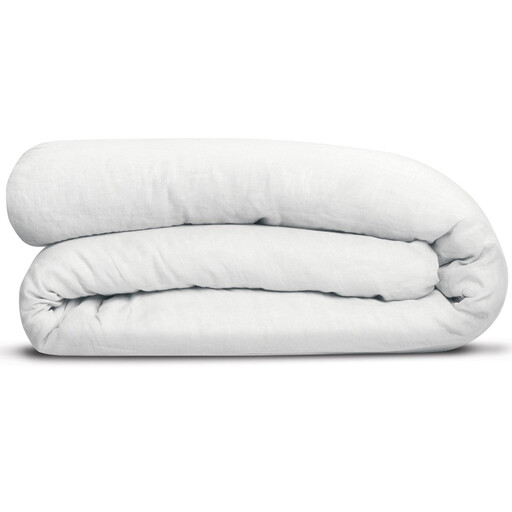
Why this choice suits this profile: Its 260 × 240 cm size suits large duvets. Its design, with a linen face and cotton reverse, offers a more refined textile finish.
The composition of both sides is clearly stated. This helps you avoid confusing an all-linen cover with a model combining linen and cotton.
100% linen front face, cotton reverse, white colour and machine washable as stated by the manufacturer.
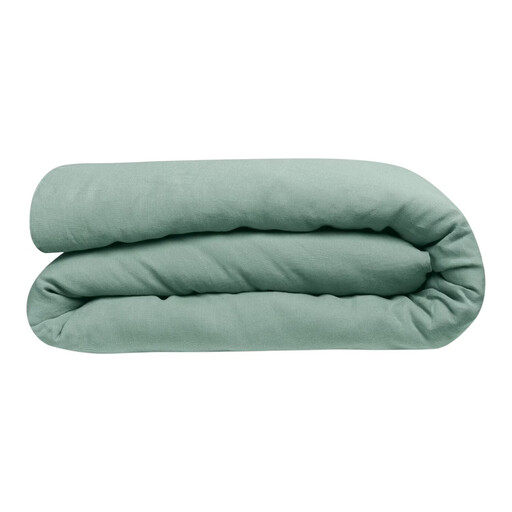
Why this choice suits this profile: This large-format hemp cover is aimed at those seeking a natural fibre and a textile capable of withstanding regular use.
The product page specifies it is 100% hemp and states machine care instructions. So you know what to expect before buying.
100% hemp, 260 × 240 cm size, sage colour and gentle wash instructions at 40 °C as stated.
We've put together a complete, real-time updated selection of products meeting these exacting criteria, while complying with European safety regulations.
Turn the cover inside out before fitting it, slide the corners of the duvet into the corners of the cover, then shake the whole thing to distribute the filling evenly. On some models, the hand-access openings make handling considerably easier.
Wash the cover before its first use, following the instructions on the label. Avoid bleach if it's not recommended and opt for moderate drying to limit shrinkage and fibre wear. Linen and hemp can retain a naturally wrinkled look: ironing isn't always necessary.
Choose a cover showing exactly the same dimensions, i.e. 220x240. Also check the type of fastening and whether there is an internal flap, which helps keep the duvet in place.
Cotton remains a safe bet – versatile and easy to care for. Linen, hemp and cotton-linen blends will suit those looking for a natural texture and a more breathable feel. The choice also depends on the thickness of your duvet and the temperature of your bedroom.
The frequency depends on usage, the season and personal habits. Regular washing is recommended, respecting the temperature and products stated on the label. Models washable at 40 or 60 °C generally fit more easily into a domestic care routine.