
Same-day & Next-day Delivery

Quality Guaranteed

Unlock Your Welcome Offers: FREE Delivery | Up to 80% OFF | Free 30-day JoyPlus trial
Download the APP
A duvet cover affects not only the comfort of your bed, but also how easy your bedding is to care for and the overall atmosphere of your bedroom. Yet the same mistakes keep cropping up at the time of purchase: wrong dimensions, fabric chosen purely for its looks, or an impractical fastening.
Before comparing a 220x240 or 260x240 duvet cover, it’s worth checking a few essential criteria. This approach will help you find a model that suits your bed, your washing habits and your decorating style.
The size of your mattress isn’t enough to determine the duvet cover size. You need to measure the duvet itself, then check the order of the dimensions given by the manufacturer.
Even a few centimetres’ difference can create creases, cause the filling to shift, or leave the sides of the bed inadequately covered.
The look of a cotton, linen or hemp duvet cover doesn’t tell you everything. You also need to check the composition, the type of weave, the fastening system and the recommended washing temperature.
Linen has a naturally irregular texture and can be worn slightly creased. Cotton is often easier to care for, while hemp becomes softer with each wash. These fabrics don’t meet the same everyday expectations.
A duvet cover that’s difficult to put on quickly becomes a nuisance, especially when it has to accommodate a thick double duvet. Hand openings, concealed buttons, internal ties or a zip can make fitting much easier.
Also check whether the product is just a cover or a set with pillowcases. This difference affects how much bedding you get and the overall price.
Measure the length and width of your duvet, without relying solely on the bed type. For a double bed, the 220x240 cm format is very common. The 240x260 cm and 260x240 cm sizes are more suited to larger duvets and beds where you want a greater overhang.
The cover also needs to be long enough to wrap properly around the duvet. A cover that’s too short may pull on the seams and shift the filling during the night.
Terms like “breathable”, “thermoregulating” or “hypoallergenic” should be understood as features stated on the product sheet, not as a medical guarantee.
An OEKO-TEX duvet cover benefits from a textile certification that controls the presence of certain substances. It’s still useful to check the certification number or reference when it’s given, as well as the exact fabric composition.
For care, look at the maximum washing temperature:
A duvet cover that’s genuinely easy to care for should suit your washing machine, your tumble dryer and your washing routine – not just make a nice marketing promise.
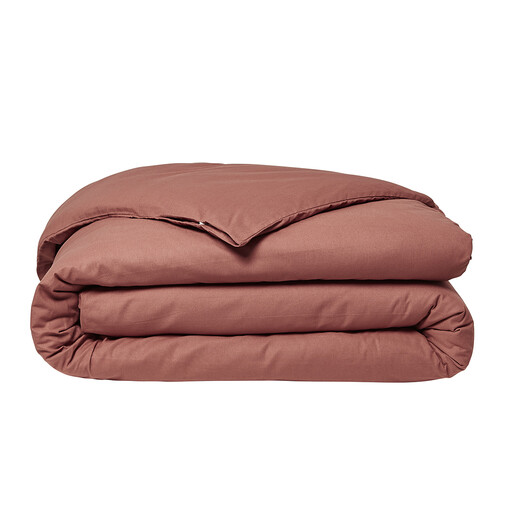
Why this choice suits this profile: With its 220 x 240 cm dimensions and 100% cotton composition, this model is ideal for anyone looking for a first duvet cover for a double bed. Its terracotta shade warms up the bedroom without requiring a whole set of matching accessories.
The product sheet mentions concealed button fastening with hand openings, plus machine washing at 60 °C.
100% cotton, stated OEKO-TEX certification and a collection available in several colours.
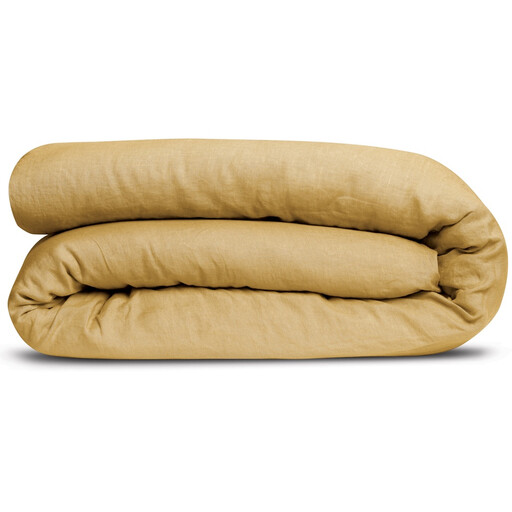
Why this choice suits this profile: This Vivaraise duvet cover combines a linen face with a cotton reverse. Its gold shade suits bedrooms where the bedding plays a full part in the décor.
The dual fabric lets you enjoy the textured look of linen on top while keeping the softer feel of cotton on the reverse.
220 x 240 cm format, 100% linen face, 100% cotton reverse and stated machine washable.
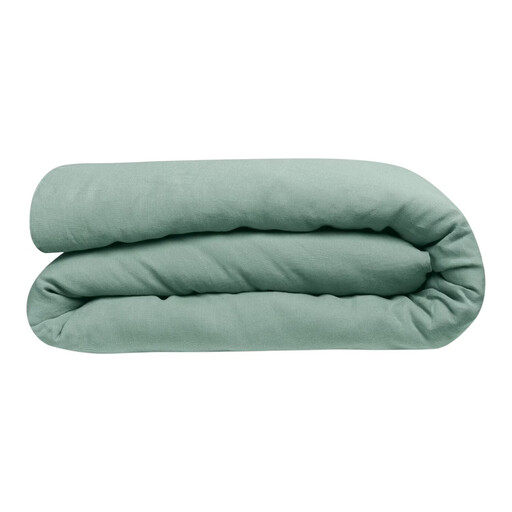
Why this choice suits this profile: With its 260 x 240 cm format and stated 100% hemp composition, this Vivaraise model is aimed at large duvets and those who want to move away from traditional cotton.
The product sheet recommends a delicate cycle up to 40 °C, moderate tumble drying and no bleach.
Stated hemp fibre, large 260 x 240 cm format and sage colour that’s easy to pair with natural tones.
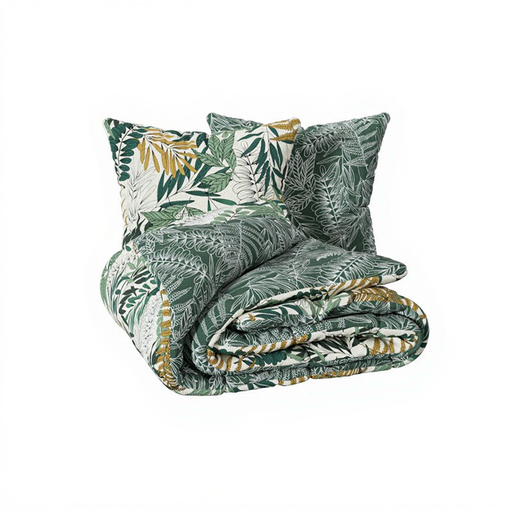
Why this choice suits this profile: This set includes a reversible double duvet cover and two square pillowcases. A practical solution for refreshing several bedding items in one order.
The product sheet details the contents of the set, the button fastening and the reversible nature of the cover.
100% cotton, 260 x 240 cm format, two pillowcases included and two patterns available thanks to the reversible design.
We’ve put together a comprehensive, real-time updated selection of products that meet these demanding criteria and European safety requirements.
Start by measuring your duvet. The 220 x 240 cm format is often used for a double or queen-size bed, while the 240 x 260 cm and 260 x 240 cm sizes suit wider duvets. The size stated on your duvet’s label remains the reference to follow.
Choose a suitable fastening and, if the model has them, use the internal ties at the four corners. Then turn the cover inside out, grasp the corners of the duvet and shake it gently to distribute the filling before fastening the buttons.
Cotton that can be machine washed at 60 °C is well suited to households that wash their bedding regularly. Linen, cotton-linen and hemp sometimes need a gentler cycle at 40 °C. In all cases, the care instructions on the product label should take priority over general washing habits.