
Livraison le jour même ou le lendemain

Qualité garantie

Débloquez vos offres de bienvenue: Livraison GRATUITE | Jusqu'à -80 % | 30 jours d'essai gratuits à JoyPlus
Téléchargez l'application
A duvet might seem simple to choose… until you start comparing the filling, the weight, the dimensions and the care instructions. Too warm, and it can feel uncomfortably stifling; too light, and it lets the cold through in winter. To avoid unpleasant surprises, it’s best to rely on the technical specifications rather than vague promises of comfort.
A thick duvet isn’t necessarily the warmest. The level of insulation depends on the weight, the type of fibres, the filling’s ability to trap air and the construction of the compartments. A winter duvet with hollow fibres can be quite fluffy while remaining relatively light, whereas a duck feather duvet will offer a different, more enveloping feel.
Terms like “natural”, “premium” or “all-season” aren’t enough to distinguish between two models. Check the exact proportion of down and feathers, or the nature of the synthetic fibres. A duvet with down and feathers that is mostly feathers will have a firmer feel than a model rich in down.
For a synthetic duvet, look at the fibre type, the weight in g/m² and the cover fabric. This information is far more telling than a simple “cosy” or “extra-comfort” label.
A duvet that only just covers the mattress is likely to let air in at the sides. For a double bed, the most common sizes include 200x200 cm, 220x240 cm and 240x260 cm. The right choice depends on the mattress width, the thickness of the bedding and the desired overhang.
For a single bed, a 140x200 cm duvet is generally suitable for a standard-width mattress. Also remember to check the size of the duvet cover you already own – that will save you from having to buy a new one.
Some models display a Tog value, while others only indicate their weight. These two measurements aren’t always presented in the same way, so compare duvets based on their stated use and detailed specifications.
A duck feather duvet often combines support and loft. The models shown here, made up of 90% duck feathers and 10% down, favour a relatively firm feel, softened by the presence of down. The box-stitch construction helps distribute the filling and limit the formation of cold spots.
The synthetic duvet with siliconised hollow fibres is often popular for its consistency and ease of care. Some MORPHEA models, for example, use a filling of 400 g/m² and a cotton percale cover. A summer version can go down to 250 g/m² to offer a lighter, more breathable cover.
A machine-washable duvet is practical, but you still need a washing machine that’s large enough. Several models require a capacity of at least 12 kg, especially when they are bulky. Follow the indicated temperature and drying method: some products can be washed at 40°C, while a lightweight summer duvet may need a delicate cycle at under 30°C.
Mentions of OEKO-TEX Standard 100, CertiPUR, Sanitised or ISO 9001 refer to standards or certifications whose scope should be checked on the product page. They don’t replace checking the composition and usage instructions. For an anti-dust mite or hypoallergenic duvet, examine the manufacturer’s claim carefully, along with the associated certification and care recommendations.
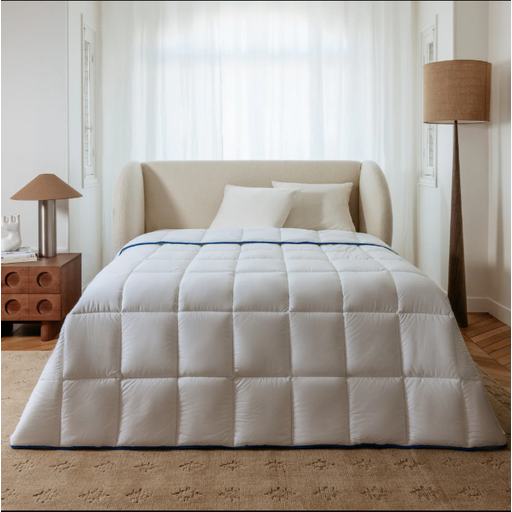
Why this choice suits this profile: This size is suitable for a single bed and combines a cotton percale cover with 400 g/m² polyester hollow fibres. A consistent option for those who want relatively simple care without moving to a natural filling.
The composition and weight are clearly stated – no risk of relying solely on visual thickness. The 40°C wash temperature is also specified.
140x200 cm size, siliconised hollow fibres, 100% cotton percale cover and machine washable according to the product page.
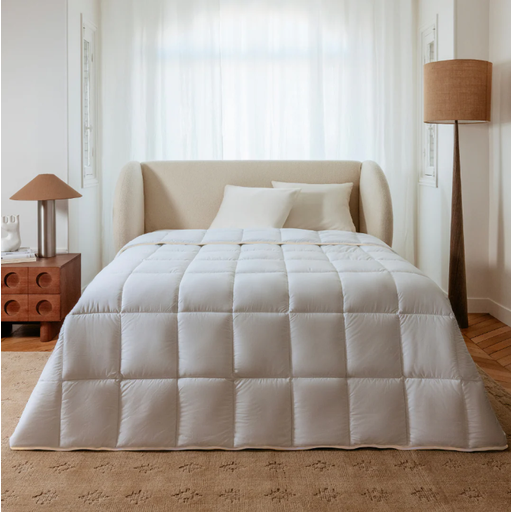
Why this choice suits this profile: With its generous 240x260 cm dimensions, it’s ideal for a double bed and offers a lovely overhang. The blend of feathers and down, combined with an organic cotton sateen cover, focuses on a natural feel and good breathability.
The filling proportion, box-stitch construction and dimensions are all detailed. You can therefore compare this model with other down and feather duvets on concrete grounds.
90% duck feathers, 10% down, box-stitch construction and stated washable up to 40°C with gentle drying.
Why this choice suits this profile: Its double size and 400 g/m² siliconised hollow fibre filling are ideal for cooler bedrooms and sleepers who want a winter duvet without the hassle of complicated care.
The product page clearly distinguishes the filling, the percale cover, the size and the 40°C wash. You therefore aren’t choosing this duvet simply because it looks bulky.
220x240 cm dimensions, 100% cotton percale cover, siliconised hollow fibres and OEKO-TEX Standard 100 certification stated on the product page.
We’ve put together a comprehensive, real-time updated list of products that fully meet these strict selection criteria and European safety regulations.
Start by considering the temperature of your bedroom and your sensitivity to cold. A winter duvet with a high weight, such as a synthetic model around 400 g/m², can suit a room that isn’t well heated. A feather and down filling will provide a different feel in terms of warmth and support. Also check the dimensions and the capacity of your washing machine.
For a 140 or 160 cm wide bed, the most common sizes are 200x200 cm, 220x240 cm and 240x260 cm. The 220x240 cm offers a good compromise, while the 240x260 cm guarantees a more generous overhang. Measure your mattress and take the thickness of the bedding into account before ordering.
Air it regularly, without leaving it exposed to moisture for too long. Use a suitable duvet cover, follow the washing temperatures and make sure the filling is completely dry before storing it. For bulky models, professional cleaning may be preferable if your home machine doesn’t have sufficient capacity.