
Livraison le jour même ou le lendemain

Qualité garantie

Débloquez vos offres de bienvenue: Livraison GRATUITE | Jusqu'à -80 % | 30 jours d'essai gratuits à JoyPlus
Téléchargez l'application
A duvet might seem simple to choose… until the first night you wake up drenched in sweat, feathers poke through the cover, or the blanket is too narrow to hang properly over the sides of the bed. Product descriptions often boast about softness, lightness or an "all-season" design, but these promises don't replace the technical specifications.
To avoid a disappointing purchase, focus first on the warmth level, the filling composition, the dimensions and the care instructions. Here are the key criteria to consider before choosing a duvet for a British bedroom, whether it's for winter, summer or year-round use.
A thick duvet isn't necessarily the warmest. Its insulating power depends on the type of fibres or down used, the amount of filling and how it's distributed. A 15 tog microfibre duvet, for example, is generally intended for cold nights, while a summer model with a lower grammage will be more suitable for a heated room or warmer periods.
Your environment also plays a significant role: room temperature, heating, your personal sensitivity to cold, whether you wear pyjamas or use an extra blanket. A duvet suited to a room at 18 °C can quickly become too warm in a room kept at 21 °C.
These claims should be examined carefully. A certification like OEKO-TEX Standard 100 confirms the absence or limitation of certain controlled substances in the certified components. It is not a medical guarantee and doesn't replace regular maintenance.
For sensitive individuals, it's better to choose a machine-washable duvet, an easy-to-clean cover and thorough drying. Synthetic fibre models are often chosen for their simpler care. A duck feather duvet can also work, provided you check its exact composition and the manufacturer's recommendations.
A 220 x 240 cm duvet doesn't automatically suit all double beds. You need to consider the width and thickness of the mattress, as well as the desired overhang on each side. For a large bed, a 240 x 260 cm duvet offers more generous coverage. However, it requires a suitable cover and a washing machine large enough to handle it.
A down and feather duvet typically combines the loft and lightness of down with a more structured feel from the feathers. The exact proportion is on the label: "90 % feathers and 10 % down" won't give the same feel or loft as a filling made mostly of down.
Hollow silicone-coated polyester fibres are a practical, easy-care alternative. They're particularly suitable for households looking for a machine-washable duvet with relatively predictable drying. Be aware, however: a "cotton duvet" may refer to the cover rather than the filling. So read both pieces of information separately.
A breathable duvet should help wick away moisture without feeling stuffy. For winter, a warm model with a denser filling will suit a poorly heated room or those who feel the cold easily. In summer, a lightweight duvet, a cotton percale cover or a model specifically designed for warm nights will generally be more comfortable.
The "4-season" label usually refers to two duvets that can be used separately or fastened together. This system lets you adjust the thickness throughout the year, but check the type of fastenings and the total weight before deciding.
Box-stitch or baffle-box quilting helps keep the filling in place and reduces the formation of cold spots. Before buying, also check the washing temperature, tumble dryer compatibility and the minimum recommended machine capacity.
Several models shown below can be washed at 40 °C. Drying must be completed thoroughly to prevent moisture from becoming trapped in the filling. For bulky duvets, a launderette with a large-capacity machine may be more practical than a domestic washing machine.
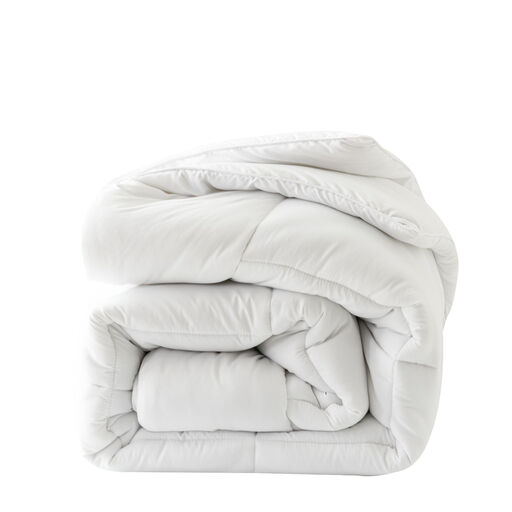
Why this suits this profile: its single size and microfibre filling make it a straightforward option for a first purchase or a single bedroom.
The warmth level is clearly stated at 15 tog, which avoids confusing a winter model with a summer duvet.
135 x 200 cm size and box-stitch construction, according to the product description.
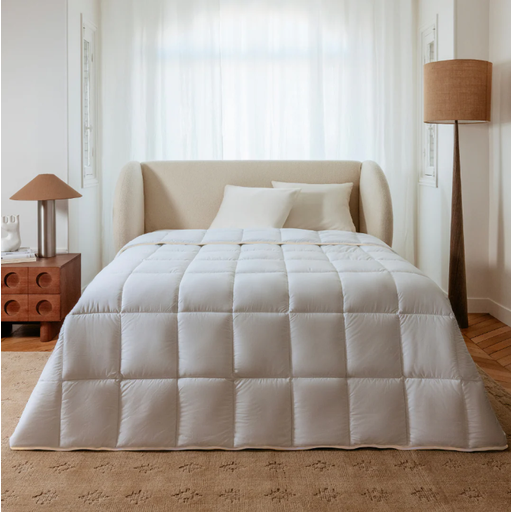
Why this suits this profile: its large size appeals to those looking for a cotton sateen cover and natural filling.
The composition is detailed: 90 % duck feathers and 10 % down, with box-stitch quilting to distribute the filling evenly.
240 x 260 cm dimensions, 100 % cotton sateen cover and washable up to 40 °C.
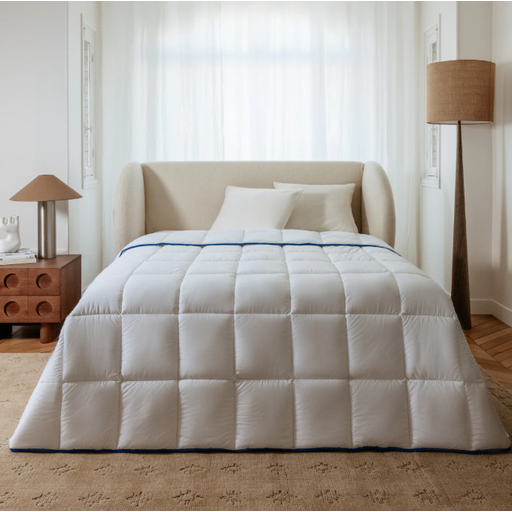
Why this suits this profile: its double size and machine-washable design suit a household that regularly maintains its bedding.
The description states use from 20 °C and care at 40 °C, rather than presenting the duvet as suitable for all temperatures.
100 % cotton percale cover, hollow polyester fibres at 250 g/m² and 220 x 240 cm size.
We've compiled a complete, up-to-date selection of products that meet these exacting criteria, while also taking European safety regulations into account.
Air your duvet regularly and use a suitable cover. For down or feather models, gently shake the filling to maintain its even distribution. Always follow the label instructions: some models can be washed at 40 °C, while others need professional cleaning.
The lifespan depends on the quality of the materials, how often it's washed, the drying process and the condition of the cover. A persistent loss of loft, clumps of filling or seams coming apart are all signs that it may be time to replace the duvet.
For a cool or poorly heated room, choose a winter duvet with a high warmth level, for example a 15 tog model or a filling of 400 g/m². However, take into account the actual room temperature and your own sensitivity to cold.
Measure the mattress, then add the desired overhang on each side. 220 x 240 cm and 240 x 260 cm sizes are common for a double bed, but the choice depends on the bed width, mattress thickness and the cover you have.
It can simplify regular care, but the "hypoallergenic" claim is not a medical guarantee. Before buying, check the composition, any certifications mentioned by the manufacturer, the washing temperature and the drying instructions.