Joybuy Insights

Duvet Buying Guide: How to Choose the Perfect Duvet

Choosing a new duvet? Seems simple enough, right? But between the technical jargon and marketing promises, it's easy to get lost. The result: restless nights and a purchase you bitterly regret. To avoid falling into the trap, here are the three most common pitfalls to sidestep.

  • The fill weight obsession: We tend to believe that the higher the fill weight (g/m?), the warmer the duvet. This is a common misconception. While weight plays a role, the quality of the fill is far more decisive. As proof, a 500 g/m? synthetic duvet filled with low-quality fibres will always be less effective than a 300 g/m? natural duvet filled with down, a master of thermoregulation.
  • The "hypoallergenic" mirage: This is a marketing term often thrown around without solid proof. A truly hypoallergenic duvet must be backed by credible certifications, like the Oeko-Tex Standard 100 label, which guarantees the absence of any harmful substances.
  • The myth of the single "all-season" duvet: Let's be clear, a single duvet cannot be perfect all year round, from frosty January nights to July heatwaves. The risk? Sweating in the summer and shivering in the winter.

Keeping these points in mind is the best way to make an informed decision and find the duvet that's truly right for you.

Key Criteria for Finding Your Perfect Duvet

To get a clearer picture, focus on the few criteria that will make all the difference in terms of comfort, durability, and ease of care.

Fill: Natural vs. Synthetic, the Ultimate Showdown

This is the heart of the duvet, and your choice will depend on your priorities: warmth, budget, maintenance, and allergy sensitivity.

  • The natural duvet (down, feathers): The gold standard of bedding. Unmatched for its insulating power and lightness, it offers exceptional thermoregulation. Down, being more premium, is lighter and warmer than feathers. These highly breathable duvets wick away moisture perfectly and represent an excellent long-term investment. For an ethical purchase, check for labels like the RDS (Responsible Down Standard).
  • The synthetic duvet (polyester): More affordable, the synthetic duvet is the go-to solution for allergy sufferers. Modern fibres (hollow, siliconised) now mimic the loft of down very well and are a breeze to care for, with most being machine-washable. A practical and effective solution.

Warmth Rating: Decoding Fill Weight (Without Getting It Wrong)

Expressed in grams per square metre (g/m?), fill weight measures the weight of the fill. It's a good indicator of the warmth level, as long as you cross-reference it with the quality of the materials.

  • Summer Duvet: Lightweight, with a fill weight of 180 to 250 g/m?. Perfect for summer nights or in rooms heated above 20°C.
  • Winter Duvet: Warm and cosy, with a fill weight ranging from 350 to 500 g/m?. Ideal for cool rooms or for those who feel the cold.
  • 4-Seasons Duvet: The ultimate versatile solution. It combines two duvets (one light and one mid-weight) that can be used separately or joined together with ties to face the coldest nights.

Casing and Certifications: The Details That Make the Difference

Often overlooked, the duvet's casing is just as important as the fill. It's what comes into contact with your skin (through the cover). Prioritise natural materials like cotton, cotton percale, or cotton sateen, which are both soft and breathable. A tight weave is also a plus: it prevents the fill from escaping and creates a natural barrier against dust mites.

Finally, don't overlook certifications—they are true seals of approval:

  • Oeko-Tex Standard 100: Guarantees a textile free of any chemical substances harmful to the skin or health.
  • Certipur: Applies to synthetic fills and certifies their safety.
  • RDS / Downpass: For natural fills, these labels ensure animal welfare standards are met.

Our Top Picks for Every Type of Sleeper

To put theory into practice, here are a few models that perfectly illustrate how to apply these criteria to specific needs.
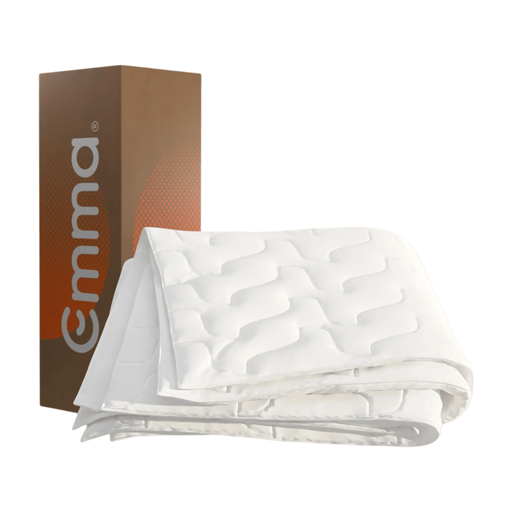
FOR: THE VERSATILE SLEEPER
EMMA | Couette 4 Saisons 240x220 cm

EMMA | 4-Seasons Duvet 240x220 cm

Why we chose it: This is the ideal solution for those who want a single, year-round adaptable product. Its 3-in-1 design means you don't have to store multiple duvets.

How it avoids the pitfall

It bypasses the "one-size-fits-all" myth by offering two detachable layers. This modularity is perfect for summer, winter, and the transitional seasons.

The key feature

Its 3-in-1 design combines two layers to adapt to every season. It's easy to adjust and machine washable.
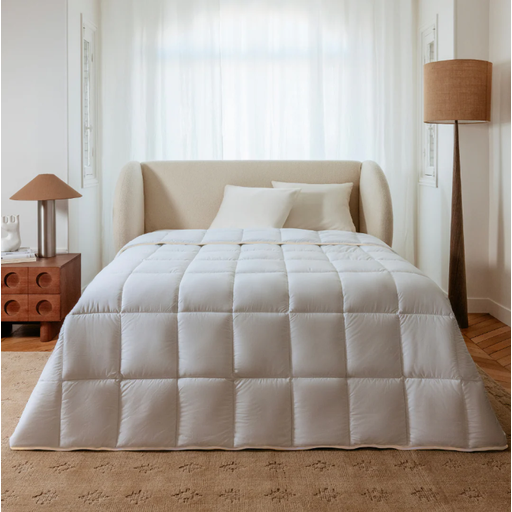
FOR: THE NATURAL WARMTH ENTHUSIAST
Couette chaude en plumes de canard 220x240cm

Warm Duck Feather Duvet 220x240cm

Why we chose it: The perfect companion for those who feel the cold and for chilly rooms in winter. Its natural feather and down fill provides enveloping warmth while remaining breathable.

How it avoids the pitfall

Rather than relying solely on fill weight, it focuses on the quality of its fill (90% feathers, 10% down) for high-performance thermal insulation and excellent temperature regulation.

The key feature

A natural fill for comfortable warmth without the risk of overheating. Its organic cotton sateen casing (129 threads/cm?) and box-stitch construction ensure even distribution and a silky feel.
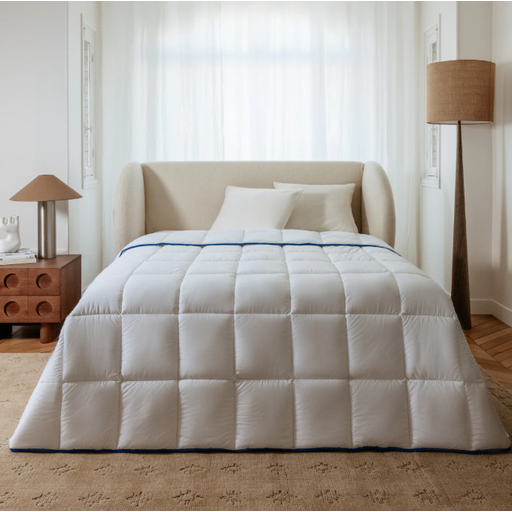
FOR: THE PRAGMATIST WITH ALLERGIES
Couette d'été, coton et polyester, 200x200 cm

Summer Duvet, Cotton and Polyester, 200x200 cm

Why we chose it: A smart, lightweight option for summer or overheated rooms. Its synthetic fill and array of certifications make it a trustworthy choice for those sensitive to allergens.

How it avoids the pitfall

Here, the term "hypoallergenic" isn't just a buzzword. It's backed by a full suite of certifications (Oeko-Tex, Certipur, Sanitized) that guarantee its transparency and anti-dust mite properties.

The key feature

Lightweight (250 g/m?), breathable, and low-maintenance (washable at 40°C). Its cotton percale casing (91 threads/cm?) is a guarantee of softness and durability.

Your Questions, Answered

What Size Duvet for Which Bed?

It all depends on your mattress size and the amount of "drape" you want over the sides. To help you decide, here are a few guidelines:

  • Single bed (90x190/200 cm): opt for a 140x200 cm (standard) or 200x200 cm duvet for maximum comfort.
  • Double bed (140x190/200 cm): a 220x240 cm size is ideal for a nice drape and to avoid fighting over the covers at night.
  • Queen Size bed (160x200 cm): a 240x260 cm duvet is a must.
  • King Size bed (180x200 cm): aim for a 240x260 cm or even a 240x280 cm duvet for that luxurious, hotel-like feel.

How Do I Care for My Duvet to Make It Last Longer?

Care depends primarily on the fill. The first universal step: air out your duvet every day to release moisture from the night.

  • Synthetic duvet: Most can be machine washed at 30 or 40°C. Choose a delicate cycle and make sure your machine's drum is large enough to avoid compressing it. Air-dry or tumble-dry on low heat.
  • Natural duvet: This process is more delicate. Professional dry cleaning once a year is often the best option. If you try it at home, you'll need a very large capacity machine, a gentle cycle, and a suitable detergent. Using a tumble dryer with dryer balls is almost essential to restore its full loft.

Is a Synthetic Duvet Automatically a Bad Choice?

Absolutely not! Technology has made leaps and bounds. Modern polyester fibres (hollow, siliconised) now offer stunning comfort, excellent insulating power, and great lightness. Even though a high-end natural down duvet still has the edge in thermoregulation, a well-made synthetic duvet is a high-performance alternative, especially considering its ease of care and hypoallergenic benefits.