
Livraison le jour même ou le lendemain

Qualité garantie

Débloquez vos offres de bienvenue: Livraison GRATUITE | Jusqu'à -80 % | 30 jours d'essai gratuits à JoyPlus
Téléchargez l'application
Choosing a duvet? A minor detail, you might think. Yet, this seemingly trivial choice has a major impact on the quality of our sleep. Too hot, too cold, allergy-inducing, or a pain to maintain—the wrong duvet can quickly turn your nights into a nightmare. Faced with often opaque marketing, it's easy to get lost. As a product expert at Joybuy, I'm sharing my advice to help you decode the labels and make the right choice, without getting fooled.
Before we break down the technical specs, let's review the two most common mistakes that lead to a purchase you'll regret.
To make the right choice, let's focus on objective criteria. Here are the three non-negotiable points to check before you head to the checkout.
This is the heart of the duvet, determining its comfort, breathability, and lifespan.
Rather than aiming for a one-size-fits-all model, it's better to choose your duvet based on the season and the temperature of your bedroom.
For optimal comfort, a duvet should hang generously over each side of the bed (between 20 and 40 cm). This is the key to avoiding draughts and the infamous duvet war if you sleep with a partner.
To put theory into practice, here are a few models that meet specific needs.
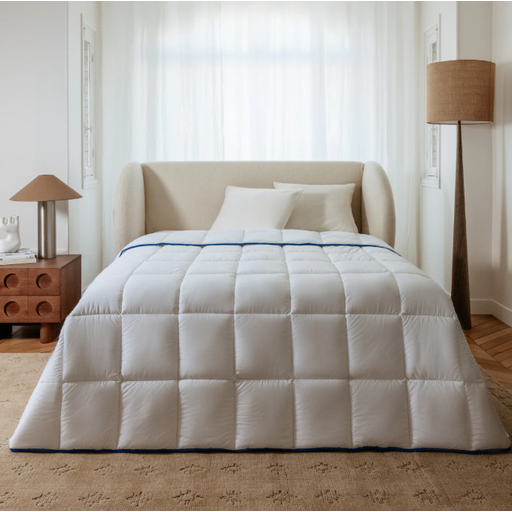
Why we chose it: Ideal for those looking for a dedicated solution for the warmer months without breaking the bank. Its combination of synthetic filling and cotton cover is a practical and comfortable choice for bedrooms where the temperature rises above 20°C.
This duvet doesn't claim to be versatile. It's an unapologetic summer duvet, with a fill weight of 250 g/m? perfectly calibrated for this purpose. This avoids the awkward compromise of a "universal" model.
Its hollow siliconised fibre construction and cotton percale cover ensure excellent air circulation, which helps to wick away moisture for cooler nights. The Oeko-Tex Standard 100 certification guarantees a healthy product, free from harmful substances.
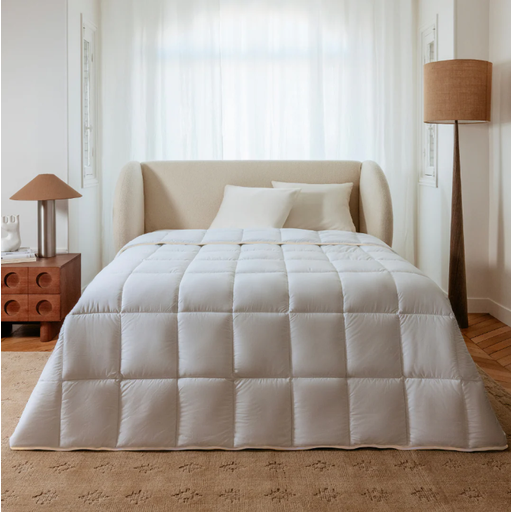
Why we chose it: For those who swear by the breathability and thermoregulation offered by a natural duvet. The blend of 90% feathers and 10% down provides a perfect balance of loft and lightness, ideal for use most of the year.
This isn't about fill weight. The duvet relies entirely on the natural qualities of down to regulate temperature. It's warm enough for winter in a normally heated room, and light enough not to become stifling in the mid-season.
Natural thermoregulation is its key strength. The organic cotton sateen cover and box-stitching ensure perfect distribution of the filling and a premium soft feel every day.
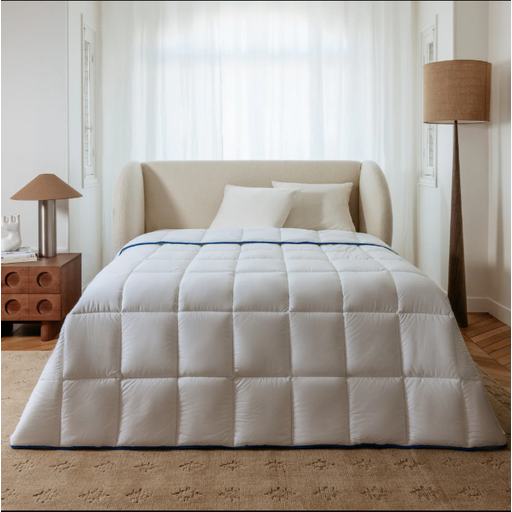
Why we chose it: Designed for the coldest nights, this winter duvet is the no-compromise solution for those who feel the cold or for poorly heated rooms. Its thickness and filling are optimised for maximum insulation.
It doesn't try to be versatile. This is a dedicated warm duvet that fully embraces its role as a shield against the cold. Its effectiveness relies on a generous volume of hollow siliconised fibres, designed to trap body heat.
Its high insulating power provides cosy comfort and immediate, enveloping warmth. Certified hypoallergenic and Oeko-Tex Standard 100, it ensures a healthy sleep cocoon, even for the most sensitive skin.
Discover our complete selection of duvets, all chosen for their adherence to our quality criteria and current standards.
For a 160x200 cm bed, a 220x240 cm duvet is the standard choice, especially if you sleep alone. However, for maximum comfort, a nicer drape, and to avoid fighting over the duvet at night, the 240x260 cm size is highly recommended.
First rule: always check the manufacturer's label. Most synthetic duvets can be machine washed at 40°C. The trick is to use a large-capacity washing machine (12 kg or more) so the duvet isn't compressed. For a natural duvet, dry cleaning is the safest option to preserve the loft of the down. If you attempt to wash it at home, use a gentle cycle and tumble dry on low heat with dryer balls to help it regain its full volume.
Yes, absolutely. A quality synthetic duvet with a high fill weight (400 to 500 g/m?) and a good filling of hollow siliconised fibres can be incredibly effective. These fibres are designed to trap a maximum amount of air, creating a high-performance insulating barrier. It's an excellent option for a warm duvet in winter, with the added benefits of being easier to care for and more affordable than a down model.