Choosing a new duvet can quickly feel overwhelming. Between fill weights, sizes, and a bewildering array of materials, it's easy to get lost. Don't panic: this guide is here to bring you clarity and help you find the model that will guarantee perfect nights, all without the unnecessary marketing jargon.
Key Criteria for Choosing the Right Duvet
Before you start, let's review the three criteria that will make all the difference to your comfort: fill weight, dimensions, and materials.
Fill Weight: A Matter of Season and Comfort
Fill weight, expressed in grams per square metre (g/m?), indicates the weight of the duvet's filling and, therefore, its warmth level.
- Summer Duvet: With a fill weight generally below 250 g/m?, a lightweight duvet is ideal for warm nights or for bedrooms where the temperature exceeds 20°C. It provides a feeling of freshness while wicking away moisture.
- All-Season Duvet: Often consisting of two attachable duvets (one lightweight and one mid-season) or a single model with a medium fill weight (around 300 to 400 g/m?), it adapts to every time of year. It's a versatile and economical solution.
- Winter Duvet: Designed for those who feel the cold or for poorly heated rooms, its fill weight is over 400 g/m? for maximum thermal insulation.
Sizing: The Right Duvet for Every Bed
For optimal comfort, the duvet should overhang the bed by 20 to 40 cm on each side. This prevents draughts and ensures good coverage, even if you move during the night.
- Single Bed (90x190/200 cm): A 140x200 cm or 200x200 cm duvet is recommended.
- Double Bed (140x190/200 cm): Opt for a 220x240 cm duvet.
- Queen or King Size Bed (160x200 cm or larger): A 240x220 cm or 260x240 cm duvet will provide perfect coverage.
Materials and Certifications: For Healthy Sleep
The choice of filling and cover is crucial not only for comfort but also for the hygiene of your bed linen.
- Synthetic Filling: Polyester or microfibre fibres are the most common. They are popular for their ease of care and accessible price point. This is also the preferred material for a hypoallergenic duvet, as it naturally inhibits the growth of dust mites.
- Natural Filling: Goose or duck down and feathers offer remarkable loft and thermal insulation but require more delicate care and may not be suitable for people with allergies.
- Certifications: The STANDARD 100 by OEKO-TEX label is a trusted benchmark. It guarantees that the textile contains no substances harmful to health or the skin.
Our Recommended Duvets and Throws
Here are a few models that stand out, each meeting a specific need.
Lightweight Summer Duvet, Cotton and Polyester, 140x200 cm
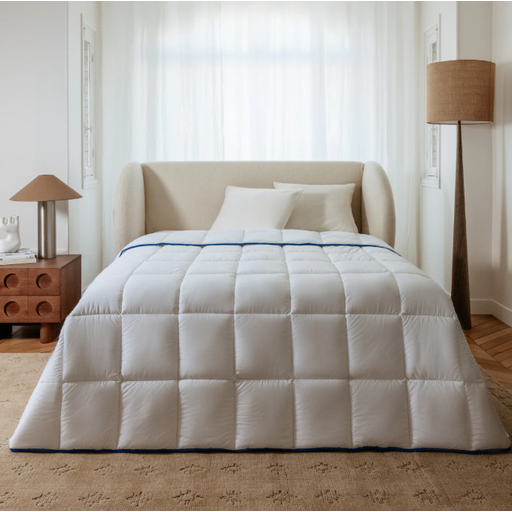
Why it stands out This model combines a 100% percale cotton cover with a dense weave (91 threads/cm?) and a siliconised hollowfibre filling. It's a winning combination for a very soft touch and excellent air circulation—a real bonus during summer nights.
Benefits
- Airy Comfort: Its 250 g/m? fill weight is designed for rooms heated to 20°C and above.
- Soft and Durable Cover: The cotton percale offers a cool feel and excellent durability.
- Hypoallergenic Filling: The siliconised hollow polyester fibres ensure a healthier sleeping environment.
- Multiple Certifications: It holds STANDARD 100 by OEKO-TEX, Certipur, and Sanitized labels.
- Simple Care: Machine washable at 40°C.
Who is it for? Ideal for a single sleeper who tends to get hot at night or is looking for a lightweight duvet for the warmer months.
Alpina Duvet 240 x 200 cm, 300 g/m?
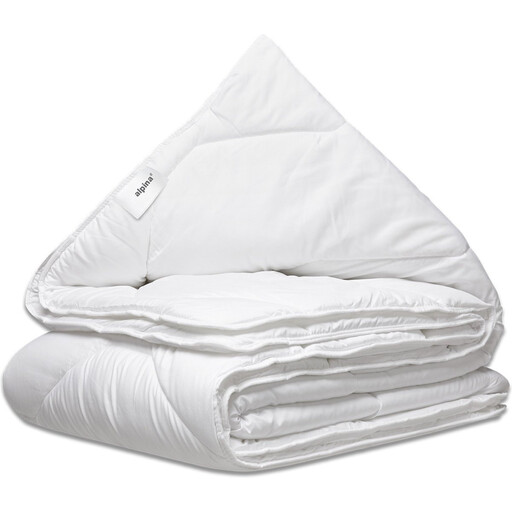
Why it stands out With its 300 g/m? fill weight, this model is a versatile solution that can be used for most of the year. Its 100% polyester microfibre composition makes it breathable and easy to care for, including in the tumble dryer.
Benefits
- All-Season Versatility: Its balanced fill weight is suitable for most room temperatures.
- Hypoallergenic Properties: The Flexofill polyester fibre filling is suitable for sensitive skin.
- Quick-Drying: Microfibre wicks moisture well and dries quickly, which is a plus for maintenance.
- Double Bed Dimensions: Its 240 x 200 cm size is suitable for a 140 cm wide bed.
- Easy Care: Machine washable at 40°C and can be tumble-dried on a low setting.
Who is it for? Perfect for couples or individuals looking for a practical hypoallergenic duvet for a double bed, without needing to switch models every season.
Atmosphera Microplush Throw, 130 x 180 cm
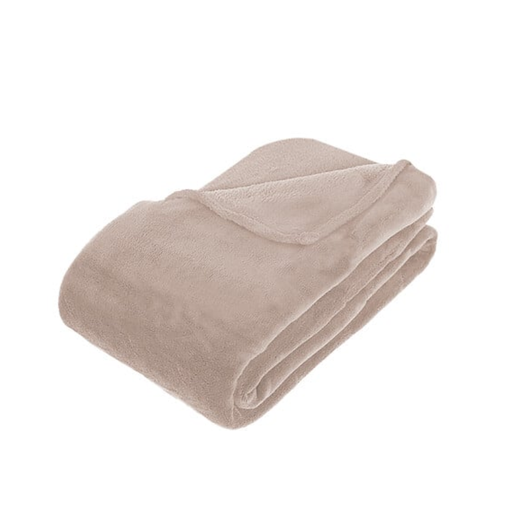
Why it stands out More than just a blanket, this sofa throw is a truly versatile comfort accessory. Its polyester microfibre texture, with its incomparable softness and warmth, makes it the ideal companion for cosy evenings in or an extra layer of warmth on your bed.
Benefits
- Softness and Warmth: The microfibre offers a very pleasant touch and immediate warmth.
- Versatile Use: Useful in the living room, on a bed to complement your bed linen, or even on a terrace during cool evenings.
- Timeless Design: Its simple look and linen colour integrate easily into many decor styles.
- OEKO-TEX Certified: A guarantee of safety for a product in direct contact with the skin.
- Easy Care: Machine washable.
Who is it for? For anyone looking for an extra touch of comfort: to snuggle up on the sofa, add a decorative note to the bedroom, or simply have a cosy blanket within reach.
Looking for Another Option?
Our selection is just a preview. If you have more specific needs (a duvet for heatwaves, a particular filling…), many other models await you.
For more choices, especially for the warmest nights, explore our collection of super soft summer blankets.
Frequently Asked Questions About Duvets
How do I choose a duvet's fill weight?
The choice of fill weight depends on your room's temperature and your sensitivity to cold.
- Summer (room > 20°C): opt for a fill weight of 150 to 250 g/m?.
- Mid-season (room between 16 and 20°C): a fill weight of 250 to 350 g/m? is suitable.
- Winter (room < 16°C): choose a fill weight above 350 g/m?. An "all-season" duvet with a fill weight around 300 g/m? is often a good compromise.
What are the benefits of a hypoallergenic duvet?
A hypoallergenic duvet uses a synthetic fibre filling (polyester, microfibre) that naturally inhibits the growth of dust mites and bacteria. It is the ideal choice for people with allergies or sensitive skin, as it ensures a healthier sleeping environment and reduces the risk of irritation.
How should I care for my duvet to make it last longer?
To preserve the quality of your duvet, follow these few tips:
- Protect it with a duvet cover, which absorbs perspiration and is easy to wash.
- Air it out regularly, ideally every morning for a few minutes, to release moisture accumulated during the night.
- Wash it once or twice a year, following the instructions on the care label. Use a large-capacity washing machine to avoid compressing it.
- Dry it completely to prevent mould growth. Air-drying is ideal, but a tumble dryer on a low heat setting is often possible for synthetic models.


