
Livraison le jour même ou le lendemain

Qualité garantie

Débloquez vos offres de bienvenue: Livraison GRATUITE | Jusqu'à -80 % | 30 jours d'essai gratuits à JoyPlus
Téléchargez l'application
Choosing a new duvet? It seems simple enough. But between the technical jargon, marketing promises, and hundreds of options, the task can quickly become a headache. The wrong choice can lead to restless nights, allergies, or a purchase you regret after just a few washes. To help you see things more clearly and invest in the duvet that's truly right for you, our editors have broken down the essential criteria and the pitfalls to avoid.
Before you check out, make sure to avoid these three common mistakes that could turn your purchase into a disappointment.
To make the right choice, three criteria should be examined closely.
Grammage, expressed in g/m? (gsm), determines the duvet's warmth level. Rather than aiming for the highest number, adapt it to the season and your room's temperature:
The filling is the heart of your duvet. It directly impacts its warmth, weight, breathability, and ease of care.
Your duvet's dimensions must be larger than your mattress. Here are some common guidelines for bed linen in France:
Don't forget to match the size of your duvet cover with your duvet for a perfect fit.
To put theory into practice, here is our selection of models that perfectly illustrate this advice, for different needs and budgets.
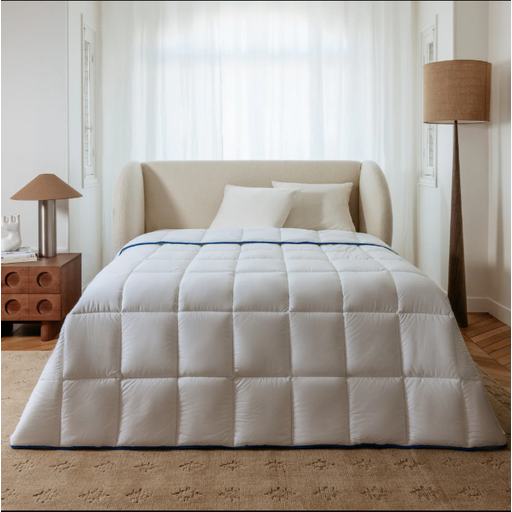
WHY THIS MODEL? Designed specifically for cold nights, this duvet offers cocooning warmth without being too heavy, ideal for those who feel the chill in winter. Its large 220x240 cm size is perfect for a standard double bed.
It doesn't fall into the "grammage is everything" trap. Its hollow siliconised fibre filling ensures excellent thermal insulation while remaining breathable, thus preventing overheating.
Its cotton percale cover is soft to the touch and durable. Another major advantage is that it's certified Oeko-Tex Standard 100 and hypoallergenic, providing peace of mind for sensitive skin.
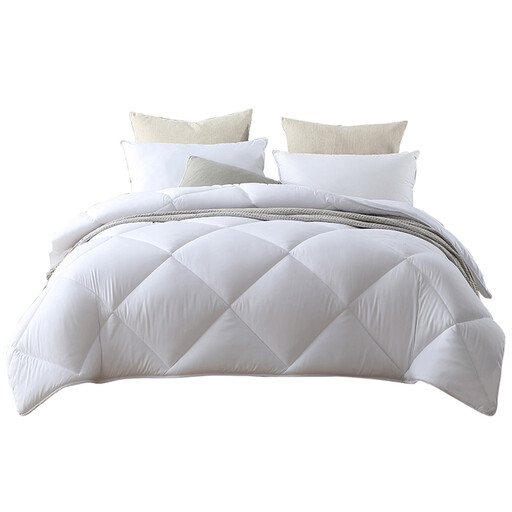
WHY THIS MODEL? Perfect for a 1-person duvet or for those looking for a simple and effective solution. Its "all-seasons" nature makes it ideal for daily use in a moderately heated room, without needing to switch duvets.
It avoids the trap of an unsuitable filling. As a synthetic duvet, it is hypoallergenic and washable, making it perfect for everyday use without the maintenance constraints of a natural duvet.
Its key strength: versatility. Breathable, soft, and machine washable, it simplifies daily life and adapts to most situations.
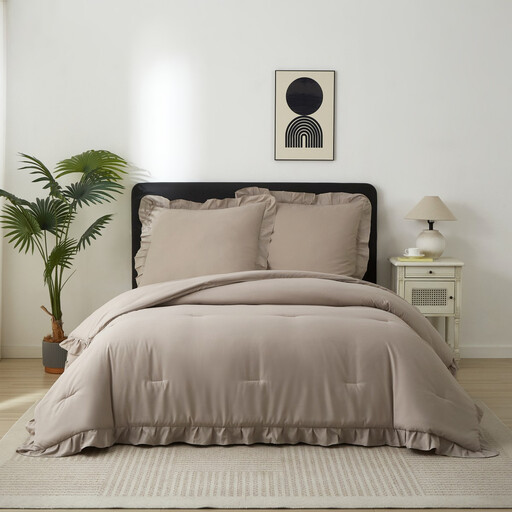
WHY THIS MODEL? For those who see their bedding set as a key decorative element. This set includes the comforter and pillowcases, offering a coordinated and elegant look with its ruffled details, without the need to find a separate cover.
This set solves the headache of matching items. By choosing a complete set, you are guaranteed perfect coordination between the comforter and pillowcases, with no risk of size or style mismatches.
The polyester microfibre fabric is soft, breathable, and easy to care for. The ruffled design adds an instant touch of refinement to the bedroom.
For a 160x200 cm bed, a 240x260 cm duvet is the ideal option. It provides a generous 40 cm overhang on each side, which is very comfortable for two people and prevents anyone from being left uncovered during the night. A 220x240 cm duvet can also work if you prefer a smaller overhang.
The first step: always check the manufacturer's label. For a synthetic duvet, use a delicate cycle at 30°C or 40°C in a large-capacity washing machine (7 kg or more) so the drum can spin freely. The pro tip: add a few clean tennis balls to the drum to help maintain the filling's loft. Air drying is best, or tumble dry on low heat if the label permits.
A mid-weight duvet has an average grammage (around 300 gsm) and is suitable for rooms heated to between 18 and 20°C. An all-seasons duvet is even more clever: it consists of two duvets (one light and one mid-weight) that attach to each other, often with press studs or ties. You can use the light duvet in summer, the mid-weight one in spring and autumn, and both together to create a very warm winter duvet.