
Livraison le jour même ou le lendemain

Qualité garantie

Débloquez vos offres de bienvenue: Livraison GRATUITE | Jusqu'à -80 % | 30 jours d'essai gratuits à JoyPlus
Téléchargez l'application
A duvet and bedding set are often bought together, but they don't serve the same purpose. The duvet provides warmth, while the cover protects the filling and contributes to the room's atmosphere. However, getting the wrong size, choosing a fabric that's tricky to care for, or picking an unsuitable warmth level can turn an appealing purchase into an impractical expense.
Before you order, three common pitfalls keep cropping up:
Here are the criteria to consider when comparing a summer duvet, a winter duvet, a bedding set or a complete bedding ensemble.
Start by measuring your mattress, then allow enough overhang on the sides. The most common sizes include:
Always check that your duvet cover has exactly the same dimensions as the duvet itself. If it's too big, the duvet can shift around inside; if it's too small, it can compress the filling.
For a summer duvet, look at the weight, the breathability of the outer fabric and the usual temperature of the bedroom. The 140 x 200 cm model in cotton percale and polyester is recommended for rooms from 20 °C, with a filling of siliconised hollow fibres at 250 g/m².
In winter, a higher weight may be preferable in a cooler room. The 140 x 200 cm duvet with a 5 cm thickness uses a polyester filling of 400 g/m². These figures let you compare models on a concrete basis, rather than relying on vague descriptions like "very warm" or "all-season".
The warmth level also depends on your existing bedding, your heating, your sensitivity to cold and the air circulation in the room.
Cotton offers a natural feel and absorbs moisture well, while polyester microfibre is often lightweight, soft and easy to wash. A cotton and polyester duvet can therefore combine a cotton outer shell with a synthetic filling that's simple to maintain.
For a cover, the microfibre duvet cover generally stands out for its quick drying and smooth feel. However, always check the maximum washing temperature: some models can be machine-washed at 30 °C, others at 40 °C. Fasten any zips before washing and avoid bleach if the label recommends it.
The OEKO-TEX STANDARD 100 label means a textile product has been tested for certain substances. It doesn't replace the need to check the composition, care instructions and traceability information. For a hypoallergenic duvet, also look at the manufacturer's exact wording and any certifications mentioned on the product page.
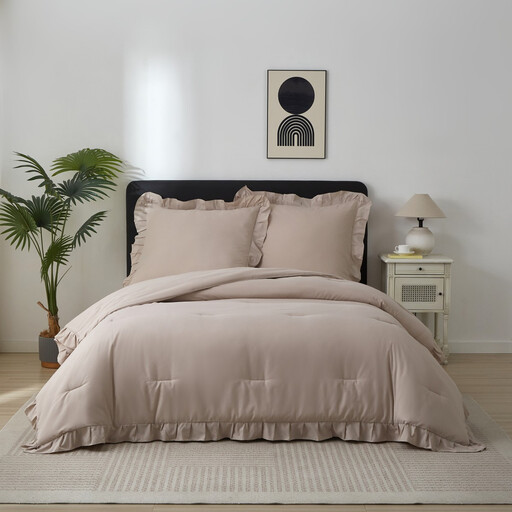
Why this suits this profile: This two-piece set includes a 140 x 200 cm duvet cover and a 65 x 65 cm pillowcase – a practical way to start kitting out a single bed.
The dimensions and composition are clearly stated, reducing the risk of ordering a cover without checking the bed size.
100% polyester microfibre, machine washable at 30 °C maximum and decorative ruffle finish.
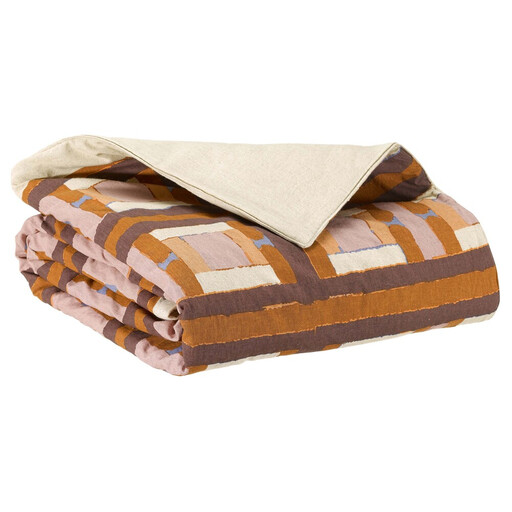
Why this suits this profile: Its blend of recycled linen and cotton is aimed at bedrooms where the look of the textiles matters as much as everyday comfort.
The outer fabric composition is detailed: 55% recycled linen and 45% cotton, with a polyester filling.
Graphic texture, two colours available and the option to mix and match different pieces from the collection.
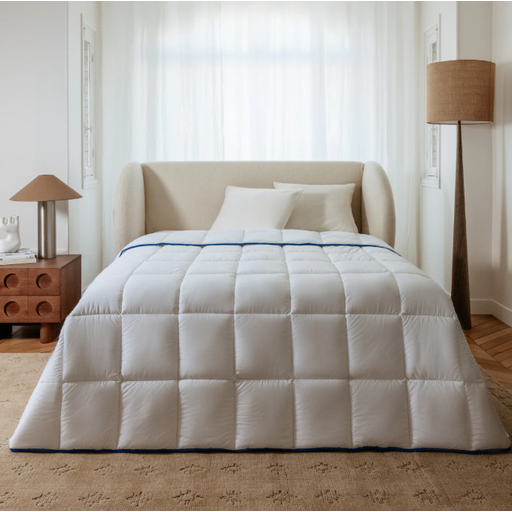
Why this suits this profile: This lightweight model is ideal for anyone looking for a machine-washable summer duvet for a bedroom kept at a moderate temperature.
The 250 g/m² weight and the stated suitability for rooms from 20 °C provide concrete benchmarks for its intended use.
100% cotton percale outer, washable at 40 °C and stated certifications including OEKO-TEX STANDARD 100 and CertiPUR.
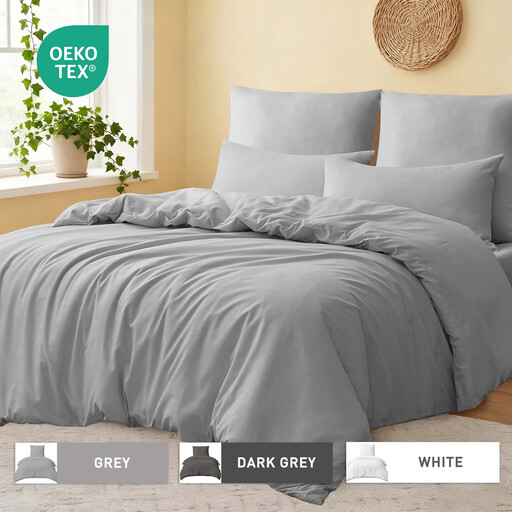
Why this suits this profile: Its large size is designed for couples with a double bed who want to replace just the cover and pillowcases.
The product page clearly states that the duvet and pillows are not included – so you won't mistake a cover set for a complete bedding ensemble.
100% microfibre, concealed zip, internal ties and machine washable at 30 °C maximum.
We've put together a comprehensive, real-time updated list of products that fully meet these strict selection criteria and European safety regulations.
The duvet is the filling that covers you as you sleep. A bedding set typically includes a duvet cover and one or more pillowcases. Read the contents of the set carefully before buying: some sets include a duvet, while others are limited to the protective covers.
Check the label before washing. A bulky duvet may need a machine with a capacity of at least 12 kg. Use a delicate cycle, stick to the recommended temperature and dry it completely to prevent moisture from building up. For a duvet cover, fasten the zip and consider turning it inside out before putting it in the machine.
It depends on the type of filling, how often you use it, how much you air it and how you care for it. Air the duvet regularly, use a suitable cover and watch for signs of wear: unevenly distributed filling, loosening seams or a lasting loss of loft. It's time to think about replacing it when the product no longer meets your needs for warmth or comfort.