
Livraison le jour même ou le lendemain

Qualité garantie

Débloquez vos offres de bienvenue: Livraison GRATUITE | Jusqu'à -80 % | 30 jours d'essai gratuits à JoyPlus
Téléchargez l'application
Updating your duvet and bed linen isn’t just about picking a pretty colour. A duvet that’s too warm can turn your night into an ordeal, while a poorly fitted cover can compress the filling or let it shift around. Materials, dimensions and care all have a direct impact on everyday comfort.
A warm duvet isn’t necessarily right for every bedroom. The room temperature, your heating level and your own sensitivity to cold are often more telling than a marketing term. Look closely at the type of filling, the weight (where stated) and the duvet’s construction.
A lightweight summer duvet will generally feel comfortable in a temperate room and for people who tend to overheat. A thicker winter duvet may be better suited to a cool or poorly heated bedroom. To adapt to the seasons, some people actually prefer two separate duvets rather than one very thick all-in-one.
A duvet needs to hang down sufficiently on each side of the mattress to cover you properly without slipping off at the slightest movement. However, standard sizes don’t suit every bed:
Before ordering a duvet cover, measure the duvet itself. A cover that’s too small compresses the filling; one that’s too large encourages creases and shifting.
Labels such as OEKO-TEX, CertiPUR or other standards should be checked on the product page. They don’t replace a careful look at the composition. These certifications can tell you about certain manufacturing or testing criteria, but they don’t guarantee the same feeling of comfort for everyone.
The washing instructions also deserve a close look. A duvet described as machine-washable may require a large-capacity drum, low-temperature drying or professional cleaning.
A duck feather duvet usually combines feathers and down. Feathers provide more structure, while down contributes lightness and loft. Read the percentage of each component carefully: simply stating “feathers and down” can cover very different compositions.
A synthetic duvet, often filled with polyester fibres, appeals because it’s generally easier to care for and contains no animal filling. Hollow silicone fibres are designed to retain a certain lightness, but comfort also depends on the weight, the cover fabric and the quilting.
Cotton, percale, cotton gauze and linen each offer a different feel and sensation throughout the night. Cotton bed linen remains popular for its versatility and easy care. Double gauze provides a soft, slightly crinkled texture. A linen duvet cover gives a natural, breathable look with a feel that softens over time with washing.
The quilting also plays an important role: regular compartments help prevent the filling from shifting. For a bedding set, check whether pillowcases are included, their size and the type of closure.
Check the maximum washing temperature, whether tumble drying is allowed, and any special precautions. For a machine-washable duvet, your washing machine’s capacity is crucial: a large duvet may need a 10–12 kg machine, or even a specialist laundry service.
Wash the duvet cover more often than the duvet itself. Air the duvet regularly and follow the label’s instructions to preserve its loft and stitching. For throws, separate any items with zips or hooks to avoid snagging.
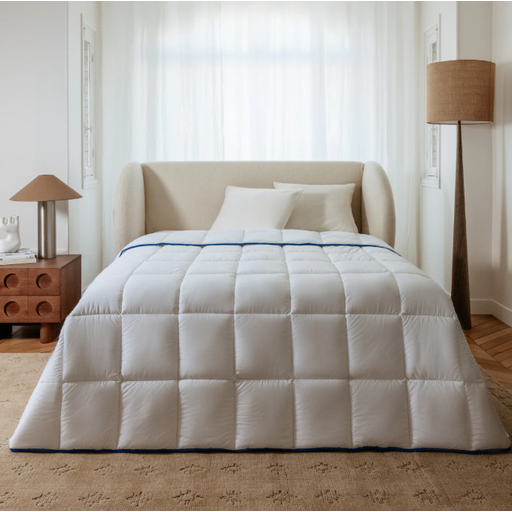
Why this choice suits this profile: its 200 × 200 cm size and 250 g/m² polyester fibre filling make it ideal for anyone looking for a lightweight duvet for a room at around 20 °C.
The composition and weight are clearly stated. This makes it easier to compare with other summer duvets, rather than relying on a vague promise.
Cotton percale cover, hollow silicone fibre filling and machine washable at 40 °C.

Why this choice suits this profile: this generous size is aimed at couples looking for a cosy winter duvet for a double or extra-wide bed.
The product page details the composition: 90% duck feathers and 10% down, rather than just saying “duck”.
100% sateen cotton cover, box quilting and care instructions up to 40 °C, with gentle tumble drying or professional cleaning.
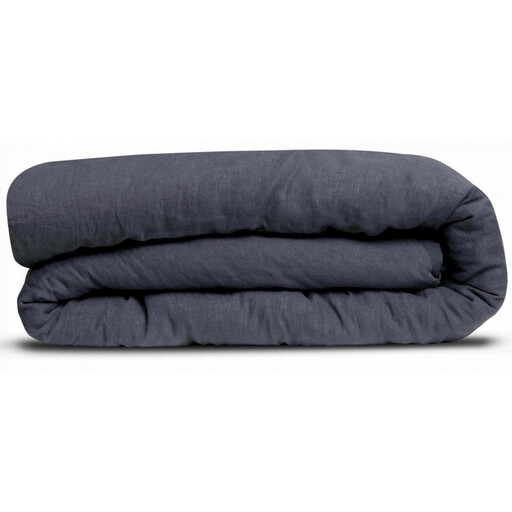
Why this choice suits this profile: this cover is ideal for regular use, especially for households that want to refresh the décor of a large bedroom easily.
Its dimensions of 220 × 240 cm are clearly stated, as is the fabric of each side. This makes it impossible to confuse the cover with the duvet.
Linen front, cotton reverse, navy colour and machine washable.
We’ve put together a comprehensive, real-time updated list of products that meet these demanding selection criteria and comply with European safety regulations.
A bedding set can quickly change the atmosphere of a bedroom, especially when it includes matching pillowcases. For a decorative touch or a bit of extra warmth, a soft throw draped over the sofa or at the foot of the bed is more versatile than a thick blanket.
A corduroy flannel throw in 130 × 170 cm will suit a sofa, armchair or for taking on the go. A model like the Fara, in 135 × 200 cm, combines a cotton cover, polyester filling and decorative fringing. In all cases, check the precautions regarding flames, washing and the age of children.
Measure the width of your mattress, then add the desired overhang on each side. The 220 × 240 cm size offers more generous coverage than 200 × 200 cm. For a narrower bed or a single sleeper, the 155 × 220 cm size will often be easier to handle.
It depends on usage, perspiration and the recommendations on the label. Air it regularly and wash it when needed. A bulky duvet may require a large-capacity washing machine or professional cleaning.
Not necessarily. The cost mainly depends on the washing temperature, drying method and your machine’s capacity. A synthetic duvet can be convenient if it’s machine-washable, but always check the actual care requirements before you buy.