
Livraison le jour même ou le lendemain

Qualité garantie

Débloquez vos offres de bienvenue: Livraison GRATUITE | Jusqu'à -80 % | 30 jours d'essai gratuits à JoyPlus
Téléchargez l'application
For a large double bed, a 240x260 cm duvet gives you a generous overhang on each side and is generally suited to wide mattresses. But picking one at random can quickly lead to a duvet that’s too hot, tricky to wash, or impossible to fit properly into the cover you already have.
Before you order, three common mistakes keep cropping up:
The right choice depends on your bedroom temperature, your sleeping habits and how sensitive you are to the cold.
Expressed in g/m², the fill weight lets you compare models more concretely. As a guide, the synthetic models shown here have 250 g/m² for the summer version and 400 g/m² for the winter version.
A synthetic duvet 240x260 cm often appeals because it’s easy to care for and affordable. Hollow silicone fibres help air circulate while keeping the duvet light. They’re also a good choice if you prefer to avoid animal-derived fillings.
A duck down duvet, or one made from feathers and down, gives a different feel. The product pages for the MORPHEA models state a composition of 90% duck feathers and 10% duck down, with box-stitch quilting. The feathers provide structure, while the down adds loft. It’s worth comparing this ratio with other models that have a higher down content.
So the choice of material should be based on the comfort you’re after, how easy it is to care for, and your budget – rather than relying on a general promise of quality.
A cotton cover, especially percale or cotton sateen, can offer a particular feel and good breathability. Check the type of weave stated, but don’t treat the thread count as a sufficient criterion on its own.
Box-stitch quilting stops the filling from shifting and helps keep it evenly distributed. When it comes to care, think about what your washing machine can handle:
Labels such as STANDARD 100 by OEKO-TEX, CertiPUR, Sanitized or ISO 9001 should be taken as compliance or process information stated on the product page. They are not a medical guarantee.
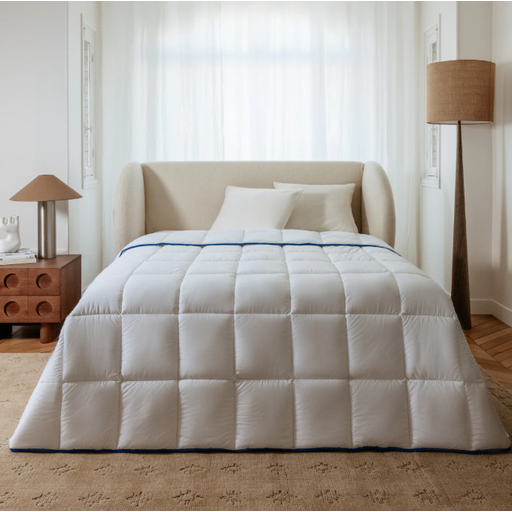
Why this suits this profile: its synthetic filling of 250 g/m² is ideal if you’re looking for a lightweight 240x260 cm duvet for a temperate bedroom or warm nights.
The fill weight and 3 cm thickness are clearly stated – no need to guess the warmth level from looks alone.
Percale cotton cover, hollow silicone fibres and machine washable at 40 °C according to the product page.
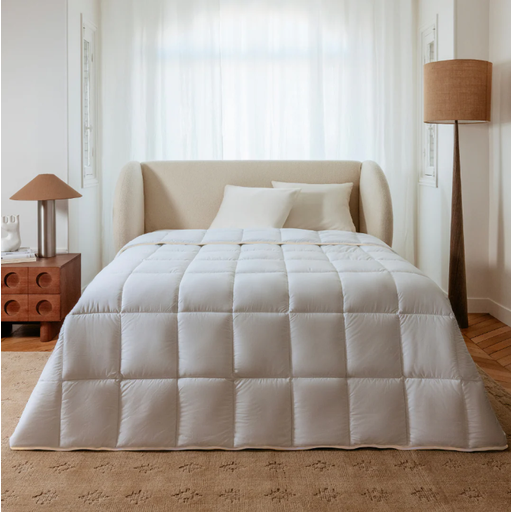
Why this suits this profile: this model combines an organic cotton sateen cover with a duck feather and down filling for a natural, light feel.
The composition – 90% feathers and 10% down – is detailed, as is the box-stitch quilting that helps keep the filling evenly distributed.
240 x 260 cm size, sateen cover with 129 threads/cm² and care at 40 °C with gentle tumble drying recommended.
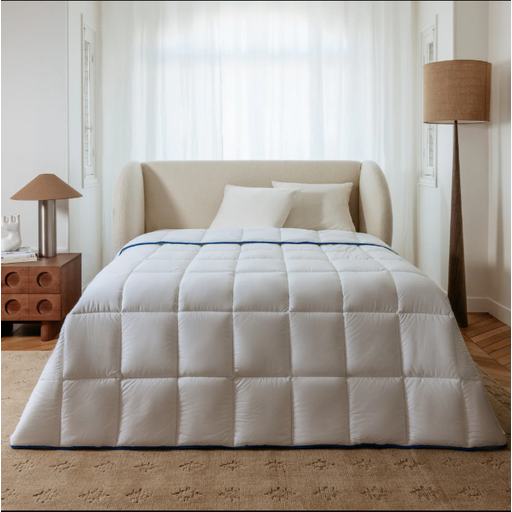
Why this suits this profile: its synthetic filling of 400 g/m² and 5 cm thickness meet the needs of a cold bedroom or regular winter use.
The product page clearly separates the fill weight, cover material and thickness, rather than just making a vague promise of warmth.
Percale cotton cover, machine washable at 40 °C and certifications listed on the product page, including STANDARD 100 by OEKO-TEX.

Why this suits this profile: its stated composition of duck feathers and down is designed for cold nights and rooms that aren’t well heated.
The high warmth level and winter use are stated separately, making it easy to compare with a lightweight or synthetic duvet.
Box-stitch quilting, organic cotton sateen cover and care at 40 °C according to the available information.
A 240x260 cm duvet cover protects the filling and makes everyday washing much easier. The TODAY Essential cover is made from 100% cotton, with a 57 threads/cm² weave, concealed button closure and openings designed to make fitting it a breeze. The product page also states it can be washed at 60 °C and carries an OEKO-TEX certification.
See the TODAY Essential duvet cover 240/260 steel
For a ready-to-use solution, a 240x260 cm bedding set may include a cover and pillowcases. However, always check exactly what’s in the set – the term “bedding set” doesn’t always mean it comes with a duvet and pillows.
We’ve put together a full, real-time updated list of products that meet these exacting criteria and European safety requirements.
It can work for a large double bed, but the overhang depends on the mattress thickness and the height of the bed base. Measure the width of your sleeping surface, then add the overhang you want on each side before ordering.
Always check the label before washing. A large duvet may need a washing machine with a capacity of at least 12 kg. The models shown here generally recommend a 40 °C wash, while the TODAY Essential cover can be washed at 60 °C. For feather and down fillings, a gentle tumble dry helps keep the filling well distributed.
How long a duvet lasts depends on how often you use it, how much you air it, the quality of the stitching, and whether you follow the care instructions. Using a cover, shaking the duvet out regularly and letting it air out will all help prevent premature wear.